Fracture Recovery Care
Post-surgical care, rehabilitation and complication prevention after a fracture.
30+
Verified registered nurses
< 60min
On site in under 60 min
24/7
Available 24/7
22
areas covered
Understanding the condition
After a fracture, convalescence at home is a decisive stage for a good recovery. Whether treated with a cast or with surgery, the period that follows calls for careful care: dressings, prevention of infections, anticoagulant injections, gradual rehabilitation and monitoring of complications such as phlebitis. For elderly people, frequently victims of hip or wrist fractures, and for tourists injured in Marrakech, repeated journeys to the clinic are difficult and painful. Our qualified nurses, employed by SOS Nursing, provide complete follow-up at home in coordination with the orthopaedic surgeon: wound care, thromboembolic prevention and support for rehabilitation. This home follow-up reduces the risk of hospital-acquired infection, makes healing safe and speeds up the return to independence.
Our care services for this condition
Home nursing services specifically tailored to your medical situation.
Why home care for Fracture Recovery Care
Post-fracture care carried out at home avoids painful journeys, reduces the infection risk linked to the hospital environment and promotes a calmer recovery.
What the nurse does at every visit
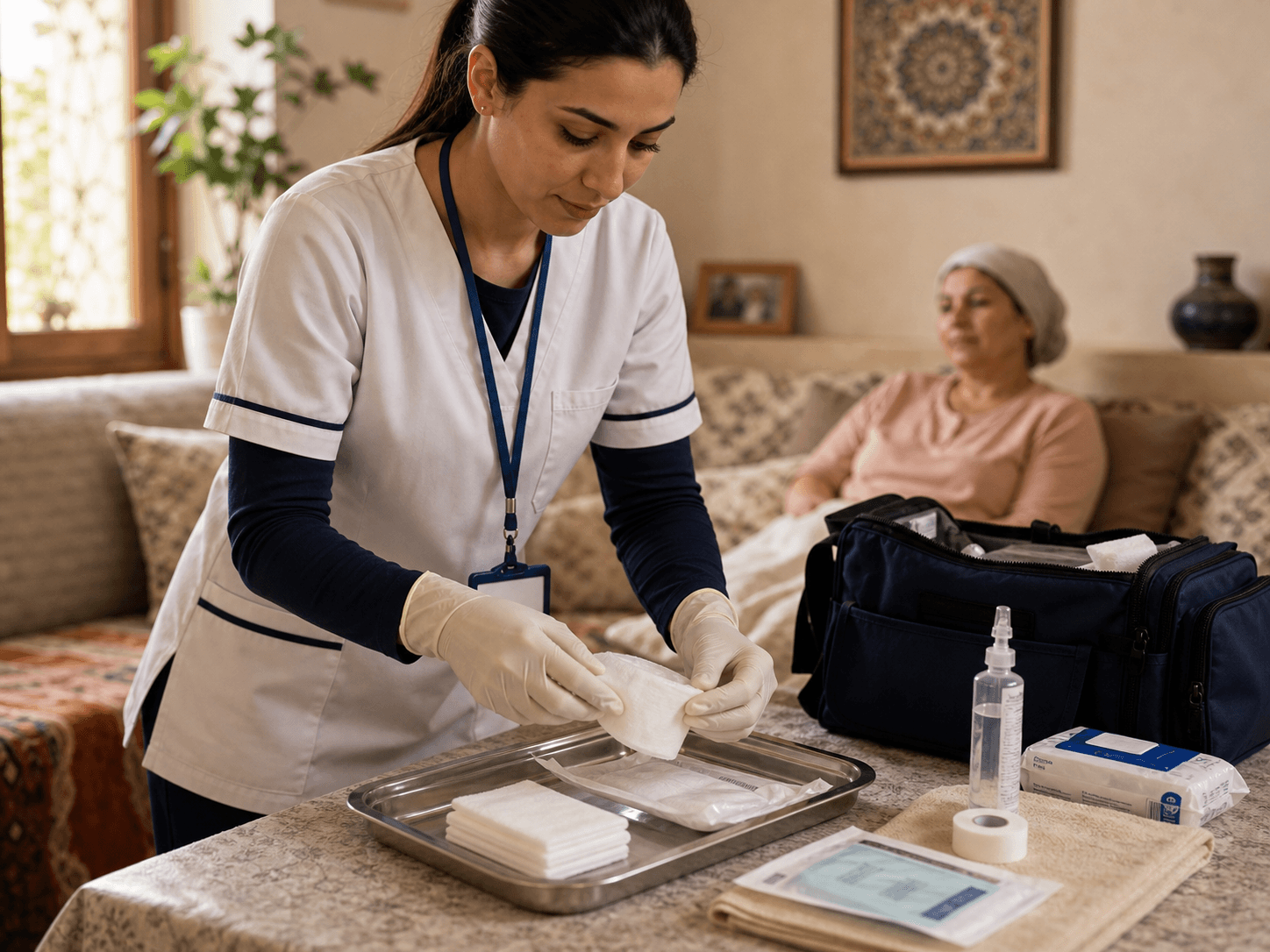
Renewal of dressings, monitoring of healing and of the cast, prescribed anticoagulant injections, pain control and a search for signs of complication (phlebitis, infection).
Visit frequency and monitoring
From 2 weeks for a simple fracture to several months for an operated fracture, with daily visits for the anticoagulant injections and then a spacing out as healing progresses.
Coordination with your treating physician
The progress of the wound and of mobility is passed on to the orthopaedic surgeon. The removal of sutures, the adjustment of treatment and the resumption of weight-bearing follow their instructions.
Equipment and home monitoring
Sterile equipment for dressings, single-use injection equipment, a clinical sharps container, compression stockings. The nurse monitors the cast, the skin condition and the circulation.
The family's role between visits
We train relatives to watch for warning signs (calf pain, swelling, fever, a cast that is too tight), to help with movement and to respect the instructions on weight-bearing and elevation.
AMO / CNSS coverage
Post-operative and post-fracture care (AMI acts, NGAP) is reimbursable by AMO or CNSS on prescription. Each visit gives rise to a compliant coded receipt and a signed care record, also useful for insurance.
Frequently asked questions
From 2 weeks for a simple fracture to about 3 months for a complex operated fracture. The programme is adapted to each patient and reviewed with the surgeon according to the progress of healing and mobility.
Yes. Our nurses administer the prescribed daily anticoagulants (LMWH) and monitor for signs of deep vein thrombosis, a frequent complication after a fracture and immobilisation.
Yes, on prescription. Nursing acts (AMI) coded according to the NGAP are reimbursable by AMO/CNSS. We provide a compliant coded receipt, also useful for travel insurance or a private health plan.
Yes. The removal of sutures or staples is part of our routine post-operative care, carried out under strict aseptic conditions, according to the instructions of the orthopaedic surgeon.
Faced with calf pain, swelling, fever or a cast that is too tight, the nurse assesses, alerts the surgeon and, if necessary, mobilises our private ambulance service for a rapid transfer to the clinic.
Yes. Our French- and English-speaking nurses travel to the hotel or riad, provide the daily care and supply a detailed compliant coded receipt, accepted by travel insurers for reimbursement.
Other conditions we treat
Fracture Recovery Care
Life-threatening emergency? Call SAMU 141.