After an operation, post-operative home care ensures continuity of care: dressings, monitoring of the wound, pain management, prevention of complications, and the gradual return of independence. Medical procedures (dressings, injections, removal of stitches, infusions) are carried out by a state-registered nurse on prescription, while non-medical home help can complement this with a presence and day-to-day assistance. Well organised from clinic discharge, this care reduces the risk of infection, phlebitis, or readmission, and supports a calm recovery in a familiar environment. This guide details the care carried out at home, the boundary between medical care and non-clinical help, the monitoring of complications, the organisation of the return home, pain management, and nutrition for healing, with answers to the questions of Marrakesh families.
Depending on the procedure, the state-registered nurse carries out a range of care.
Which care after an operation
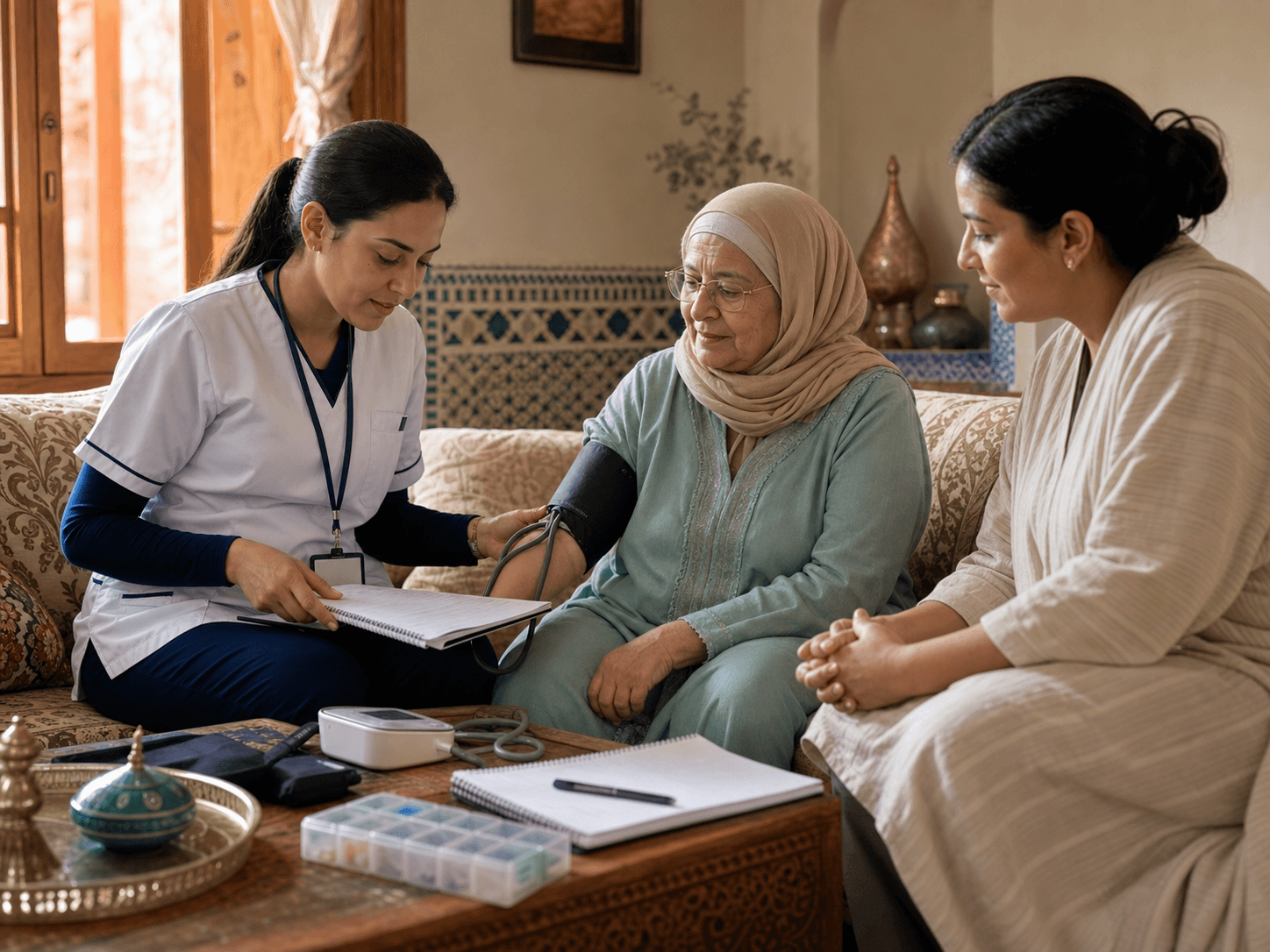
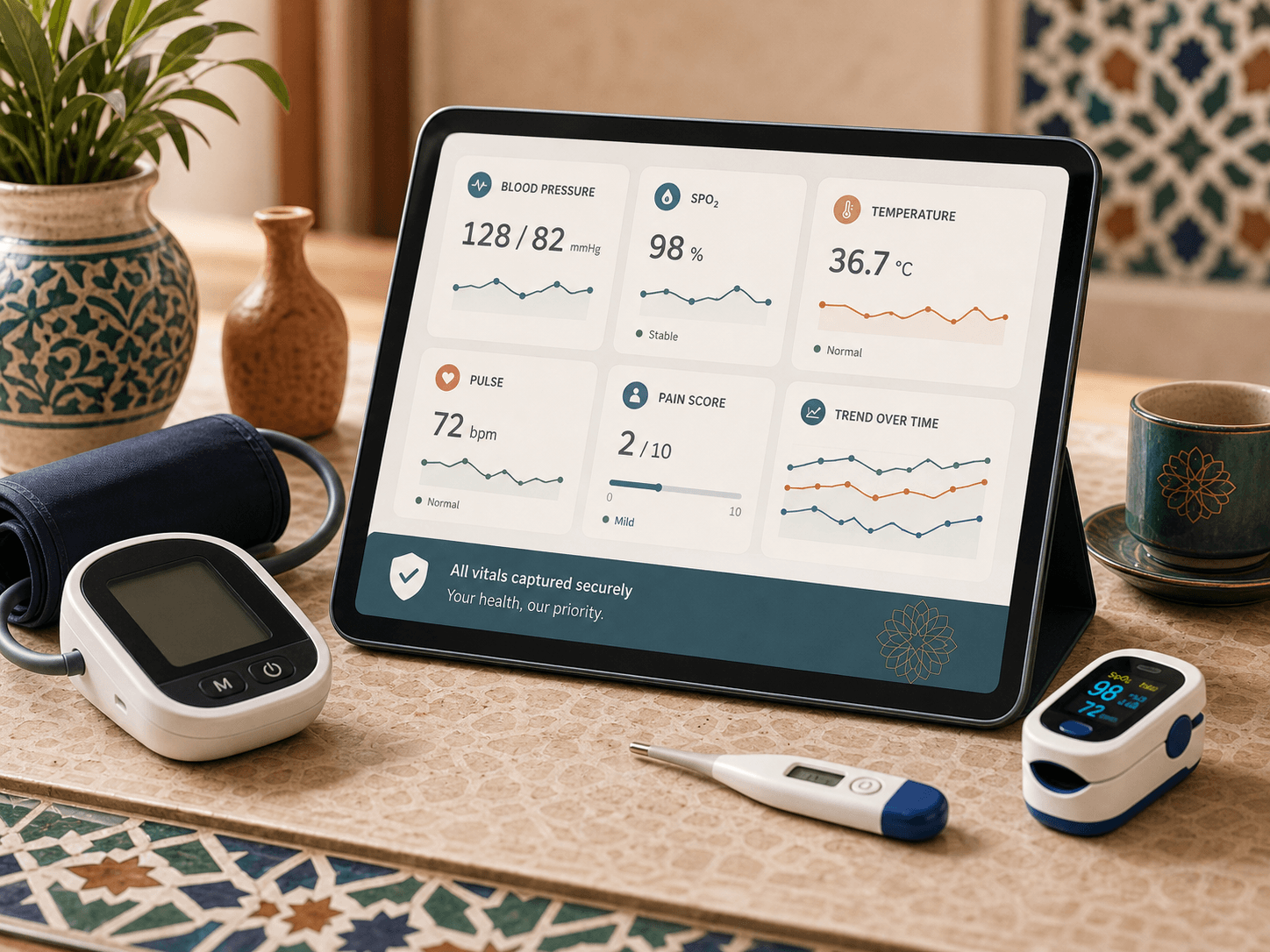
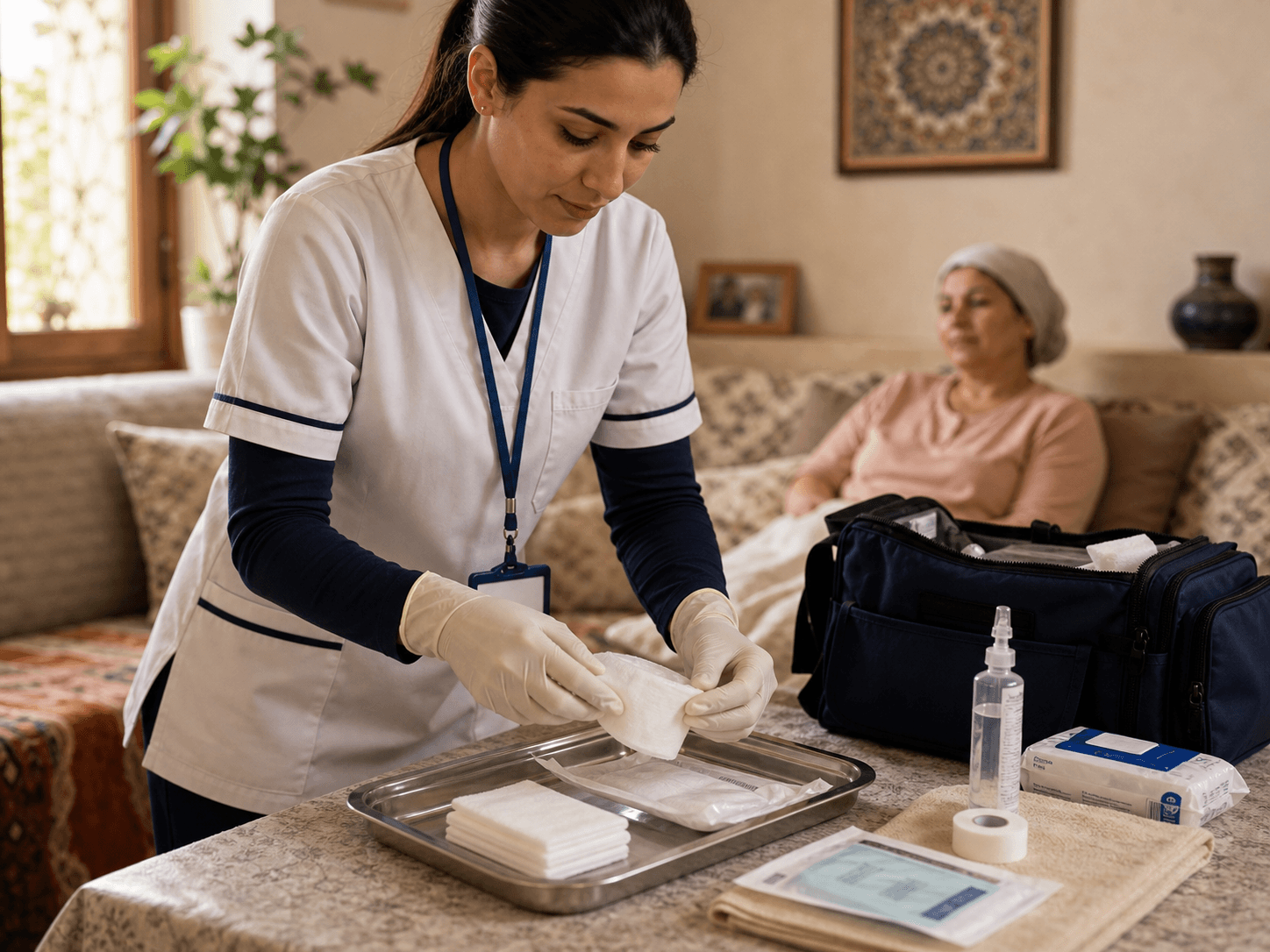
Depending on the procedure, the state-registered nurse carries out a range of care. They redo the dressings according to the protocol, monitor the wound (redness, heat, discharge, dehiscence), manage drains, redon drains, and tubes, and administer the prescribed injectable treatments, in particular anticoagulants to prevent phlebitis. Monitoring vital signs (temperature, blood pressure, pain) allows a complication to be detected early. The removal of stitches or staples takes place on prescription, on the date set by the surgeon. These clinical procedures are the exclusive remit of qualified staff and are carried out on medical prescription, with rigorous traceability at each visit. The care plan is adapted to your type of operation and reassessed at each visit.
The boundary between medical care and home help
Distinguishing nursing care from home help is essential for your safety. Anything to do with medical procedures — injection, dressing, infusion, removal of stitches, management of a drain — requires a state-registered nurse, on prescription. In parallel, a non-clinical home carer can provide a reassuring presence, help with washing, dressing, meals, and getting about, as well as light housekeeping. They carry out no medical procedure and administer no medication beyond a simple reminder to take it. This complementarity, properly framed, allows both clinical needs and day-to-day support to be covered, with no confusion of roles or responsibilities. SOS Nursing coordinates the two where necessary.
Preventing complications
Home monitoring aims to detect the main post-operative complications early. The nurse looks for signs of surgical-site infection (fever, redness, increasing pain, purulent discharge), of phlebitis (a painful, swollen, hot calf), or of a healing problem. They educate the patient and the family about the warning signs that should prompt an immediate consultation, and coordinate with the surgeon if an opinion is needed. The prevention of pressure sores in bed-bound patients (position changes, skin care, an appropriate mattress) and early mobilisation, as soon as the surgeon allows it, are an integral part of the follow-up. This organised vigilance clearly reduces the risk of readmission and speeds up recovery.
Post-operative pain management
Well-controlled pain is the condition for a good recovery. The nurse regularly assesses pain using a simple scale, ensures the prescribed painkillers are taken at the right times, and monitors both their effectiveness and their side effects (constipation, drowsiness, nausea). Insufficiently relieved pain hampers mobilisation, disrupts sleep, and delays healing; conversely, controlled pain allows walking and everyday tasks to resume sooner. The nurse reports poorly controlled pain to the prescriber to adjust the treatment, and explains to the patient how to take painkillers ahead of care or physiotherapy. Pain management is a care objective in its own right, never an inevitability.
Organising the return home
The success of post-operative care is often decided even before clinic discharge. Ideally, you plan the discharge prescription, the operative reports, the necessary equipment (dressings, devices), and the schedule of visits as soon as the hospital stay ends. Prepare the home: a clean space for care, an accessible bed, a kit of essentials. SOS Nursing can combine medical transport for the return, nursing care, and, if needed, non-clinical home help, in a single arrangement with a single point of contact. This coordination avoids breaks in care, needless journeys, and the stress of having to organise everything yourself just after an operation.
Nutrition, hydration, and healing
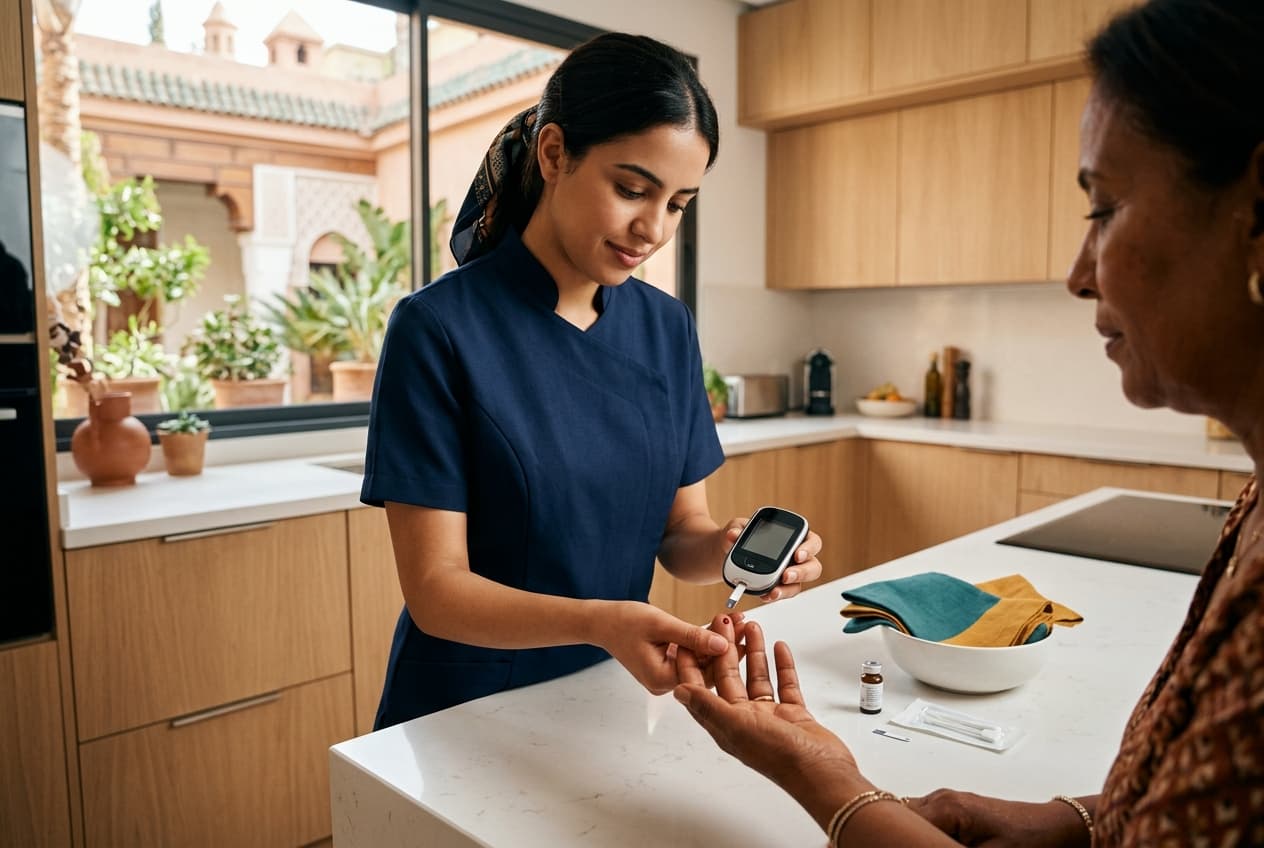
Diet plays a direct role in the quality of healing. A sufficient intake of protein (meat, fish, eggs, pulses), vitamin C, and zinc supports tissue rebuilding, while good hydration favours exchanges and prevents the constipation linked to painkillers. In the elderly or in cases of loss of appetite, the risk of undernutrition slows healing and increases complications: the nurse monitors food intake and raises the alarm if necessary. Small, appetising meals adapted to swallowing ability help maintain intake. For diabetic patients, blood-sugar control is particularly important because high blood sugar harms healing. These nutritional tips usefully complement the technical care.
Duration and frequency of visits
The frequency of visits depends on the type of procedure and how it develops. A dressing may require a daily visit or one every two days, or even several times a day for certain complex wounds, while stitch removal generally occurs between day 7 and day 15 depending on the operated area. An anticoagulant injection may be daily over several weeks. The pace decreases as healing progresses and independence returns. The care plan is defined with your surgeon, adjusted at each visit according to the state of the wound, and reassessed if a complication appears. This flexibility guarantees care that is neither excessive nor insufficient, geared to your real needs and the medical prescription.