Care for the elderly at home covers two complementary realities: nursing care (medical procedures carried out by a state-registered nurse) and non-medical home help (presence, hygiene, daily assistance). Clearly distinguishing the two allows you to choose the right service, secure the ability to stay at home, and keep control of the budget. In Marrakesh, these services can be coordinated for complete, flexible support adapted to the person's level of dependency. Staying at home, often preferred in Morocco where family solidarity remains strong, nevertheless calls for rigorous organisation and vetted carers. This guide explains the care/help distinction, the assessment of needs, the follow-up of chronic illnesses, fall prevention, the cultural dimension of support, and the help given to family carers.
The first thing to understand is the nature of each service.
Nursing care or home help: the distinction
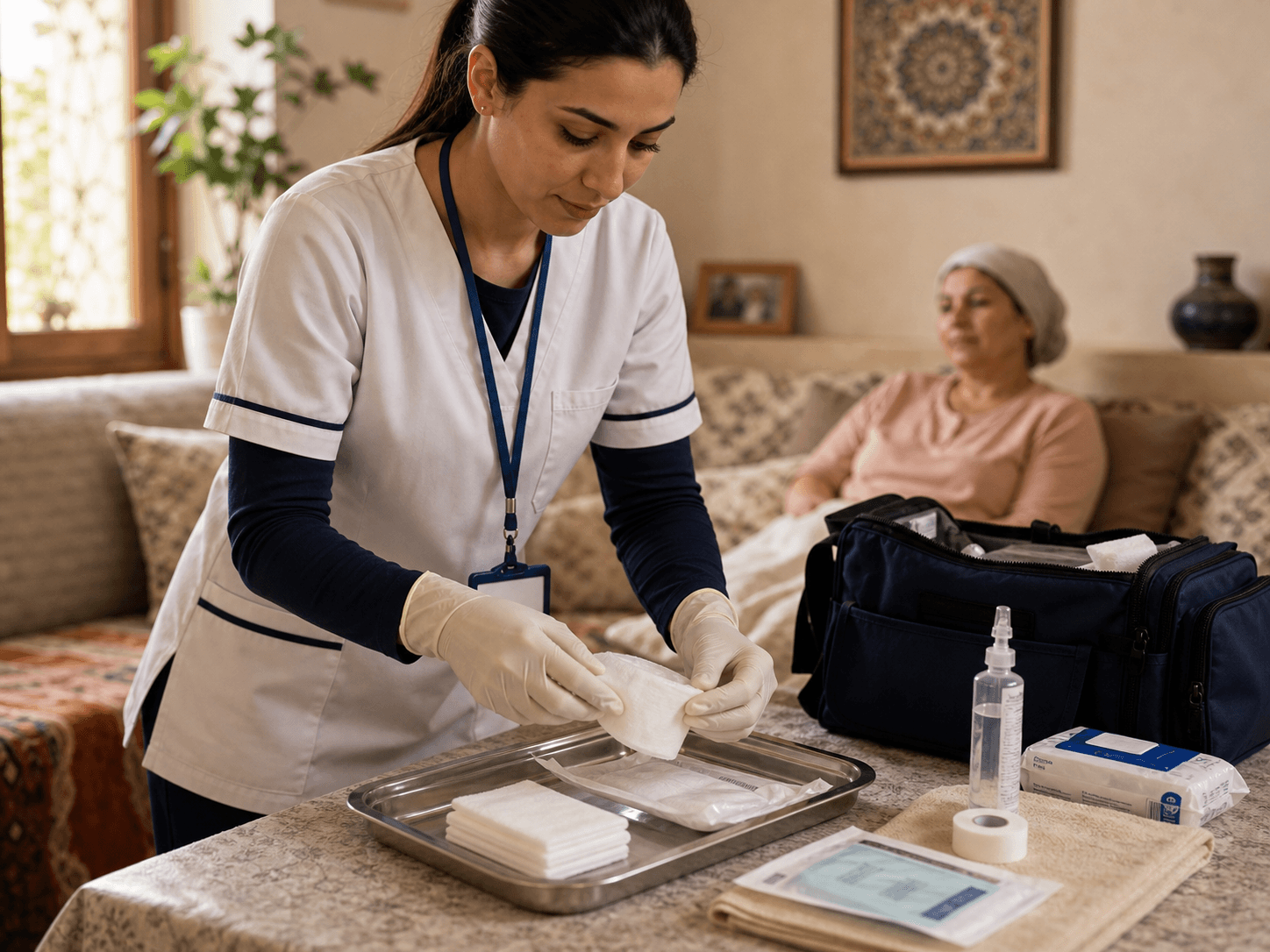
The first thing to understand is the nature of each service. Nursing care (injections, dressings, infusions, management and preparation of complex treatments, monitoring of vital signs, wound and pressure-sore care, catheterisation) consists of medical procedures reserved for state-registered nurses, on prescription. Non-medical home help covers washing, dressing, meals, mobility, shopping, light housekeeping, and companionship, with no care procedure at all. This boundary is not administrative but a matter of safety: entrusting a medical procedure to an untrained person exposes the patient to serious risks. For an elderly person, the two are often combined: the nurse for the medical side, the home carer for the everyday side, in a coherent arrangement.
Assessing needs
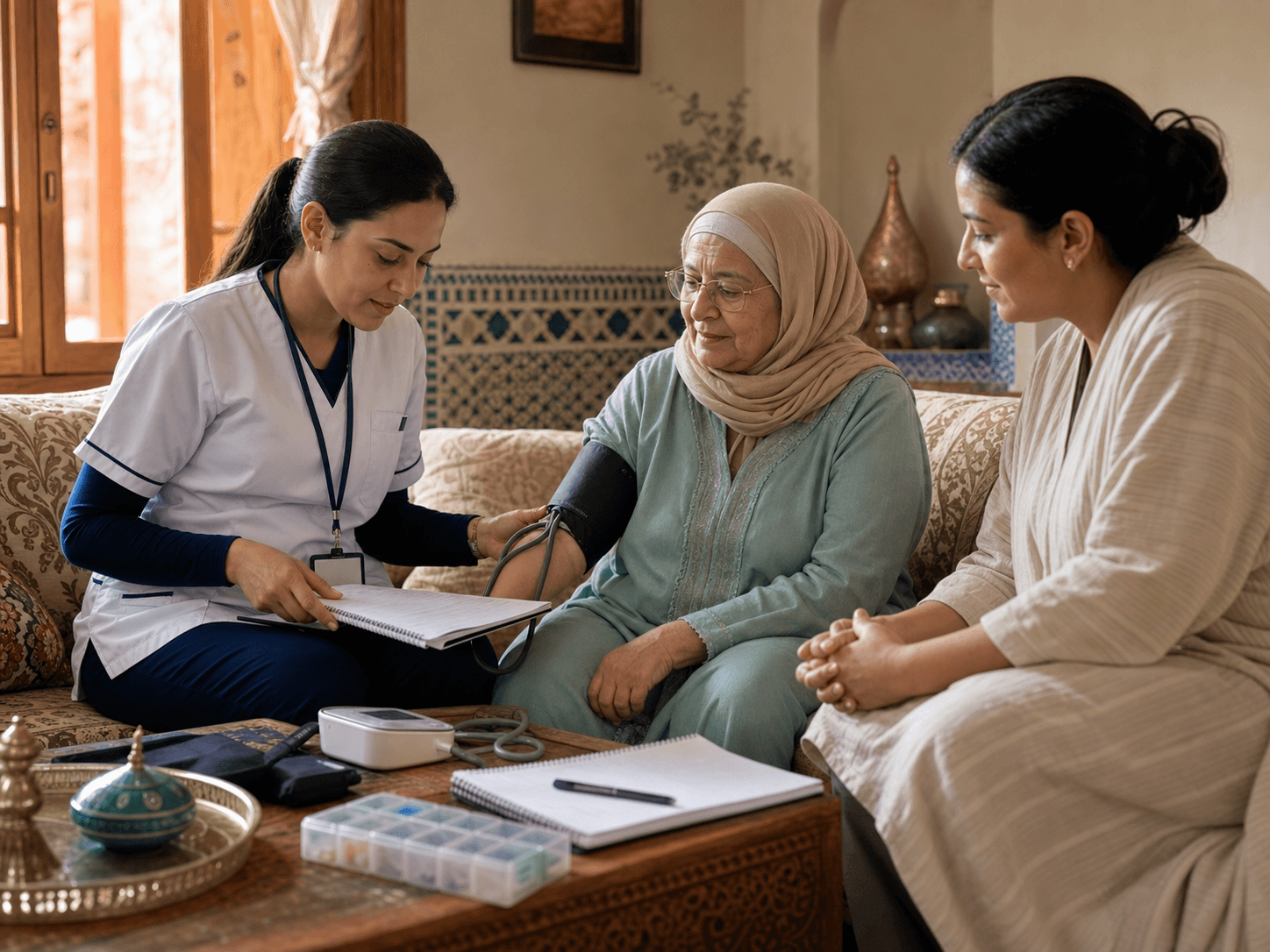
Good support begins with an honest assessment of the situation. You appraise the person's independence for the essential tasks (getting up, washing, dressing, getting about, eating), their memory and orientation, their ability to manage their medication, and the state of the home (stairs, bathroom, fall risks). This assessment allows the right mix of nursing care and human help to be dosed, from a few hours a week to a continuous 24/7 presence, according to the level of dependency. It is reassessed regularly, because needs change: a convalescence, a fall, or a worsening of a chronic illness can alter the support plan. Involving the elderly person and their family in this assessment fosters buy-in and respect for their dignity.
Follow-up of chronic illnesses
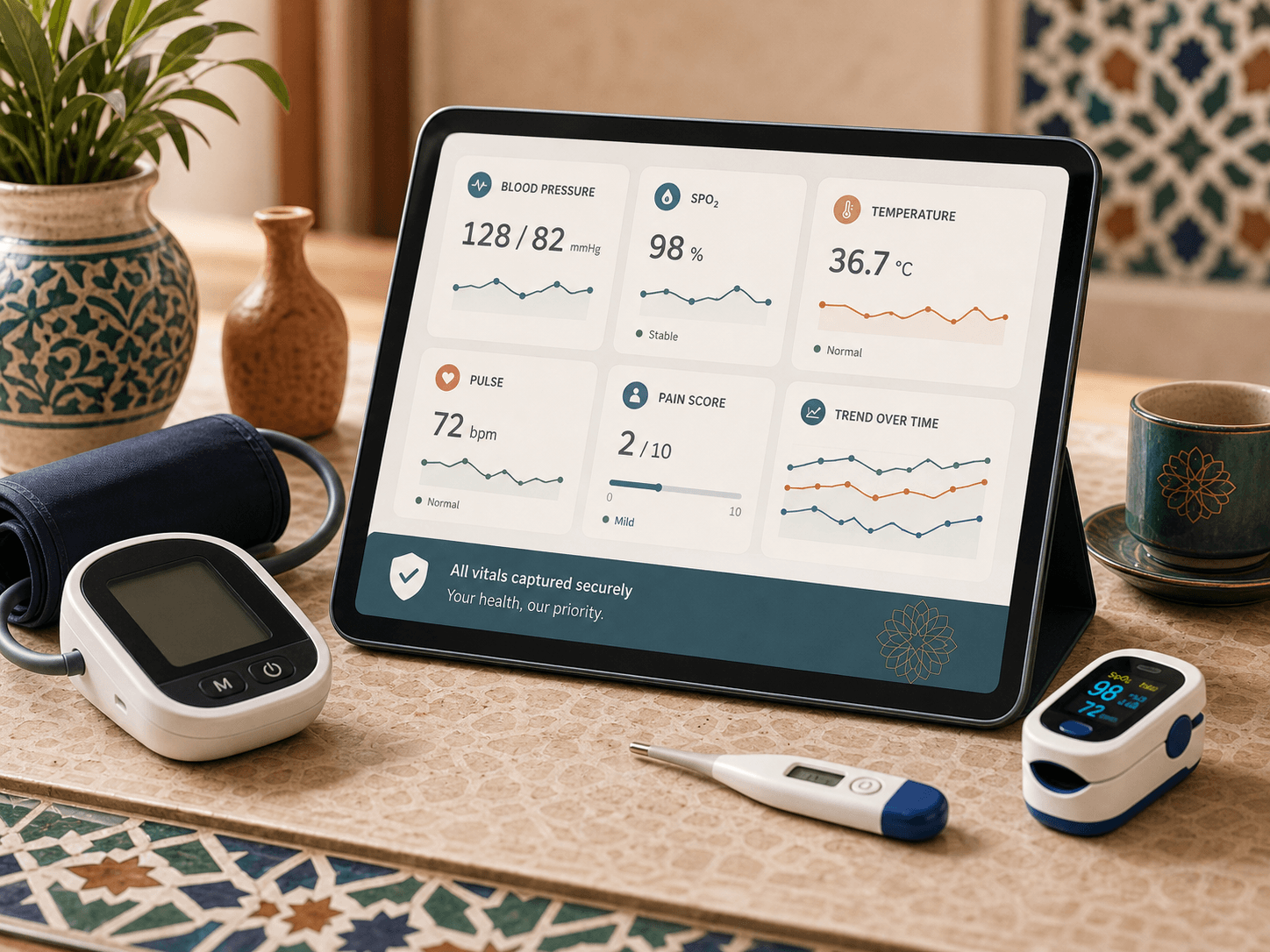
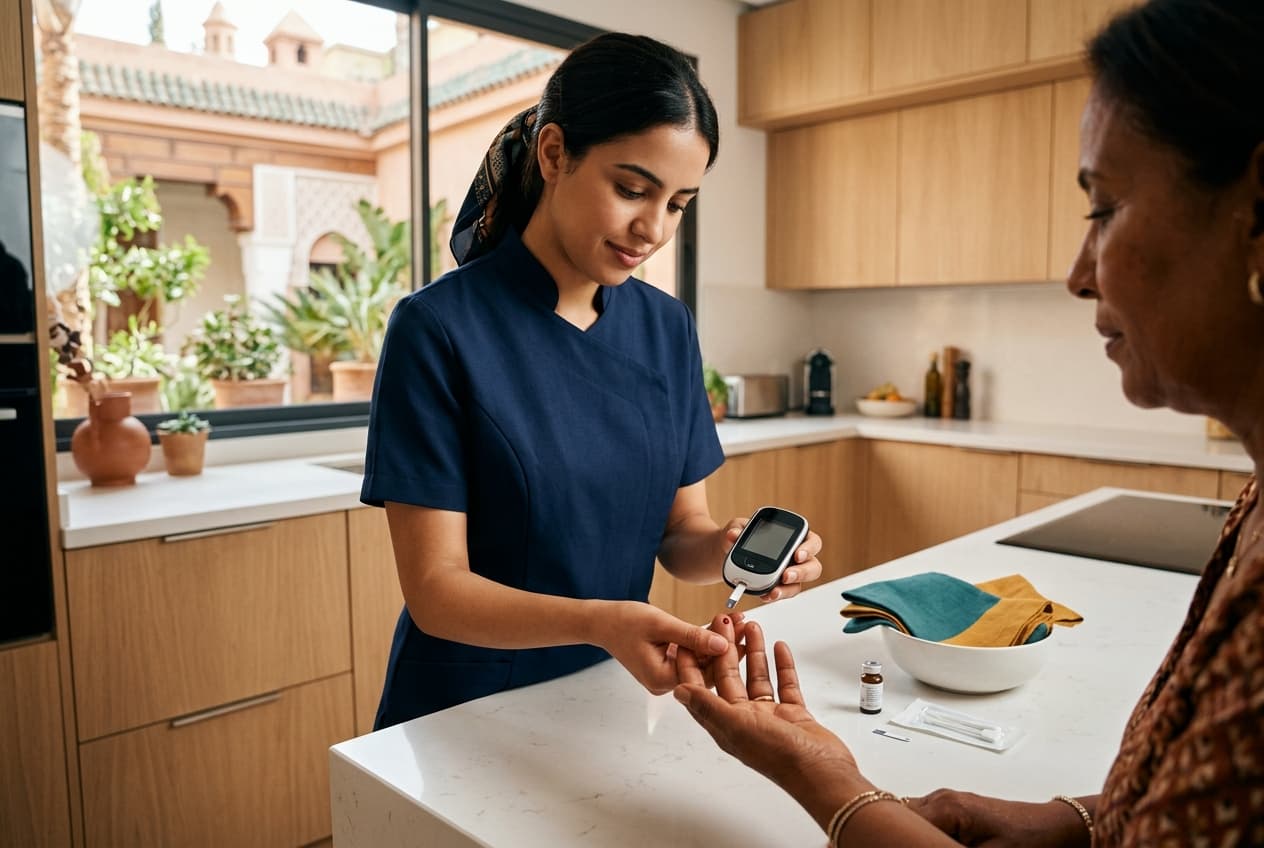
Elderly people often have several chronic conditions requiring regular monitoring. Diabetes, hypertension, heart failure, the aftermath of a stroke, respiratory or kidney disease call for close follow-up: checking blood glucose and blood pressure, verifying adherence to treatment, screening for signs of decompensation. The nurse carries out these procedures, may prepare complex pill organisers, monitors the effects of medication, and alerts the doctor in the event of deterioration. This follow-up avoids hospital admissions and stabilises the illnesses. Fall and pressure-sore prevention, the maintenance of good hydration, and appropriate nutrition complete the clinical monitoring. Coordination with the treating doctor ensures a swift adjustment of treatments without a tiring journey for the elderly person.
Securing the ability to stay at home
Beyond care, staying at home depends on a safe environment and constant support. Fall prevention is the priority: adapting the home (rugs, lighting, grab rails), help with getting up and going to bed, suitable footwear, identifying medications that cause dizziness. Good hydration and sufficient nutrition prevent undernutrition and dehydration, which are frequent and dangerous in seniors, especially in the hot season in Marrakesh. A reassuring presence limits anxiety and isolation. A non-clinical home carer provides this daily support, taking over from the medical care, and reports any change in condition to the nurse or the family. This human, organised safety net allows the person to stay at home with confidence for as long as possible.
Cultural dimension and respect for habits
Supporting an elderly person also means respecting their history and their way of life. In Marrakesh, support can take account of local traditions: meal times and contents, religious practices, the language spoken (Darija, Amazigh, French), daily rituals. A carer who speaks the same language as the elderly person makes communication and trust easier, particularly in cases of memory problems. Respecting modesty during washing, food preferences, and the rhythm of life preserves dignity and morale. This cultural attentiveness is not incidental: it determines the acceptance of help and the person's well-being. SOS Nursing takes care to offer carers suited to the profile and expectations of each family.
Coordinating and supporting carers
Family carers are at the heart of staying at home, but their burnout is a real and frequent risk. Many relatives take on the support of an elderly parent alone, at the expense of their own health, their work, and their social life. Coordination between nurse, home carer, doctor, and family is essential to share the load and avoid breaks in care. SOS Nursing can organise these carers and offer respite to family carers: a few hours of relief, an overnight presence, cover during a weekend or an absence. Vetted staff and a support plan reassessed over time reassure the family. Supporting the carer also means lasting support for the elderly person.
Budget and practical organisation
Anticipating the budget helps build support that is sustainable over time. Prescribed nursing care may, depending on the rules in force and your cover, give entitlement to AMO/CNSS coverage, whereas non-medical home help is generally not reimbursed. The total cost depends on the volume of help hours, the frequency of care, and any use of an overnight or continuous presence. It is better to start with the priority needs and adjust gradually, rather than over-sizing from the outset. A single point of contact who coordinates care and help simplifies the organisation, the billing, and the follow-up. Keep the named invoices for your reimbursement formalities, and check eligibility with your scheme before incurring costs.