Home vaccination lets you receive a vaccine in your own home, given by a state-registered nurse on medical prescription, with strict respect for the cold chain and the rules of asepsis. It is a practical and safe solution for elderly people, those with reduced mobility, infants following the vaccination schedule, immunocompromised people, very busy working people, and travellers. In Marrakesh, this service avoids waiting in a room, limits exposure to other patients, and guarantees suitable post-injection monitoring. Beyond vaccines, home injections also cover prescribed injectable treatments (anticoagulants, maintenance treatments, prescription vitamins). This guide explains how a home vaccination works, the role of the prescription and the cold chain, the groups concerned, safety, the monitoring of effects, and how to book and prepare for the appointment.
The process is simple, quick, and safe.
How a home vaccination works
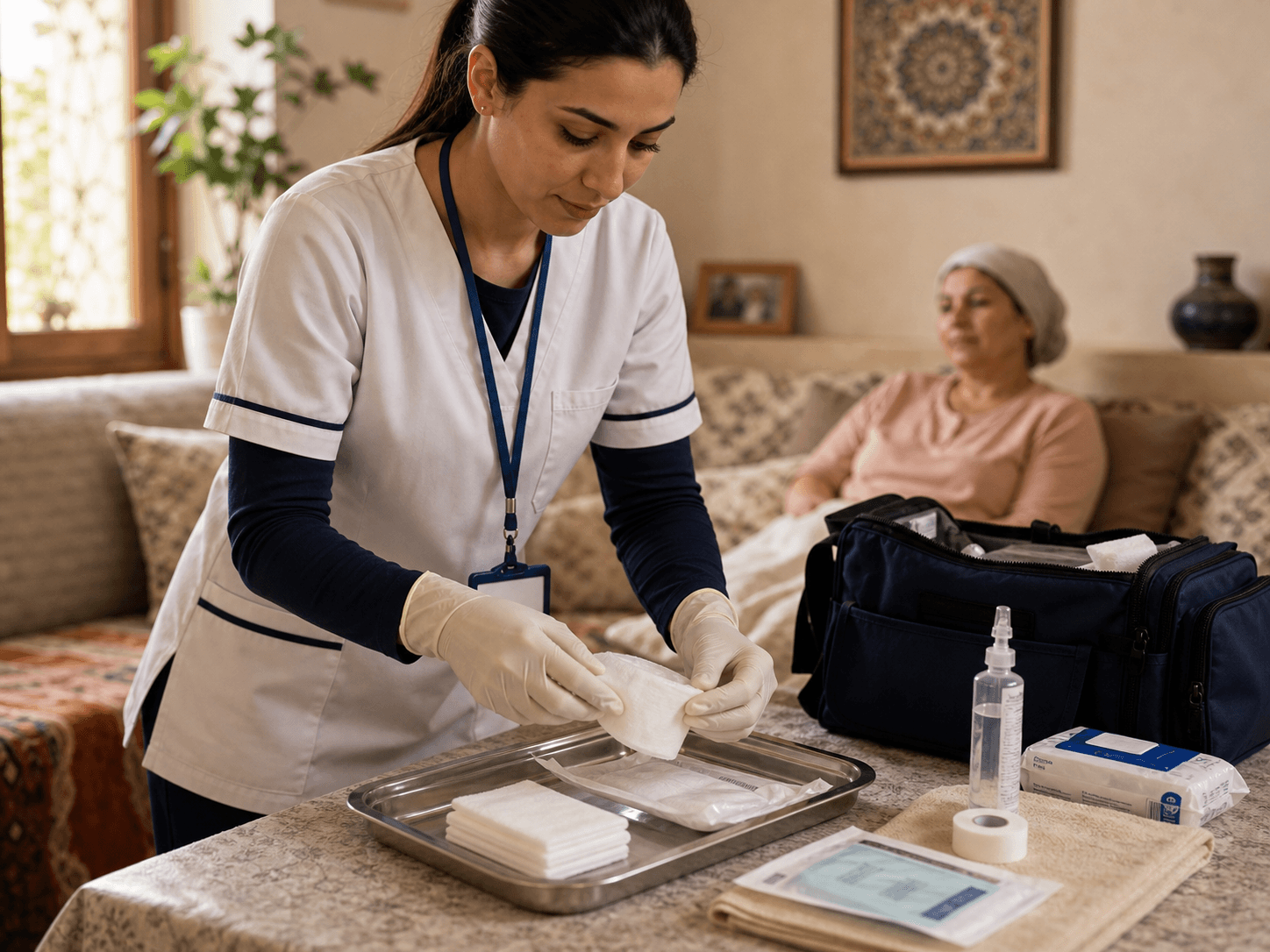
The process is simple, quick, and safe. After checking the prescription, the patient's identity, and their vaccination record, the state-registered nurse checks the vaccine (integrity, expiry date, storage), prepares the sterile equipment, and gives the injection under rigorous aseptic conditions. The patient is then observed for a few minutes to detect any immediate reaction. Traceability is ensured: the name of the vaccine, its batch number, and the date are noted in the vaccination record, a valuable document to keep. The nurse explains to the person and their family the monitoring of any effects and what to do. The whole visit takes only a few minutes, monitoring included, in the comfort of home.
Prescription and the cold chain
Two requirements frame home vaccination: the prescription and storage. A vaccine requires a medical prescription, which guides the choice of product and the indication. Strict respect for the cold chain is imperative: most vaccines are stored between 2 and 8 °C and lose their effectiveness if exposed to heat. The vaccine may be dispensed at a pharmacy on prescription and then given at home, or brought in a refrigerated container according to the arrangement agreed. An expired, accidentally frozen, or poorly stored vaccine is never used, as it would be ineffective or even risky. If the vaccine is already at your home, keep it in the refrigerator (never in the freezer or in the door) until the nurse's visit.
Who it is particularly useful for
Home vaccination is of service to many profiles. It is valuable for seniors, the priority targets of vaccines against seasonal flu and pneumococcus, and for people with reduced mobility or who are immunocompromised, for whom a journey and a waiting room present a risk. Infants and young children can follow part of their vaccination schedule in the reassuring setting of home, with their parents. People with chronic illnesses (diabetes, heart or respiratory conditions), who are more exposed to infectious complications, benefit particularly. Travellers needing certain vaccines before departure and working people with a busy schedule also find a time saving in it. In every case, the home injection limits exposure to the germs of waiting rooms.
Beyond vaccines: home injections
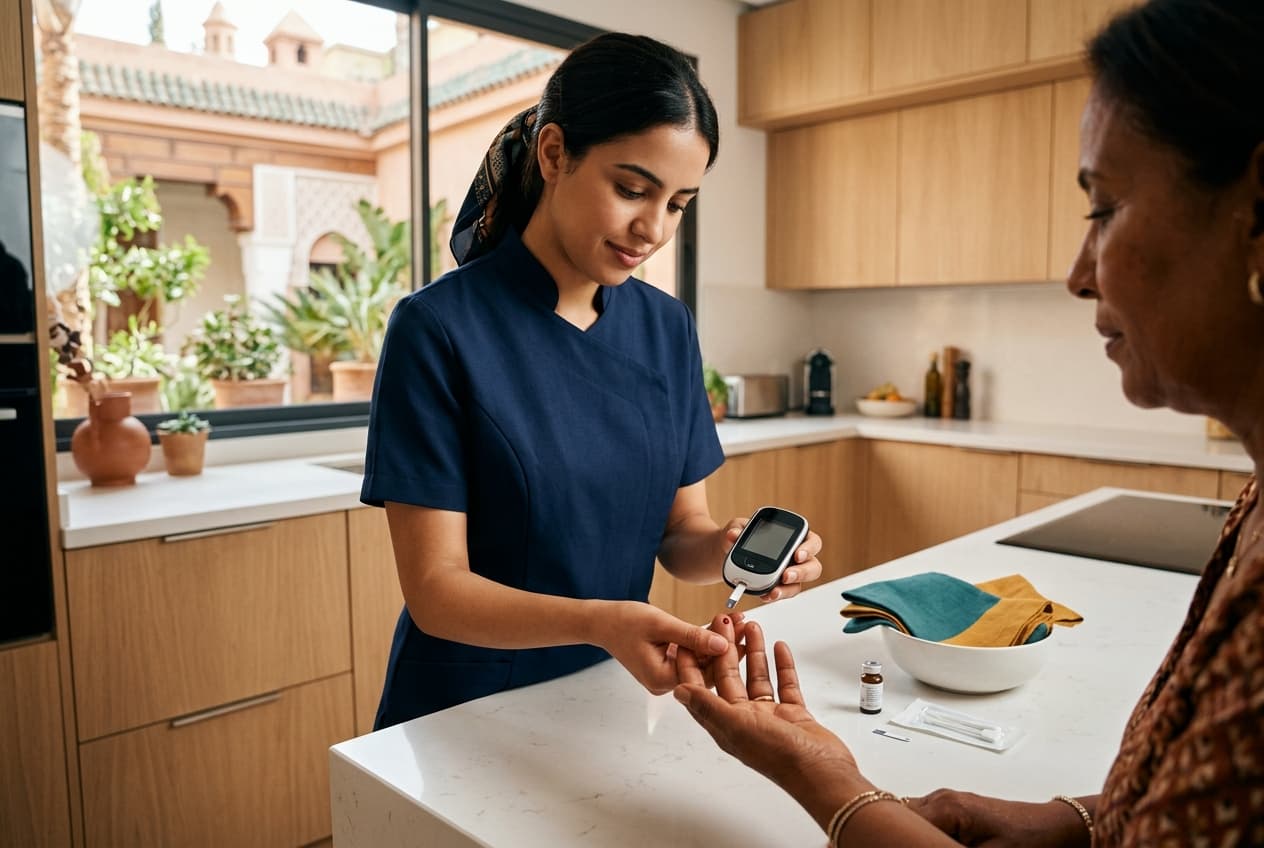
The service is not limited to vaccines. On prescription, the state-registered nurse carries out many injections at home: subcutaneous anticoagulants (often after surgery or for a venous condition), injectable maintenance treatments, vitamin B12, certain hormone treatments, or prescribed intramuscular injections. For a daily treatment over several weeks, the regular visit of a nurse guarantees the correct technique, the rotation of injection sites, and the monitoring of effects. It is a comfortable and safe alternative to daily trips to a surgery, particularly appreciated by elderly people and convalescent patients. As with vaccines, these procedures are the exclusive remit of qualified staff and are carried out on prescription, with traceability at each visit.
Safety and monitoring of effects
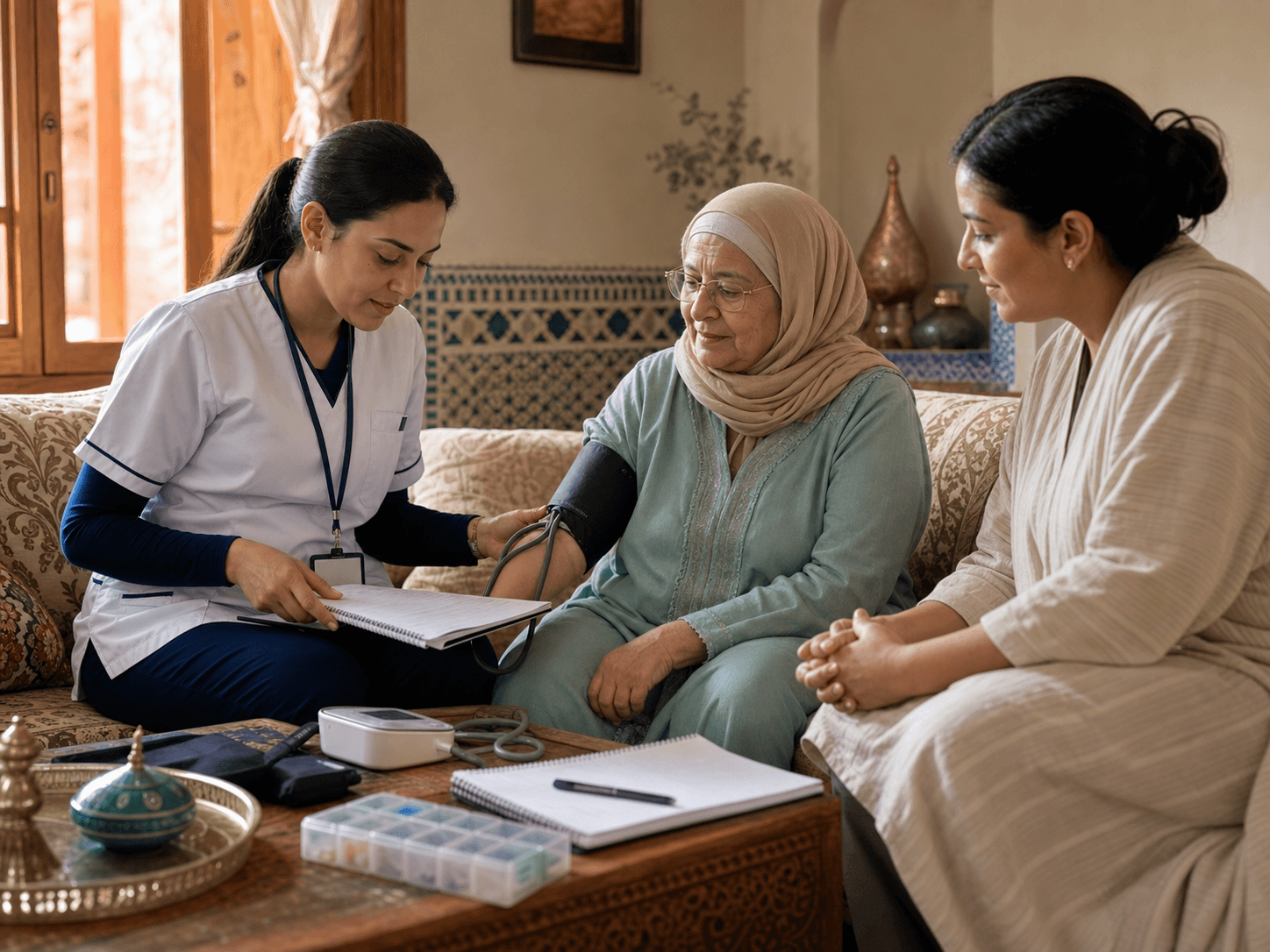
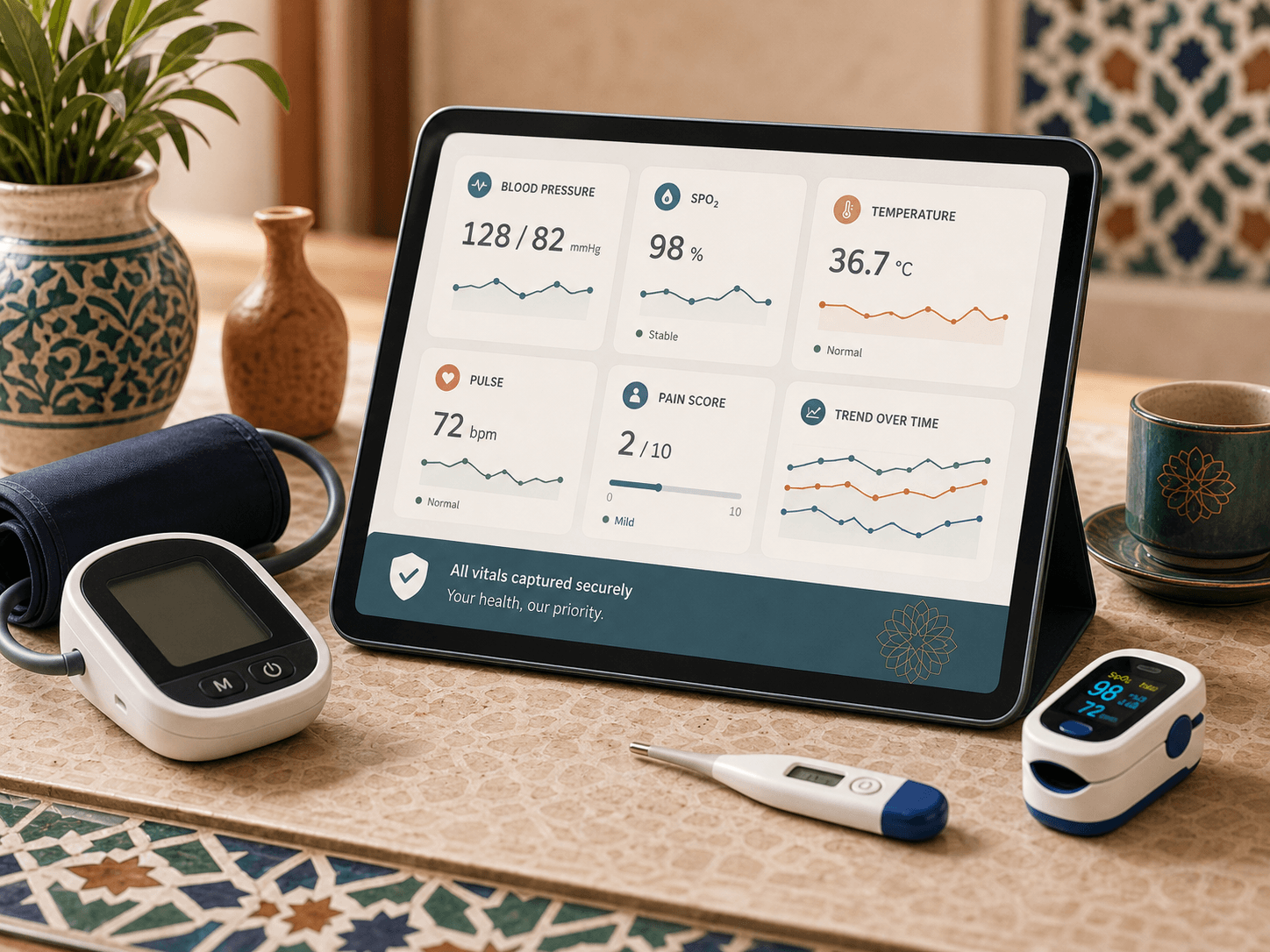
Patient safety is at the centre of the approach. After the injection, mild effects are frequent and not serious: pain or redness at the injection site, slight fever, passing fatigue, aches. The nurse explains what to do (rest, hydration, an antipyretic if needed on medical advice) and the signs that should prompt a consultation. In the event of a more serious immediate reaction, fortunately rare, the first emergency actions are taken and, if necessary, the SAMU (141) or Civil Protection (150) is alerted without delay. It is precisely for this monitoring that the injection must be carried out by a state-registered professional, able to react. The observation period after the procedure is an integral part of the care.
Booking and preparing
Preparing for the appointment makes for a smooth vaccination. To book, state the prescribed vaccine or treatment, the patient's age, and your neighbourhood. Prepare the prescription, the vaccination record (or child-health record for a child) and, where applicable, the vaccine kept in the refrigerator. Report any history of allergy, a pregnancy, an immunosuppressive treatment, or any health particularity. The slot is set according to your availability, including for boosters and multi-dose vaccination schedules, which we can plan in advance so as not to forget them. Dress the patient so that the arm or injection area can be easily exposed. After the visit, keep the record up to date: it will be requested for boosters and certain formalities.