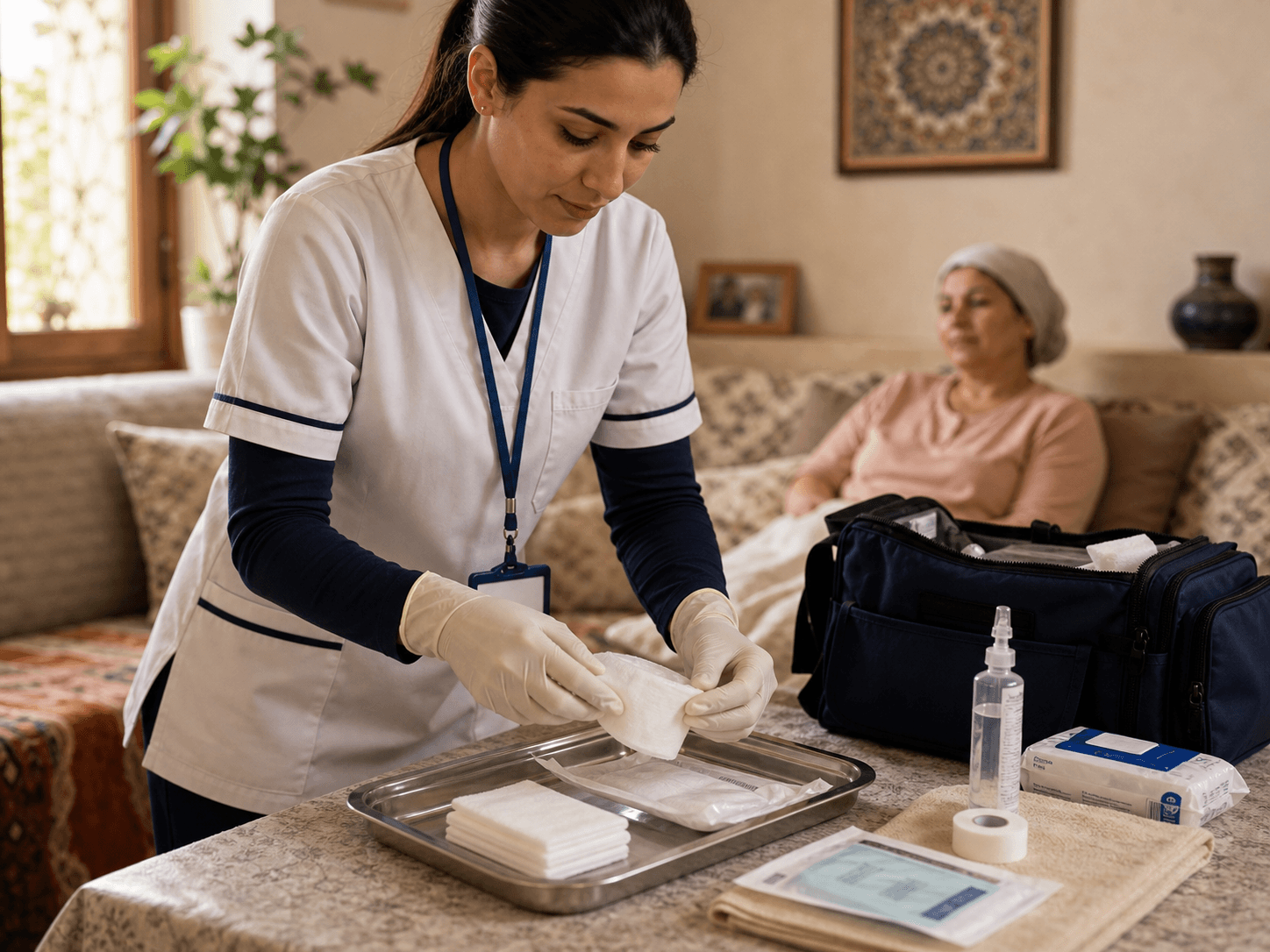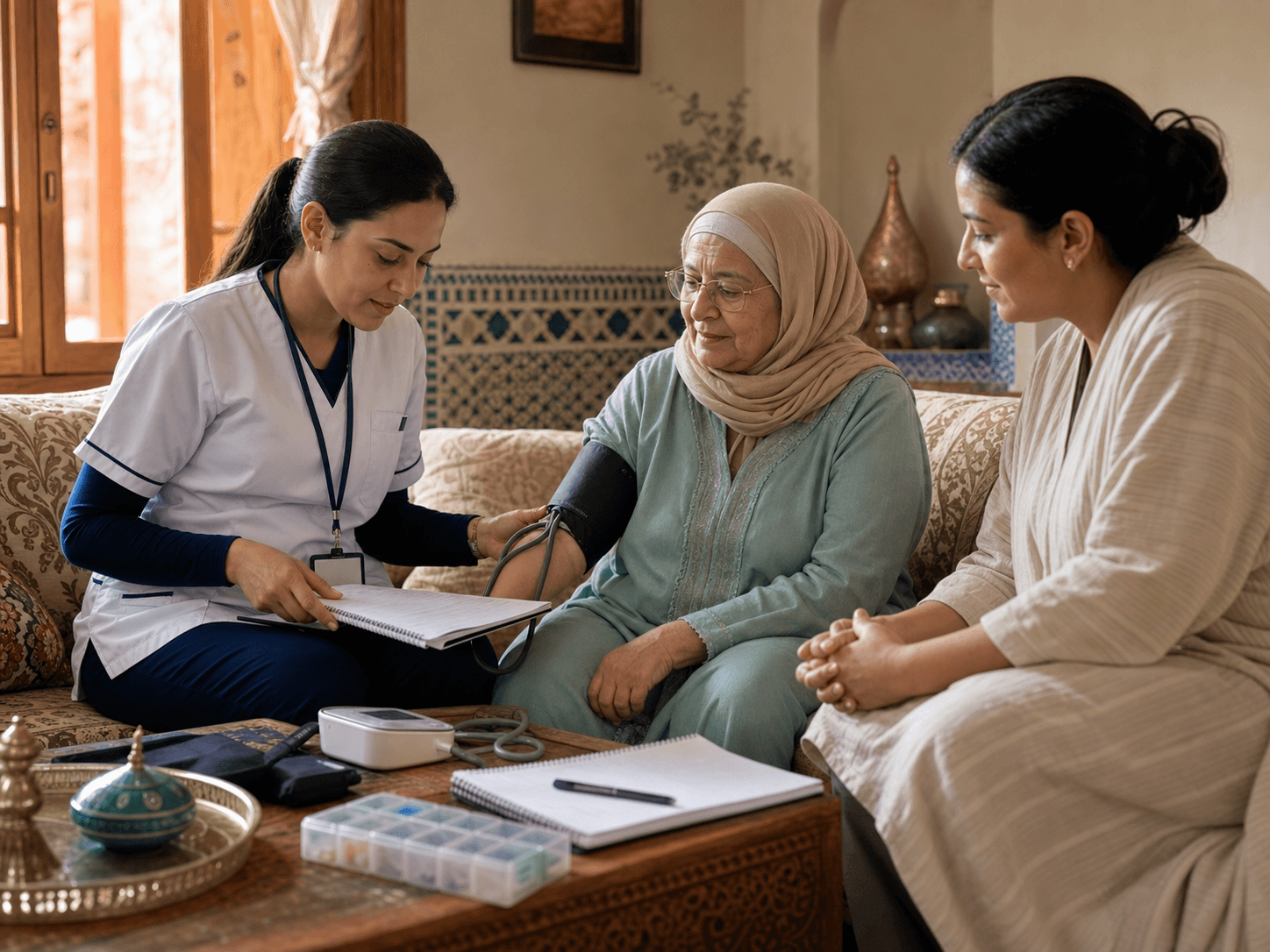
Diabetes affects more than 2.7 million Moroccans according to the Ministry of Health. Regular home nursing visits allow capillary blood glucose monitoring, insulin dose administration and adjustment, foot inspection to prevent ulcers, and patient education in self-management. SOS Nursing sends a state-certified nurse to your home in Marrakech for personalised support, in coordination with your attending physician and endocrinologist.
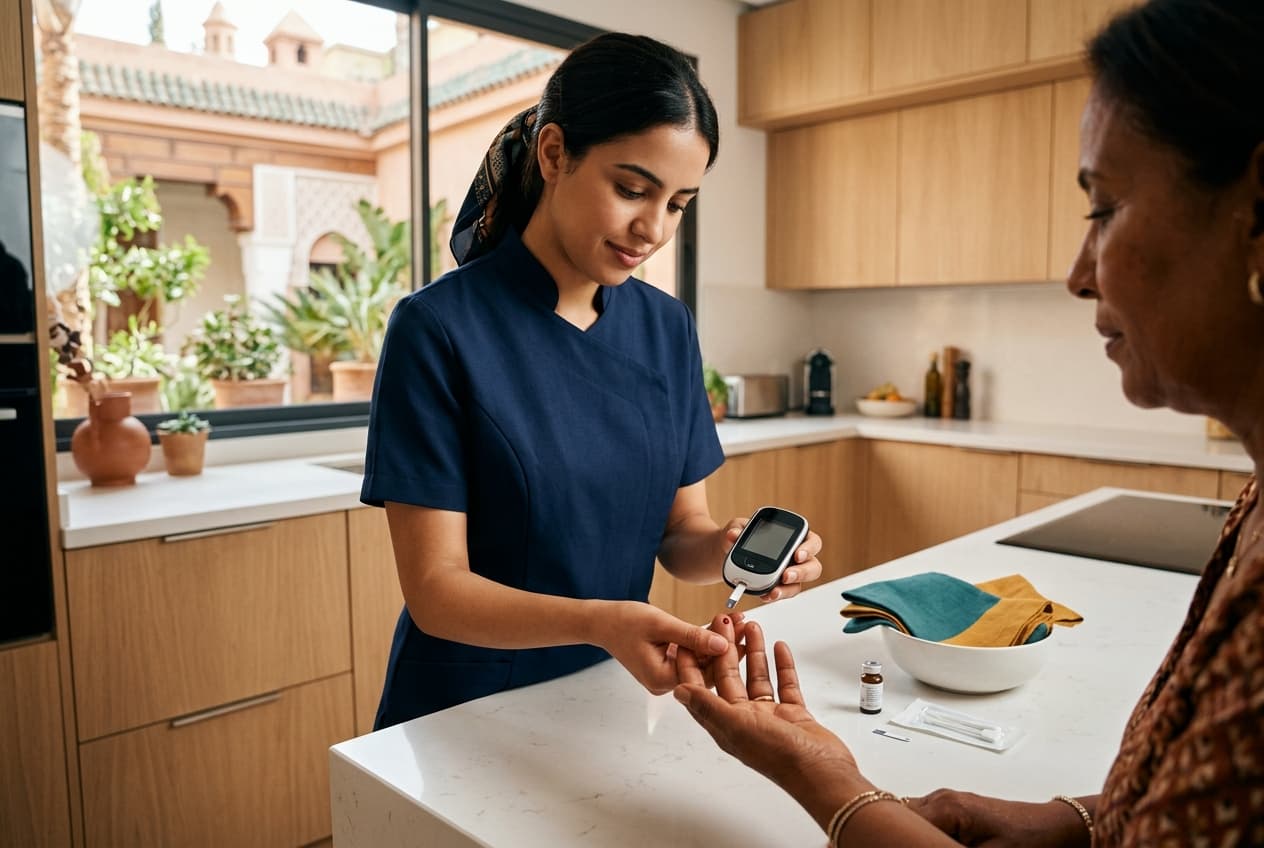
The home nurse performs a capillary blood glucose test using a certified glucose meter.
Capillary blood glucose monitoring: protocol and frequency
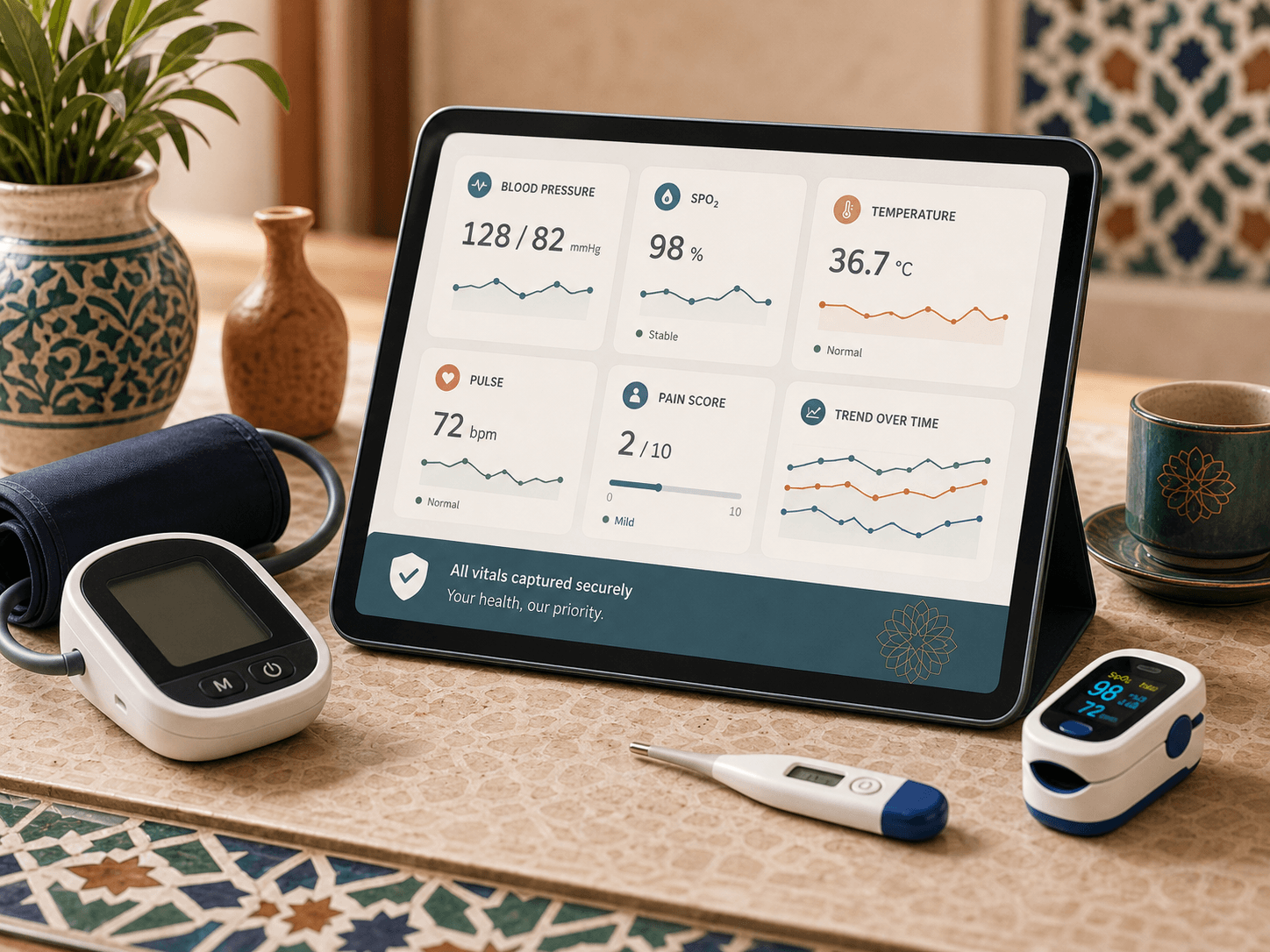
The home nurse performs a capillary blood glucose test using a certified glucose meter. For type 2 diabetes managed with oral antidiabetics, two to three readings per week are usually sufficient. For type 1 diabetes or insulin-dependent patients, four to six daily readings are recommended: fasting, before main meals and at bedtime. Each result is recorded in the monitoring logbook and transmitted to the doctor via our secure platform.
Insulin administration and dose adjustment
Insulin injection requires precise technique: rotation of injection sites (abdomen, thigh, arm), injection angle adapted to body fat, and proper timing relative to meals. The nurse checks insulin pens, verifies expiry dates, trains the patient in self-injection and reports any anomalies (lipodystrophies, recurrent hypoglycaemia) to the prescriber for dose adjustment.
Foot care and ulcer prevention
The diabetic foot is the leading cause of non-traumatic amputation in Morocco. The nurse inspects the feet at every visit: monofilament test to assess neuropathy, skin examination (cracks, fungal infections, calluses), and checking colour and temperature. They provide appropriate foot care and advise on footwear, skin hydration and daily prevention habits.
Therapeutic education and self-management
Therapeutic patient education (TPE) is a cornerstone of diabetes care. The nurse teaches glucose meter reading, recognition of hypoglycaemia and hyperglycaemia signs, dietary management (glycaemic index, portion sizes) and the importance of regular physical activity. This empowerment reduces hospitalisations and improves daily quality of life.
Medical coordination and reimbursement
Each visit generates a report sent to the attending physician. Home nursing care for diabetes is partially reimbursed by AMO-CNSS (mandatory scheme) and AMO-ANAM (self-employed scheme) upon medical prescription. SOS Nursing provides the detailed invoices required for the reimbursement file. A supplementary mutual fund may cover the remaining balance.