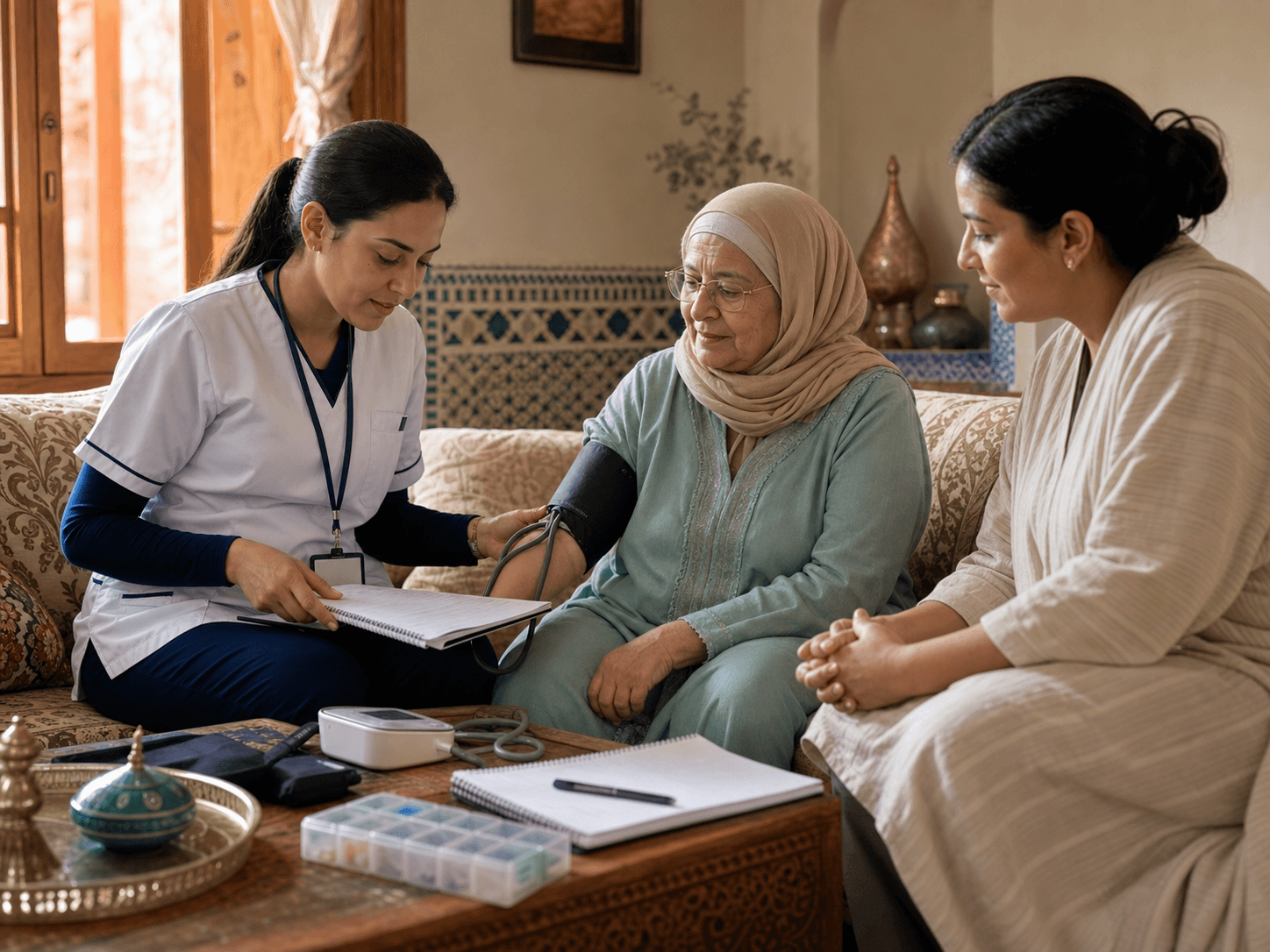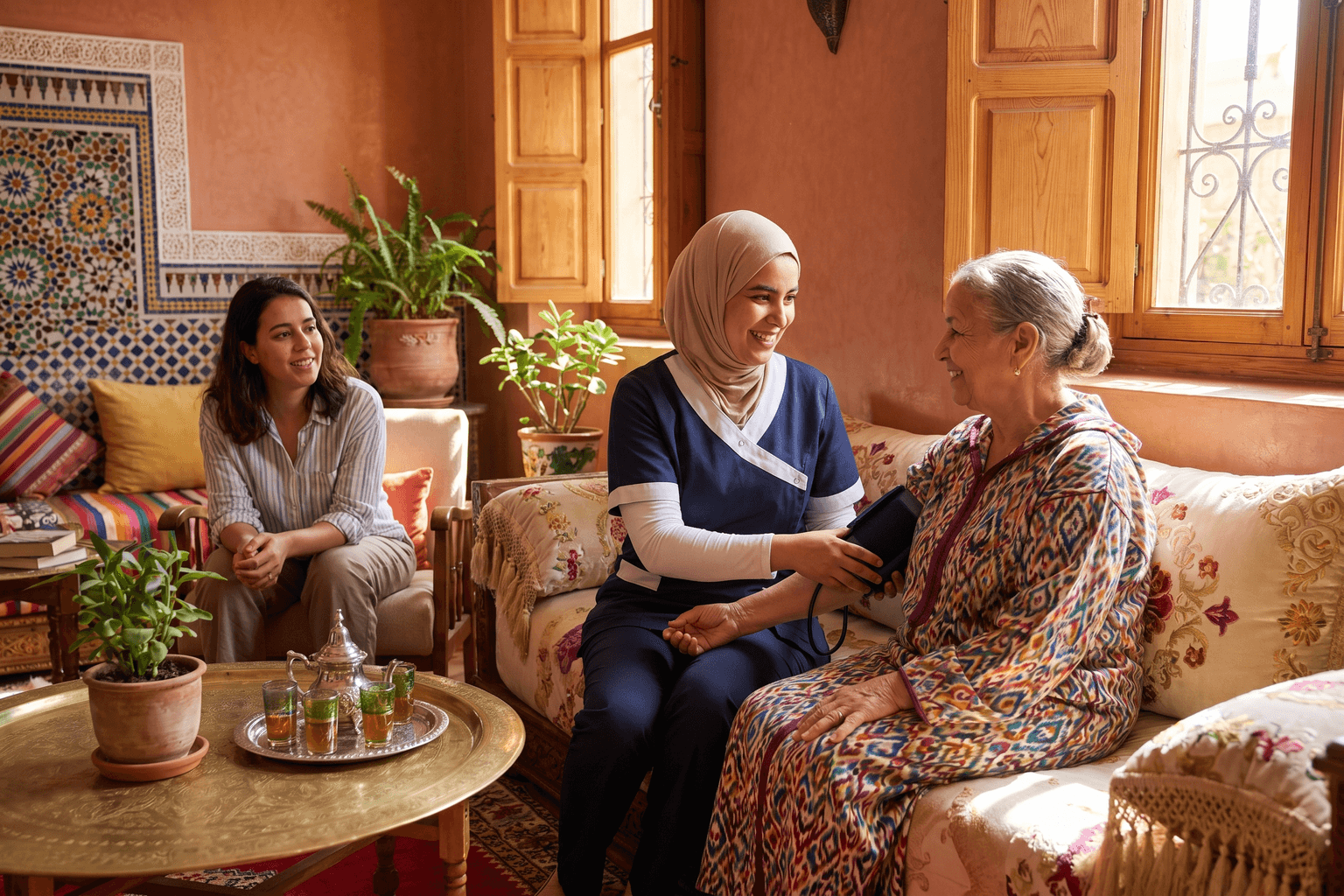
Leaving the clinic does not mean care ends. The first days after surgery are critical: wound healing, pain control, and complication prevention all hinge on this period. In Marrakech, SOS Nursing bridges the gap between clinic and home with salaried state-certified nurses trained in post-operative follow-up and coordinated with your surgeon.
Returning home reassures the patient, reduces the risk of hospital-acquired infections, and promotes better sleep — two factors that accelerate healing.
Why recover at home after surgery
Returning home reassures the patient, reduces the risk of hospital-acquired infections, and promotes better sleep — two factors that accelerate healing. But this transition must be supported. A poorly prepared discharge often leads to avoidable re-hospitalisation: a neglected dressing, inadequately managed pain, or an infection caught too late. A home nurse ensures continuity of the care prescribed by the surgeon, monitors the wound, and raises the alarm at the first sign of deviation. In Marrakech, this support is invaluable for families who cannot stay at the clinic, and for patients who travelled from other cities for their procedure.
Preparing for the return home
Everything depends on preparation before discharge. Collect the operative report, the full prescription, the wound-care protocol, and the scheduled date for suture or staple removal. At home, prepare a clean, well-lit space for care, a basic first-aid kit, and a reliable thermometer. A SOS Nursing coordinator contacts you the day before to plan the first visit — ideally within twenty-four hours of discharge. The nurse checks the prescription, reviews the available supplies, and arranges delivery of any missing consumables if needed. This preparation prevents gaps in care over the first weekend, a period when many complications arise due to lack of follow-up.
Dressings and wound healing
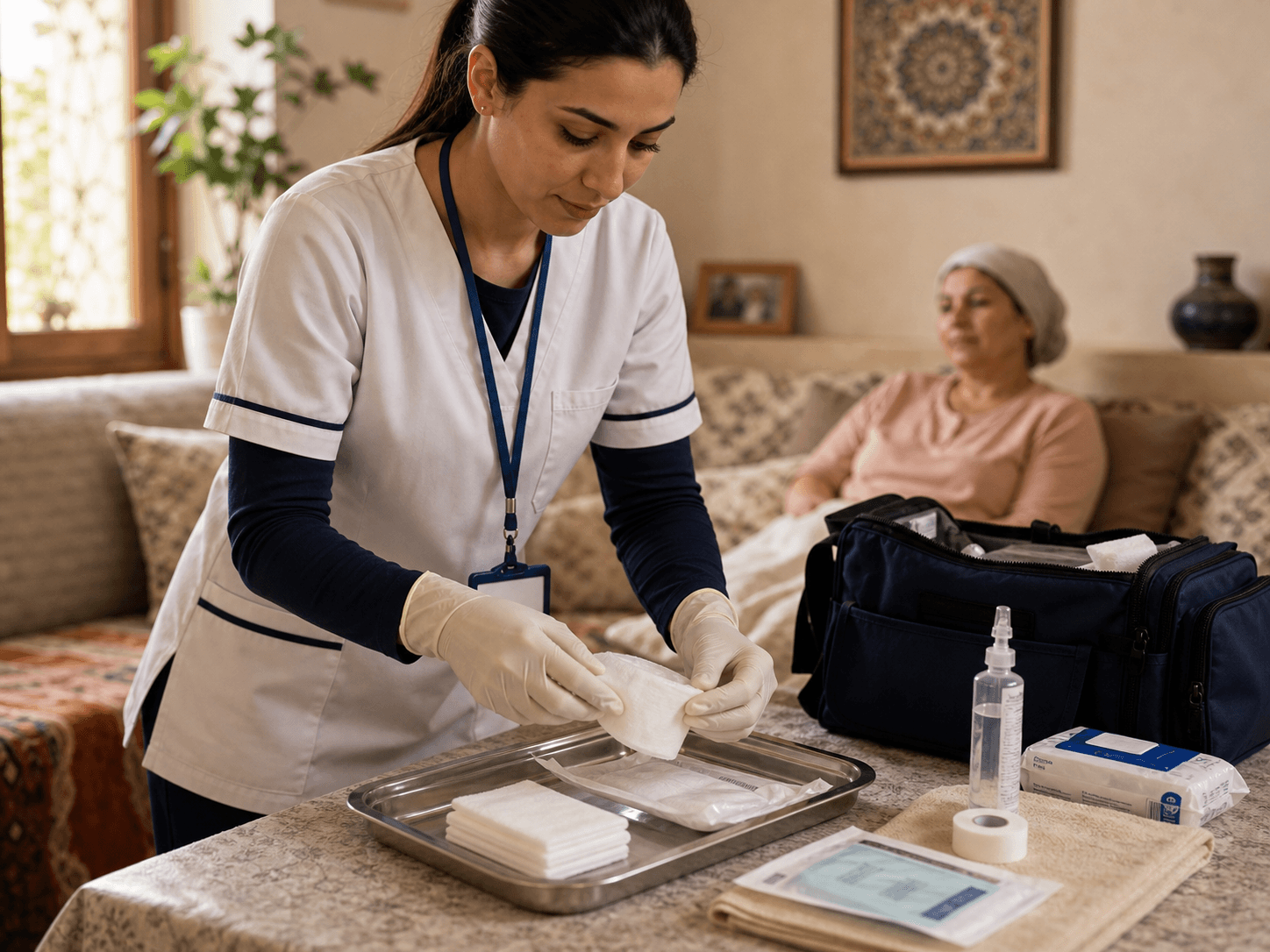
Wound care is at the heart of post-operative follow-up. The nurse performs sterile dressings according to the surgeon's protocol, cleans the wound, inspects the wound edges, and adjusts the frequency of dressing changes. A well-healing scar is dry, without spreading redness or purulent discharge. Conversely, a wound that feels warm, is painful, weeps, or begins to reopen is a warning sign. The nurse documents each visit with progress photographs shared with the family and the physician, allowing objective assessment of healing over time. Suture or staple removal is also performed at home on the prescribed date, sparing the patient unnecessary travel.
Managing pain after surgery
Well-controlled pain is not a luxury — it enables early mobilisation, deep breathing, and therefore the prevention of complications. The nurse administers prescribed pain relief, rates pain on a simple scale at each visit, and alerts the physician if pain resists treatment. The nurse also explains how to space doses throughout the day to avoid pain peaks, particularly before personal care or movement. No dose adjustment is made without medical advice. Pain that suddenly increases after having decreased may signal a complication and warrants prompt contact with the care team.
Preventing common complications
Three complications dominate the post-surgical period: wound infection, deep vein thrombosis (DVT), and digestive problems linked to immobility and pain medication. The nurse monitors temperature, the appearance of the scar, and any sign of a red, warm, or tender calf, and encourages appropriate early mobilisation. DVT prevention relies on gradual getting-up, compression stockings when prescribed, and sometimes anticoagulant injections administered at home. The nurse also monitors hydration and bowel function. Caught early, these signs are straightforward to treat; ignored, they frequently result in re-hospitalisation.
Injections, drains, and catheters at home
Many technical procedures can be performed safely at home by a state-certified nurse: subcutaneous anticoagulant injections, antibiotic infusions, monitoring and removal of Redon drains, urinary catheter care, and stoma care. Every procedure follows a strict aseptic protocol and the surgeon's prescription. The nurse also trains the family in simple monitoring tasks to carry out between visits. Having a professional at home avoids tiring and risky journeys for a recently operated patient, while ensuring these delicate procedures are performed to the highest standard.
Nutrition, mobility, and regaining independence
Recovery depends on both diet and movement. A diet rich in protein, vitamin C, and zinc supports healing, while adequate hydration prevents constipation. The nurse advises the family on meals suited to the type of procedure and to Marrakech's climate, where heat increases fluid requirements. In terms of mobility, guided early rising and a few daily steps reduce complications and restore confidence. Depending on the procedure, home rehabilitation can complement this follow-up to rebuild strength and joint range of motion, in direct continuation of post-operative care.
Coordination with your surgeon
Good post-operative follow-up is never carried out in isolation. SOS Nursing transmits regular reports to your surgeon: wound progress, pain levels, vital signs, and treatment tolerance. When in doubt, the nurse seeks an opinion before the next consultation, making it possible to anticipate problems rather than react to them. This coordination is facilitated by our model: our nurses are salaried staff trained to consistent protocols, which ensures a uniformly high quality of communication. The family is kept informed at every stage and always knows exactly who to contact with any question.
When to worry and who to call
Certain signs require prompt contact with the care team: fever above 38.5 °C, a wound that reopens, spreading redness, purulent and foul-smelling discharge, sudden calf pain, or unusual shortness of breath. In the case of heavy bleeding, chest pain, or loss of consciousness, this is a life-threatening emergency: contact emergency services immediately. For an unplanned transfer to the clinic, SOS Nursing has a private ambulance service that your coordinator can reach directly. Keeping these warning signs in mind — and your coordinator's number close at hand — allows you to react quickly and calmly.