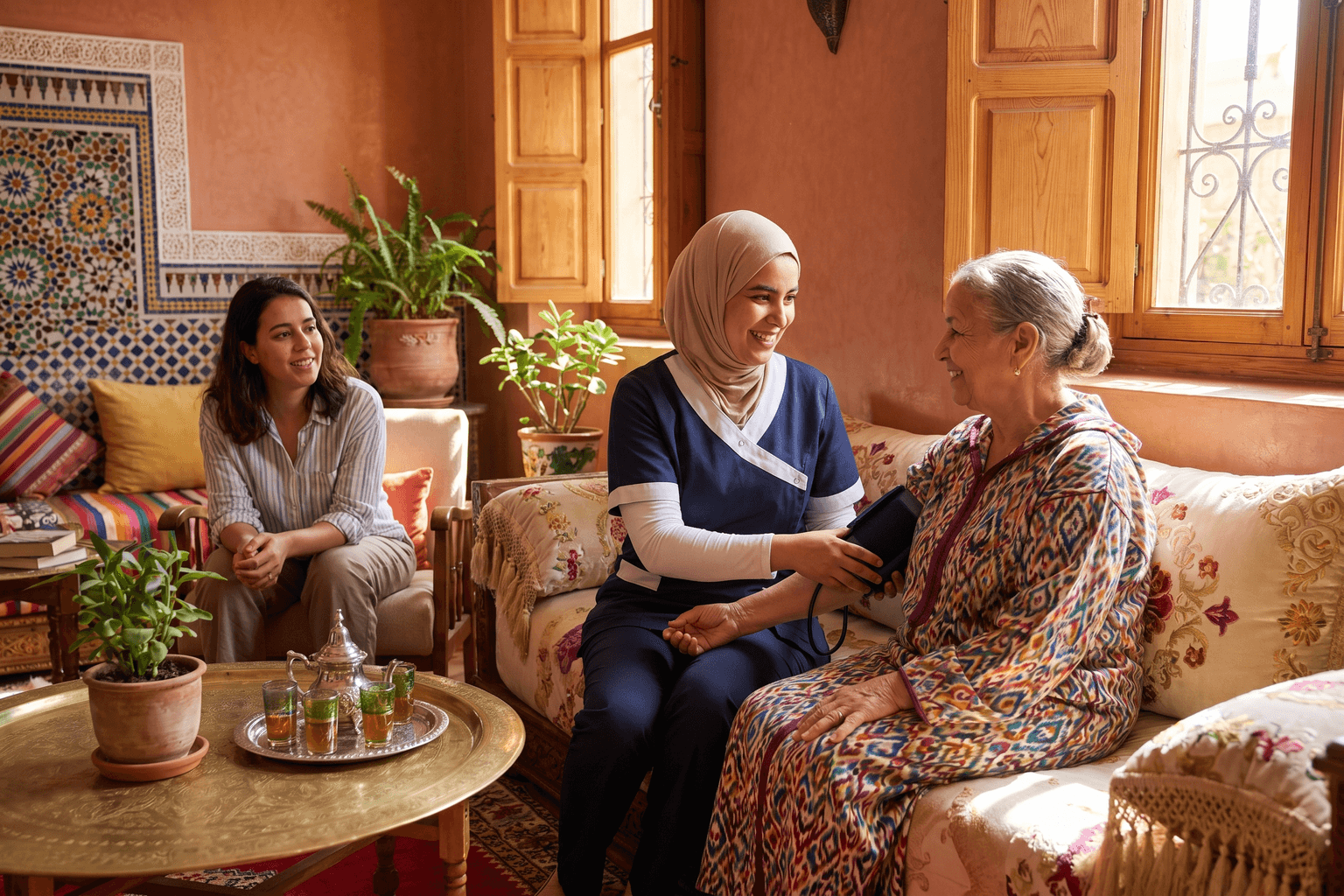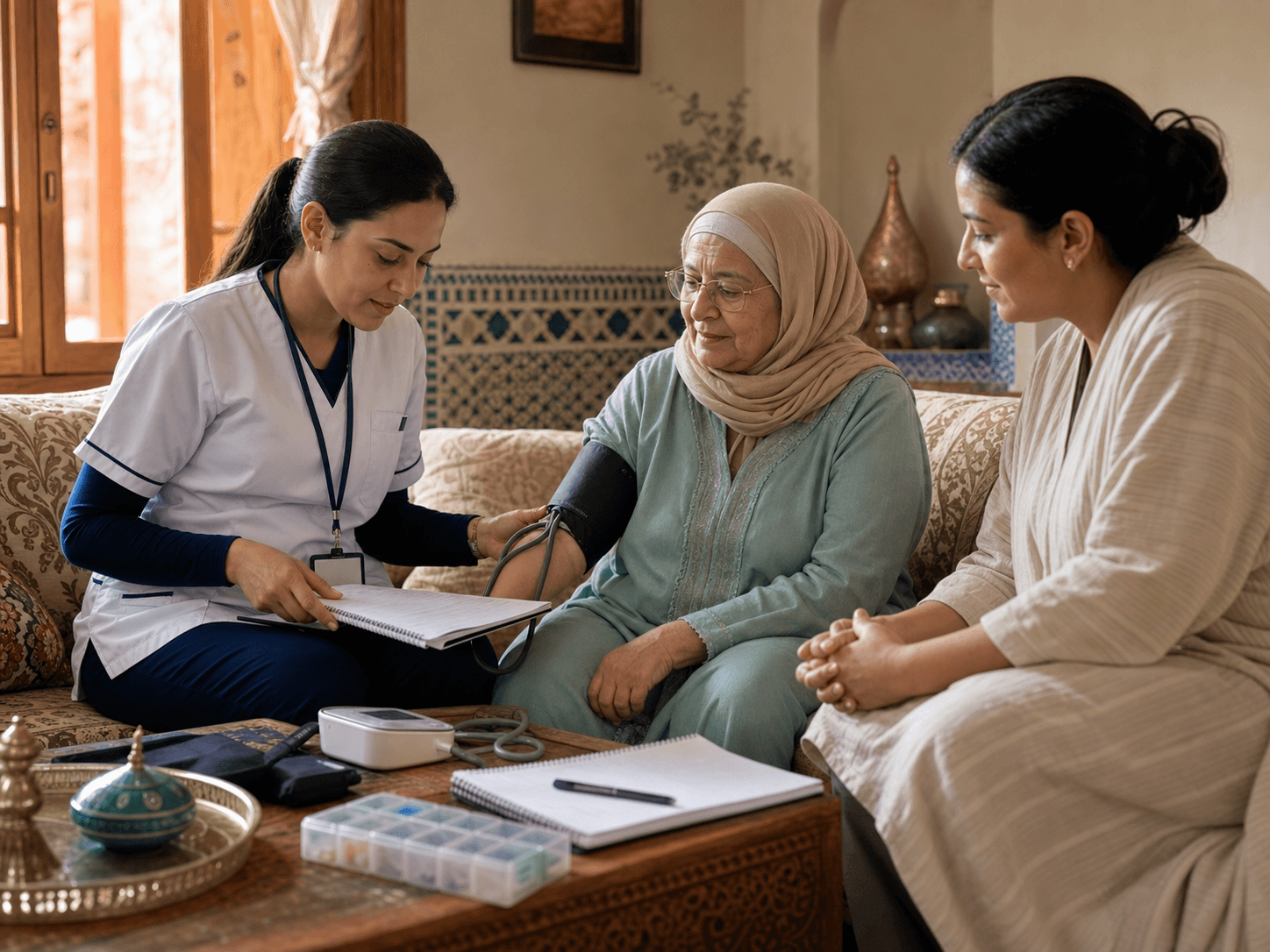
Every summer, Marrakech faces intense heatwaves. Elderly people, often isolated, are particularly exposed to dehydration and heatstroke. SOS Nursing mobilises its nurses for preventive home visits.
Marrakech sits at the edge of the Haouz plain, where July and August regularly push past 42 to 45 °C, with nights that often stay above 25 °C.
Why Marrakech summers are especially dangerous for seniors
Marrakech sits at the edge of the Haouz plain, where July and August regularly push past 42 to 45 °C, with nights that often stay above 25 °C. That lack of overnight cooling is what makes a heatwave so dangerous: the body never gets a chance to recover. Older adults are the most exposed because the natural thirst reflex weakens with age, kidney function declines, and many seniors take medications (diuretics, blood-pressure pills, certain antidepressants) that increase fluid loss or reduce the body's ability to regulate temperature. Add the reality that many elderly residents in the medina and surrounding douars live alone in homes without air conditioning, and you have the exact conditions that lead to hospital admissions every summer.
How dehydration takes hold within hours
Dehydration in an elderly person is rarely dramatic at first, which is precisely why it is so dangerous. It can set in within a few hours on a hot afternoon, long before anyone notices. The early signs are subtle: a dry mouth and cracked lips, darker and less frequent urine, mild fatigue or irritability, and a slight unsteadiness when standing up. As it progresses, blood pressure drops, the pulse quickens, the skin loses its elasticity, and confusion appears. Left unchecked, dehydration tips into heatstroke, a medical emergency in which the body's core temperature climbs above 40 °C and vital organs begin to fail. In frail seniors this cascade can become life-threatening in less than a day.
Warning signs of heatstroke you can check at home
Families are the first line of defence, so it helps to know exactly what to watch for. Call for help immediately if you notice hot, red and dry skin (the person has often stopped sweating), a body temperature above 39 °C, severe headache, nausea or vomiting, unusual confusion or drowsiness, a rapid weak pulse, or no urine for more than eight hours. A simple test at home: gently pinch the skin on the back of the hand; if it stays tented instead of springing back, dehydration is already significant. Any sudden change in alertness or behaviour in an elderly person during a heatwave should be treated as an emergency rather than waited out.
Daily prevention measures in the home
Most heat-related harm is preventable with simple, consistent habits. Encourage at least 1.5 litres of fluid a day, spread across small, regular sips rather than large amounts at once, and supplement water with soups, fruit and yoghurt. Close shutters and curtains during the hottest hours (roughly 11 a.m. to 6 p.m.) and open the home in the cool of early morning and late evening. Dress the person in loose, light cotton, use a misting spray or a damp cloth on the neck and wrists, and keep a fan moving the air. Avoid heavy meals and limit coffee and very sugary drinks, which worsen fluid loss. For bedridden patients, turn and refresh them frequently to prevent both overheating and pressure sores.
Adapting medication during extreme heat
Heat changes how the body handles many common treatments, so a medication review is one of the most valuable things a heatwave brings to light. Diuretics (water tablets) can deepen dehydration; blood-pressure medicines may cause dizziness and falls when fluid levels are already low; and insulin needs can shift with reduced appetite and activity. Some medicines, such as certain insulins and suppositories, also degrade if stored above 25 °C. The home nurse reviews the full medication list with the attending physician, checks how everything is stored, and flags any dose that may need temporary adjustment. No medication should ever be stopped or changed without the prescribing doctor's agreement.
How a home nurse supports you during a heatwave
During heatwave periods, SOS Nursing offers enhanced monitoring visits tailored to the most vulnerable patients. As a managed service, we recruit and employ our nurses directly, so the same trusted professional can follow your loved one day after day rather than a different stranger each visit. At each visit the nurse assesses general condition, measures blood pressure, pulse, temperature and hydration, inspects the skin, confirms that fluids are being taken, and adjusts the care plan in coordination with the attending physician. If any sign of deterioration appears, the nurse alerts the doctor and the family without delay. For the highest-risk patients, daily or twice-daily visits can be arranged, and a coordinator stays reachable for questions throughout the day.
When to seek emergency help
Prevention does not replace knowing when a situation has become urgent. If an elderly person shows signs of heatstroke (confusion, hot dry skin, a temperature above 39 °C, fainting or seizures), move them to the coolest room, loosen their clothing, cool the skin with damp cloths and a fan, and seek emergency medical help straight away by calling the public emergency services (SAMU 141 or Civil Protection 150). If you are an SOS Nursing client, call your coordinator in parallel: we can guide you over the phone, dispatch a nurse where possible, and arrange a private ambulance transfer if needed. The goal is always to begin cooling the body before help arrives, because every minute counts in heatstroke.