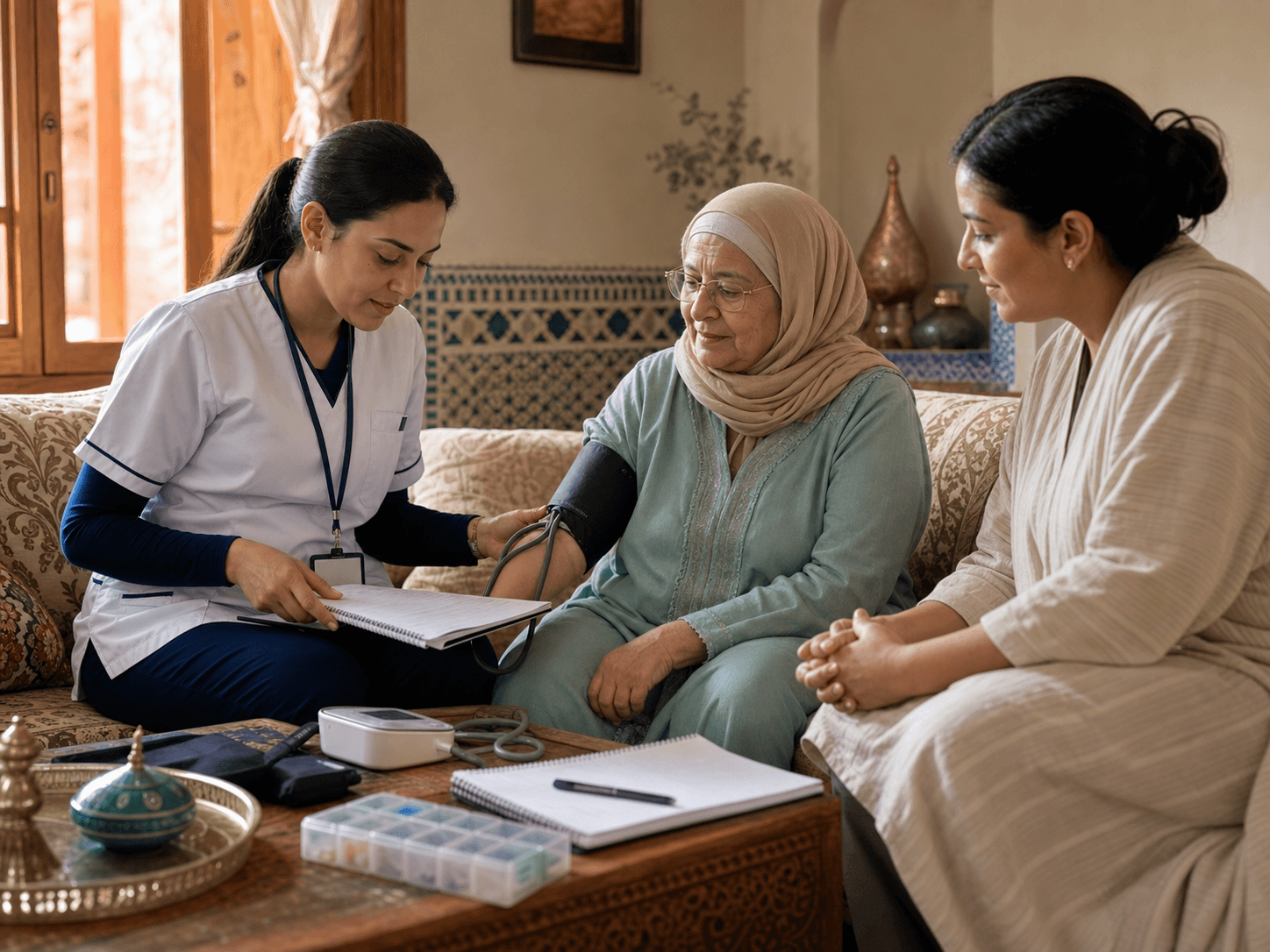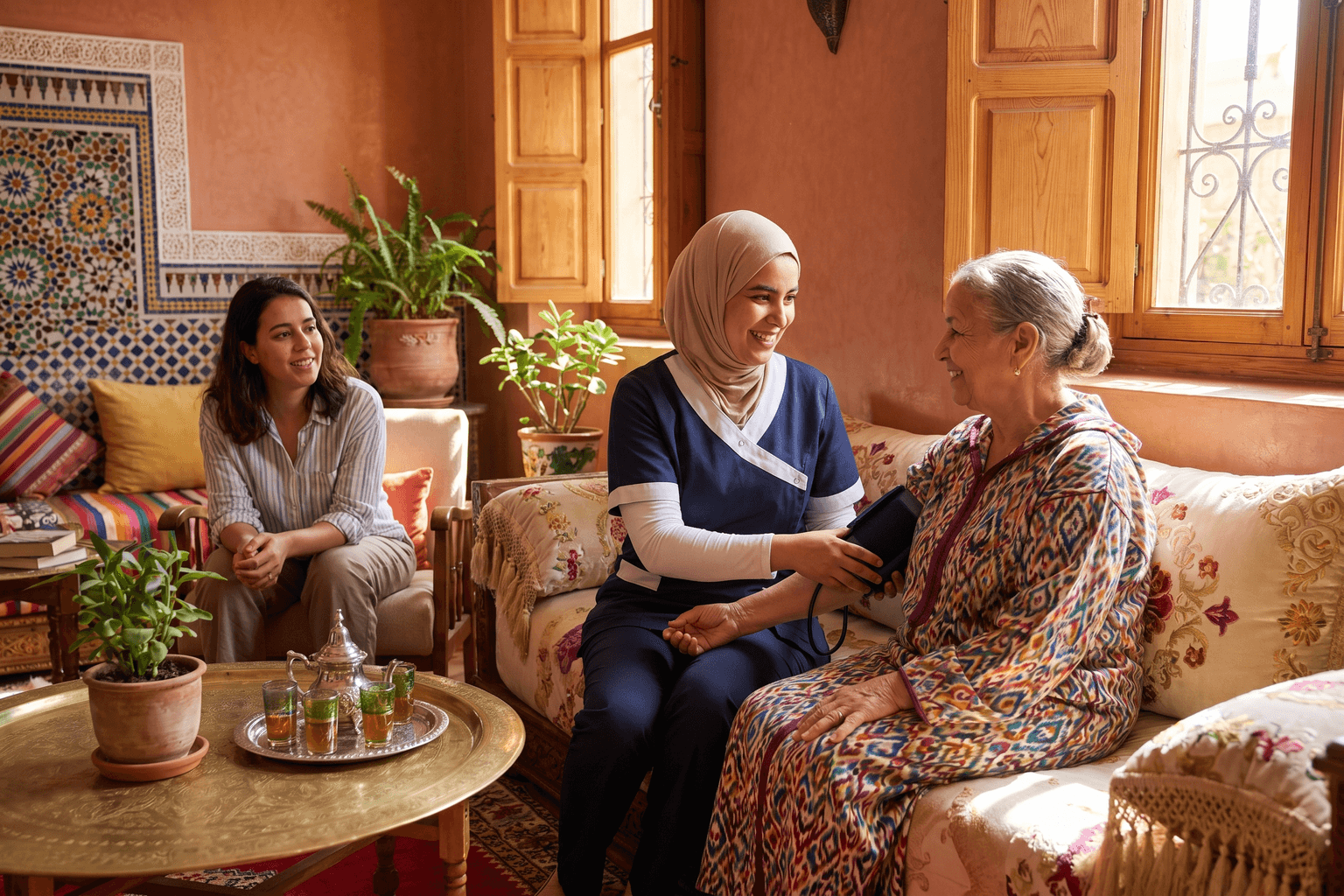
Ramadan profoundly changes patients' daily routines: shifted meal times, prolonged fasting, medication schedules to reorganise. SOS Nursing adapts its protocols to support each patient safely.
Ramadan reshapes the rhythm of the whole household, and chronic patients feel it the most.
Why home care needs to change during Ramadan
Ramadan reshapes the rhythm of the whole household, and chronic patients feel it the most. Meals shift to before dawn (Suhoor) and after sunset (Iftar), sleep becomes fragmented, daytime activity slows, and the body goes many hours without food or fluid in the Marrakech heat. For someone managing diabetes, heart failure, kidney disease or a complex medication list, these changes are not just lifestyle adjustments; they directly affect how treatments work and how safe fasting really is. The role of home care during the holy month is to honour the patient's wish to observe Ramadan wherever it is medically safe, while putting clear safeguards in place so that faith and health support each other rather than collide.
Reorganising the medication schedule around Suhoor and Iftar
Many medicines are prescribed once, twice or three times a day, often with food, which is straightforward outside Ramadan but needs rethinking when eating windows shrink to two points in the day. The home nurse works with the attending physician to map each medication onto the new schedule: some twice-daily drugs can be moved to Suhoor and Iftar, certain long-acting formulations can replace daytime doses, and timing relative to meals is preserved so absorption and effectiveness are not compromised. Treatments that genuinely must be taken during the day are discussed openly with the patient and doctor, because health takes precedence and Islamic guidance itself exempts those for whom fasting would be harmful. Nothing is changed without the prescriber's agreement, and the revised plan is written down clearly for the family.
Keeping diabetic patients safe while fasting
Fasting is one of the highest-risk situations for people with diabetes, and it cuts both ways. During the long daytime fast the danger is hypoglycaemia (a dangerous drop in blood sugar), while the rich, sugary meals at Iftar can send blood glucose sharply high. The home nurse performs regular capillary blood glucose checks at key moments, mid-afternoon, before Iftar and a few hours after, and adjusts insulin doses strictly according to the physician's instructions. Checking blood sugar with a finger-prick does not break the fast, so monitoring can continue safely. Patients are taught the warning signs of hypoglycaemia (shakiness, sweating, confusion, palpitations) and told clearly that they must break the fast immediately if these appear; this is both medically necessary and religiously permitted.
Hydration and nutrition between Iftar and Suhoor
The hours between sunset and dawn are when the body must recover everything it lost during the day, and how the patient eats and drinks in that window matters enormously, especially in Marrakech's heat. The nurse and coordinator offer practical guidance: rehydrate gradually with water rather than only sugary or caffeinated drinks, prioritise slow-release foods (whole grains, dates, vegetables, protein) over heavy fried dishes, and avoid going straight to bed on a very full stomach. For patients with heart failure or kidney disease, fluid intake may need to be balanced carefully rather than maximised, which is why individual advice from the care team is important. Good overnight hydration is the single most effective way to make the next day's fast safer.
Injections, infusions and what breaks the fast
A frequent source of worry is whether necessary care will invalidate the fast. According to the majority of contemporary religious opinions, intravenous infusions and injections that are not nutritional (such as insulin, anticoagulant injections, antibiotics or vaccines) do not break the fast, because they do not constitute eating or drinking. This means the home nurse can administer most prescribed treatments during the day without the patient having to choose between care and observance. Nutritional drips that replace food are treated differently and are usually given at night. When a patient is unsure, we encourage them to consult both their doctor and a trusted religious authority, and we schedule reversible treatments for after Iftar wherever that is clinically reasonable.
Flexible visit slots adapted to the Ramadan day
Standard daytime appointments rarely suit a household living on a Ramadan schedule, so SOS Nursing adapts its slots to the rhythm of the holy month. Visits can be arranged early in the morning before Suhoor, in the late afternoon as Iftar approaches, or later in the evening once the family has eaten and rested. Because we are a managed service that employs our nurses directly, we can plan these unusual hours reliably and keep the same nurse on a case for continuity. Emergencies remain covered around the clock, including throughout the night, so families never feel they have to wait until morning if something goes wrong after Iftar.
Who should think carefully before fasting
Islam exempts the sick from fasting, and for some patients fasting is genuinely not advisable. People with poorly controlled or type 1 diabetes, advanced kidney disease, those recovering from surgery, patients on treatments that must be taken with food at regular intervals, and the frail elderly at risk of dehydration should all have an honest conversation with their doctor before Ramadan begins. The home nurse helps frame this discussion compassionately, explaining that protecting one's health is itself a religious duty and that missed fasts can be made up later or compensated. The aim is never to discourage observance, but to ensure that each person fasts only where it is safe to do so.