It is not always easy to realise that an elderly parent needs help. Out of modesty or habit, seniors often minimise their difficulties. Here are the five warning signs that should alert you.
Decline in an ageing parent is rarely sudden.
Why the early signs are so easy to miss
Decline in an ageing parent is rarely sudden. It usually creeps in gradually, through small changes that are easy to explain away one at a time. A skipped meal becomes "they just weren't hungry"; a missed call becomes "they were probably napping". For families who live abroad or in another city, the gap between visits makes these shifts even harder to track, and a parent who looks fine on a short video call may be struggling in ways they would never admit. Seniors themselves often minimise their difficulties out of pride, fear of being a burden, or anxiety about losing their independence. Learning to recognise the warning signs early is what allows you to act before a crisis, such as a serious fall or a hospital admission, forces a rushed decision.
1. Unexplained weight loss
Significant or steady weight loss is one of the most reliable signals that something is wrong. It may simply mean your parent is finding it harder to shop, carry groceries home, stand and cook, or chew comfortably, so they quietly eat less and less. But it can also be the first visible sign of an undiagnosed condition, depression, dental problems, or a side effect of medication. Practical clues include a fridge that is increasingly empty or full of expired food, clothes that suddenly hang loose, and a loss of interest in meals they used to enjoy. A home visit can assess nutritional status objectively, help organise easier meals, and alert the physician if a medical cause needs investigating before the loss becomes dangerous.
2. Neglected personal hygiene
A parent who was always well-groomed but now appears in dirty or mismatched clothes, with body odour, unwashed hair or an untended beard, is telling you something important without words. Behind neglected hygiene there is almost always a practical or emotional cause: a fear of slipping in the bathroom, joint pain that makes washing difficult, fatigue, or early depression that drains the motivation for self-care. The bathroom is also the single most dangerous room in the house for falls. Respectful, professional bathing and personal-care assistance preserves your parent's dignity while making the daily routine safe again. This is non-clinical help with everyday living, delivered gently and without judgement, and it often restores both comfort and morale.
3. Forgotten or mismanaged medication
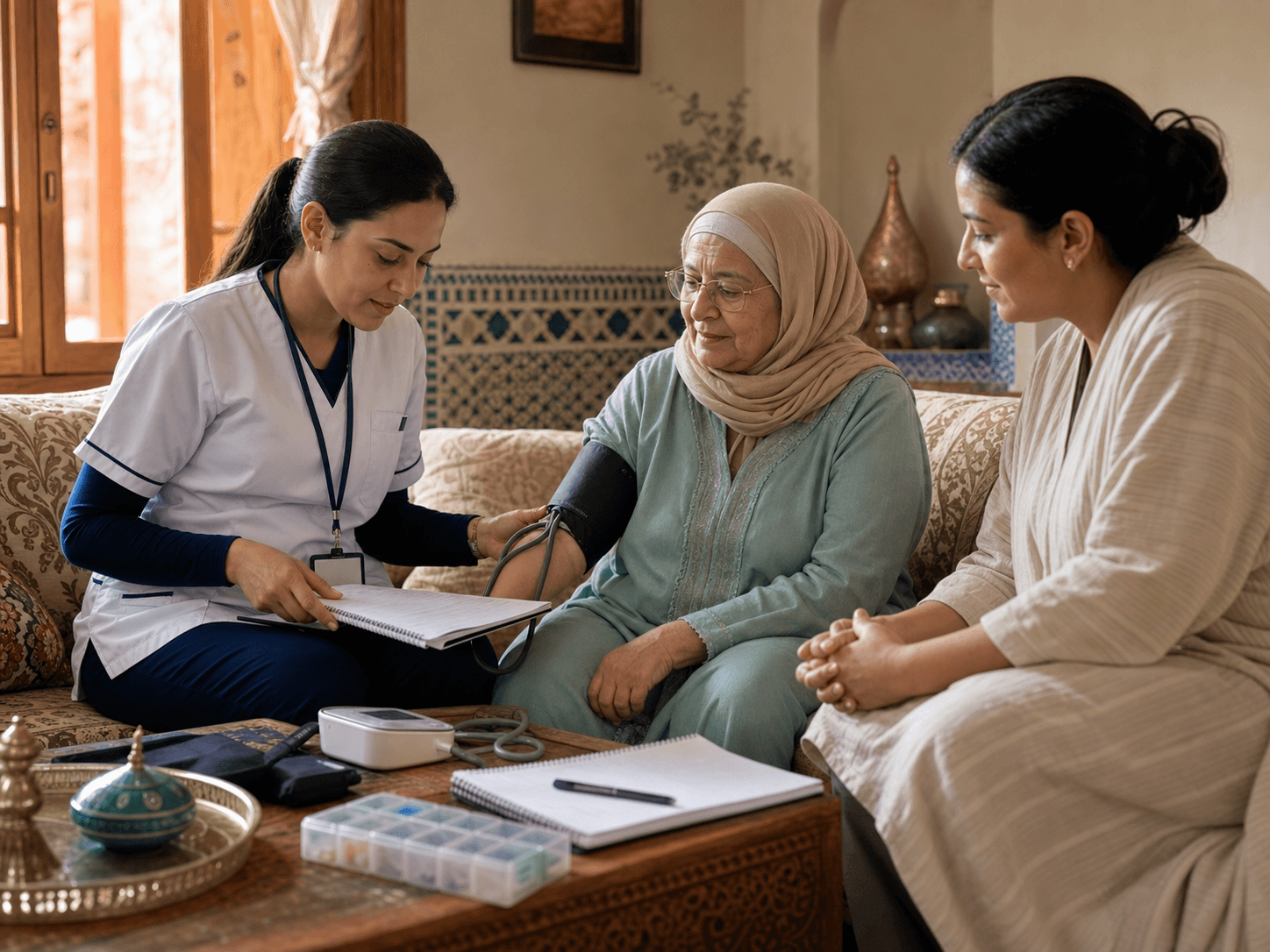
Medication errors are among the most common and most dangerous problems in older people living alone. The warning signs are easy to spot once you look: pill boxes still full at the end of the week, duplicate or expired packets, prescriptions left unrenewed at the pharmacy, or tablets found on the floor and in odd places. Mismanaging treatment for conditions like high blood pressure, diabetes or heart failure can lead directly to a hospital admission. A home nurse reviews the full medication list, sets up a clearly organised weekly pill box, and confirms that doses are actually being taken at the right times, coordinating with the prescribing doctor whenever something needs adjusting. For many families this single intervention brings enormous peace of mind.
4. Repeated falls or fear of falling
Falls are not a normal part of ageing; they are a red flag. Even a fall without a fracture marks a turning point, because it signals declining balance, muscle weakness or a medical problem, and it often plants a fear of falling that makes the person move less and grow weaker still. Watch for new bruises your parent cannot quite explain, furniture-cruising around the home, a reluctance to go out, or a new unsteadiness on the stairs. A home assessment looks at the modifiable risk factors, loose rugs, poor lighting, unsuitable footwear, clutter and missing grab rails, and puts practical prevention in place in coordination with the physician. Reducing fall risk is one of the most effective ways to protect a parent's independence.
5. Increasing social isolation
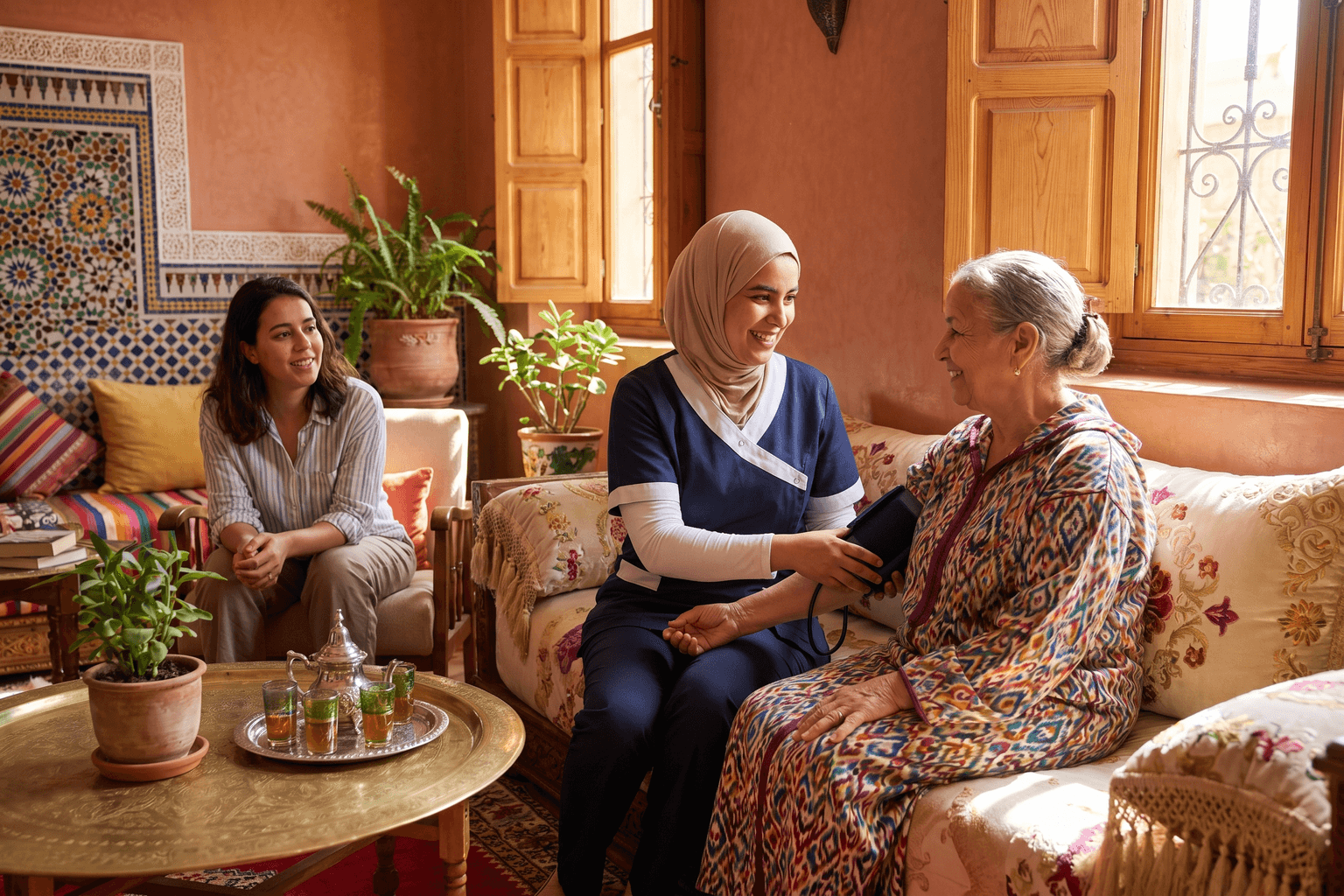
A parent who stops answering the phone, declines invitations they used to look forward to, lets friendships lapse and withdraws into the house may be experiencing depression or the early stages of cognitive decline. Isolation is not just sad; it is a genuine health risk, linked to faster cognitive deterioration, poorer physical health and higher mortality. In Marrakech, where extended family has traditionally provided this contact, modern life and children living abroad can leave older parents far more alone than they once were. Regular visits from a familiar carer break that isolation, give structure to the week, and provide an extra pair of eyes that notices subtle changes early, often spotting a developing problem long before the family would on their own.
When several signs appear together
Any one of these signs deserves attention, but it is the combination that should prompt action. Weight loss alongside forgotten medication and a recent fall, for example, points to a person whose ability to manage alone is slipping on several fronts at once, and that is exactly the pattern that ends in an emergency if nothing changes. Rather than waiting for the next worrying phone call, it helps to step back and look at the whole picture: how your parent is eating, washing, taking medicines, moving and connecting with others. A professional assessment can turn these scattered worries into a clear plan, distinguishing what needs medical attention from what simply needs a little reliable support at home.
How to respond once you have noticed the signs
The goal is to add support without stripping away independence, and the right response is usually graduated rather than dramatic. Start with an honest, kind conversation, then arrange a home assessment to understand exactly what is needed. From there, support can be layered: non-clinical home help for companionship, meals, hygiene and daily living; skilled home nursing for medication management, wound care, injections, vital-sign monitoring and chronic-disease follow-up; and clear coordination with the attending physician so nothing falls through the cracks. As a managed service, SOS Nursing recruits and employs its nurses and carers directly, vets and trains them, and keeps a coordinator reachable for the family, so you are never left organising and supervising care from a distance on your own.