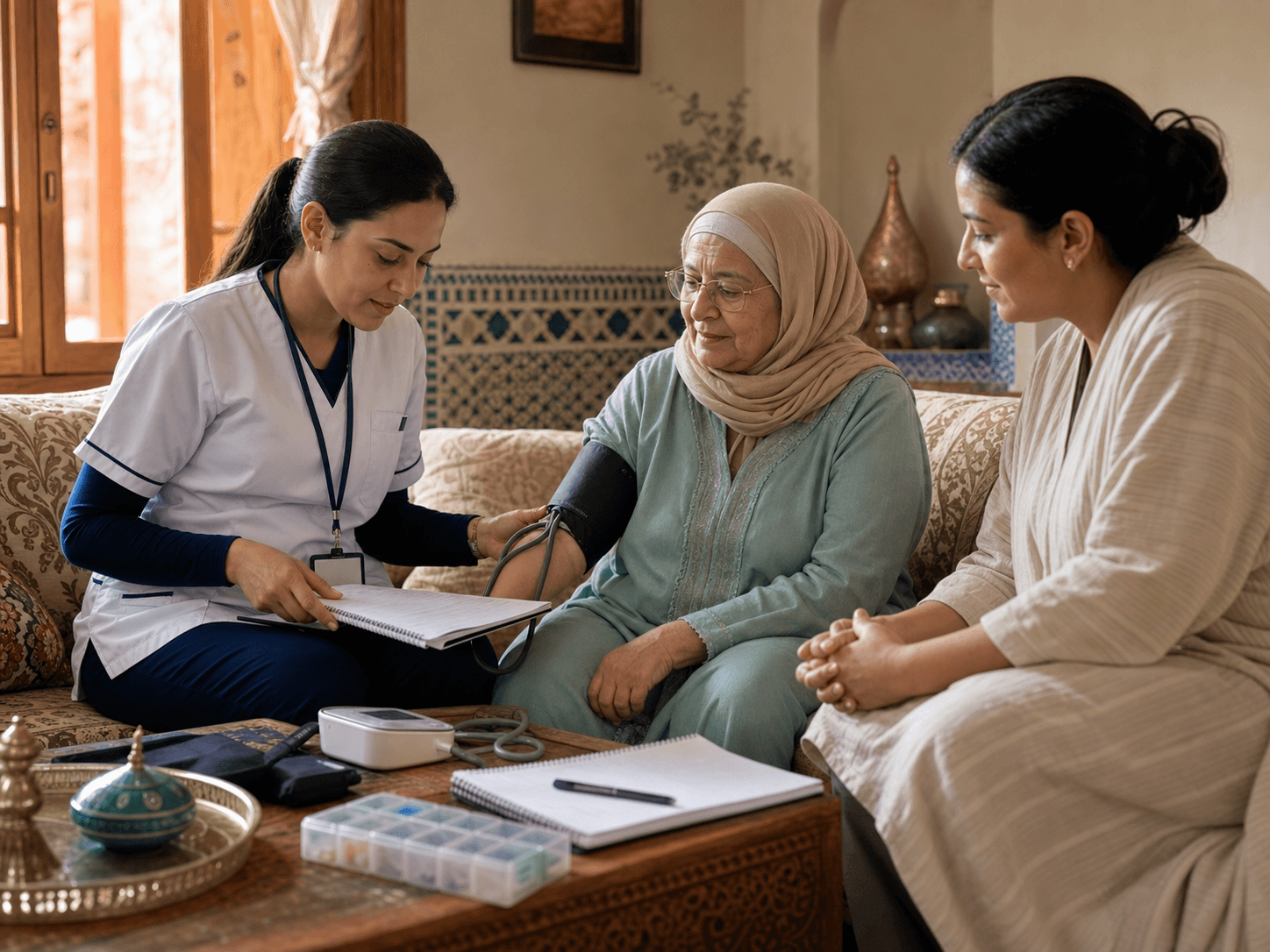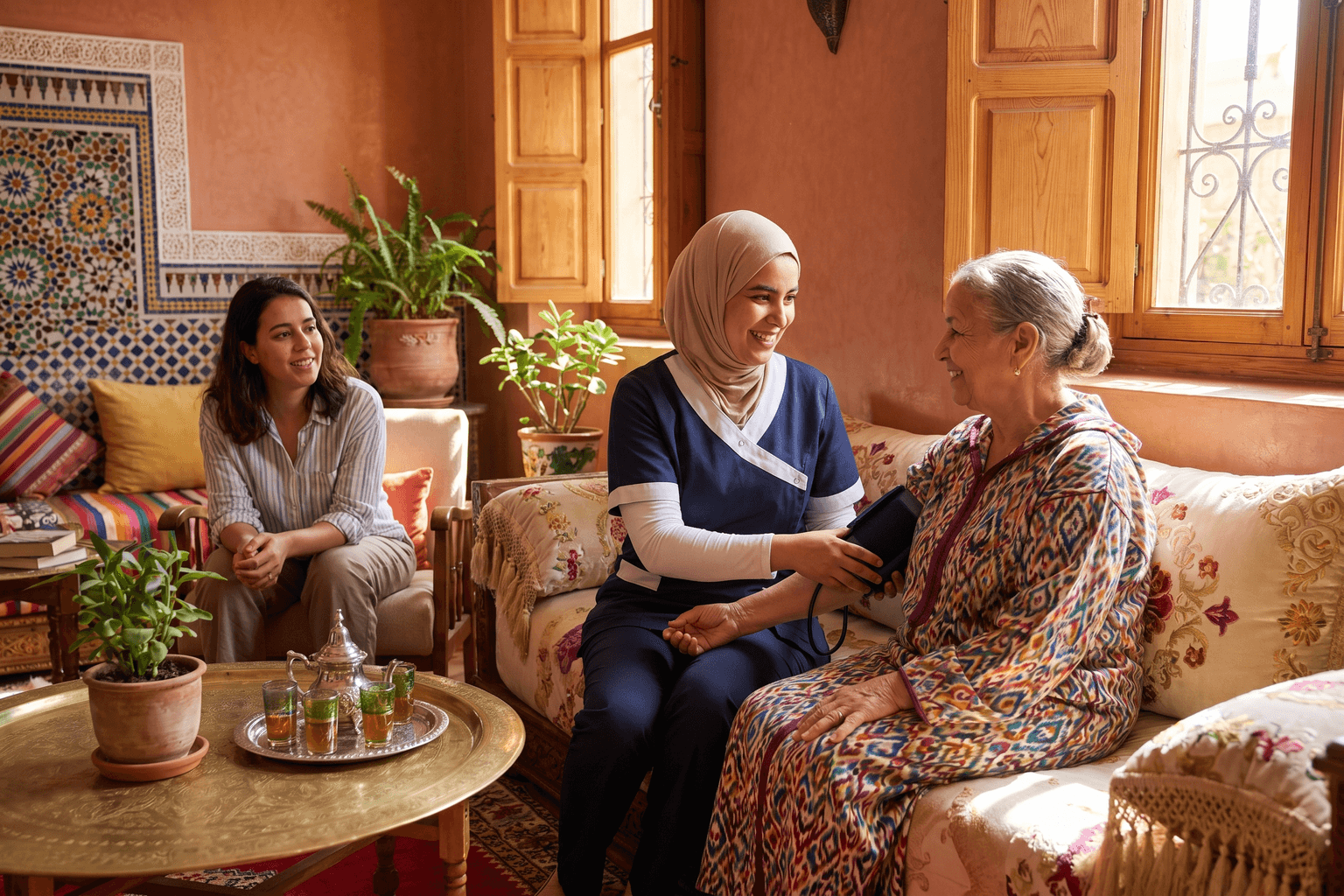
Receiving intravenous treatment no longer always requires a hospital bed. Antibiotic therapy, rehydration, pain management, or nutritional support: many IV infusions can be administered at home, safely, by a state-certified nurse. In Marrakech, SOS Nursing handles the entire process — device placement and monitoring, strict adherence to aseptic protocols, and coordination with the prescribing physician.
IV therapy means delivering a medication or solution directly into a vein at a controlled rate.
What home IV therapy involves
IV therapy means delivering a medication or solution directly into a vein at a controlled rate. At home, it avoids prolonged hospitalisation while maintaining the same rigour as in a clinical setting. Indications are varied: intravenous antibiotics for a severe infection, rehydration in cases of dehydration, pain management, supportive chemotherapy, or parenteral nutrition. Home IV therapy is intended for patients whose condition is stable but who require regular intravenous treatment. It always relies on a precise medical prescription, which the nurse follows scrupulously, as well as a reliable supply chain for products and equipment.
Venous access devices explained simply
Depending on the treatment and its duration, several types of access are available. A short peripheral catheter, placed at the elbow crease or forearm, is suitable for short-term treatments. For longer courses, central devices such as a PICC line or implantable port are used — placed in hospital but maintained at home. Each device has its own aseptic and monitoring requirements. The nurse checks the device is functioning correctly, inspects the insertion site, and looks for any sign of infection at every visit. Understanding which device your relative is using helps the family identify what is normal and what should raise concern between visits.
How a session unfolds
Before each infusion, the nurse verifies the patient's identity, the prescription, the product, its expiry date, and its integrity. The nurse performs thorough hand hygiene, prepares sterile equipment, and checks the venous access device. The infusion is then set to the prescribed rate and monitored throughout. At the end, the device is flushed and protected according to protocol. Everything is recorded: the product administered, the rate, the duration, the patient's tolerance, and the condition of the insertion site. This documentation, shared with the physician, ensures continuity and safety of treatment session by session, and allows care adjustments when necessary.
Safety and asepsis: strict standards
Infection is the primary risk of any IV therapy. That is why asepsis is non-negotiable: hand hygiene, sterile field, disinfection of the insertion site, and contact-free handling of connections. Central devices demand heightened vigilance because an infection there can become serious. Our state-certified nurses are trained in these protocols and apply them consistently — a key advantage of our model, where every nurse follows the same standards. Single-use materials are disposed of in appropriate containers. This rigour, invisible to the patient, makes all the difference between a safe infusion and an avoidable complication.
Recognising a complication
Certain signs should prompt action between visits. At the insertion site: redness, swelling, warmth, pain, or discharge suggest infection or vein inflammation. During the infusion: chills, fever, shortness of breath, itching, or a rash may indicate a reaction. A swollen limb, a device that has stopped flowing, or a soiled dressing are also reasons to act. When these signs appear, stop the infusion if it is running and contact the nurse or coordinator. Most of these situations are easy to manage when caught early — which is precisely why regular monitoring and a well-informed family are so important.
Intravenous antibiotic therapy at home
IV antibiotic therapy is one of the most common indications for home infusion. It allows patients to continue at home a course started in hospital for a bone, urinary tract, or soft-tissue infection. Doses are given at fixed times, sometimes multiple times a day, which the nurse schedules with the family. Keeping to the timetable is critical to treatment success: a delay or missed dose can compromise recovery. The nurse monitors tolerance, temperature, and clinical progress, and reports any adverse effect to the physician. This arrangement avoids weeks of hospitalisation while keeping the patient in familiar surroundings.
Logistics: products, equipment, and cold chain
Home IV therapy demands flawless logistics. Products must be available on time; some must be refrigerated and kept within the cold chain — particularly important given Marrakech's warm climate. Sufficient quantities of sterile materials, solutions, and waste containers must be prepared. SOS Nursing coordinates procurement with the pharmacy and anticipates needs to avoid any break in treatment. The family does not have to manage this complexity: the coordinator ensures that every session has everything it requires, an essential condition for safe, uninterrupted treatment.
SOS Nursing's role in your treatment
From the first device placement to the final session, SOS Nursing supports the patient and family throughout. The coordinator schedules visits at the prescribed frequency, the nurse performs and monitors each infusion, and the team maintains ongoing contact with the physician. Because our nurses are salaried staff trained to shared protocols, quality remains consistent from one visit to the next regardless of which nurse attends. The family has a single point of contact, available seven days a week, for any question. This structured approach transforms an intravenous treatment — often perceived as burdensome — into a smooth, safe experience at home.