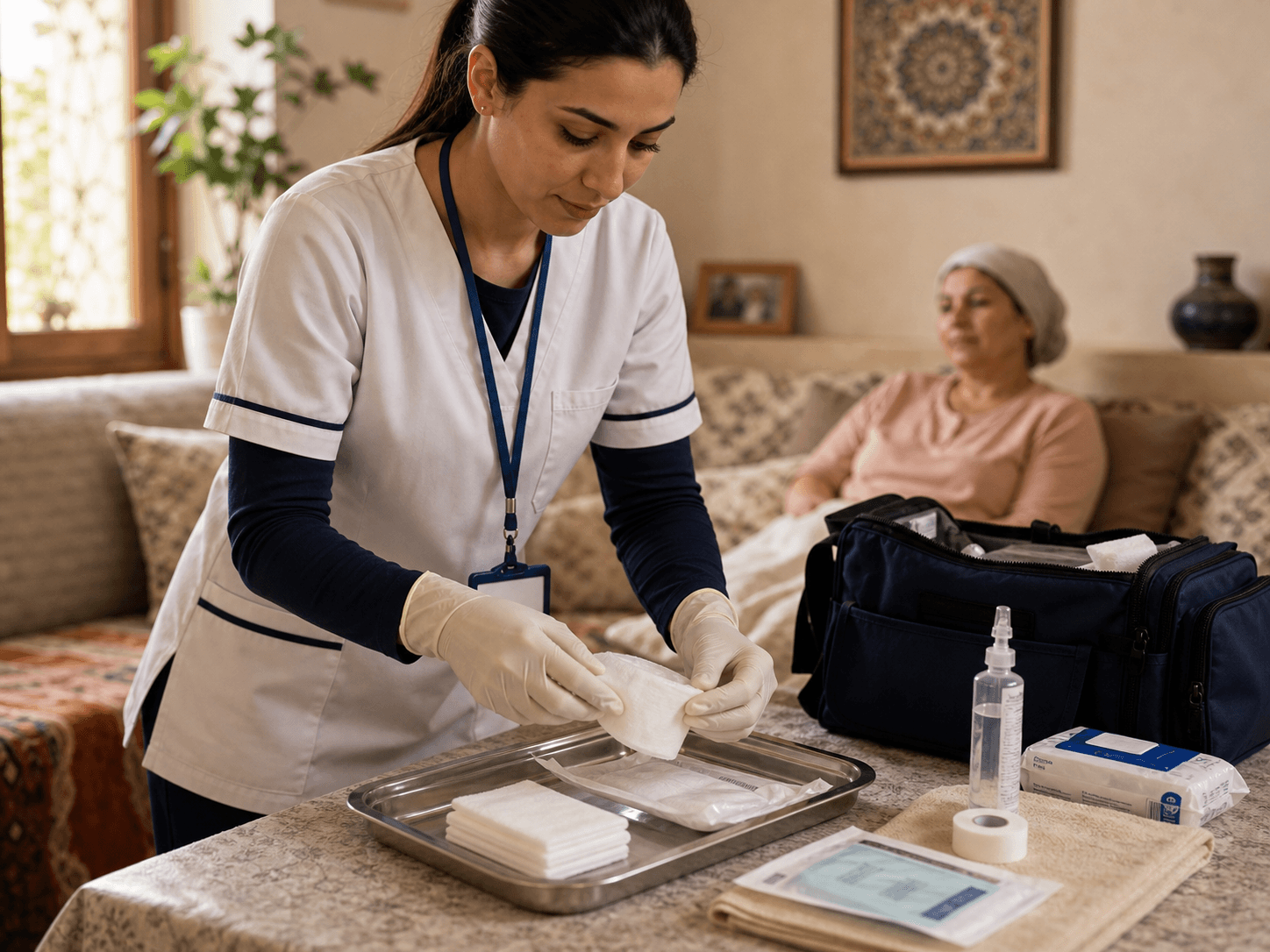
Arterial hypertension (HTN) affects nearly 30% of Moroccan adults and is the leading risk factor for stroke and heart failure. Regular home blood pressure monitoring by a registered nurse helps detect abnormal variations, evaluate treatment efficacy and prevent hypertensive crises. SOS Nursing offers this service in Marrakech, with results transmitted to the attending physician for rapid therapeutic adjustment.
The nurse uses a validated, calibrated electronic blood pressure monitor.
Blood pressure measurement: standardised protocol
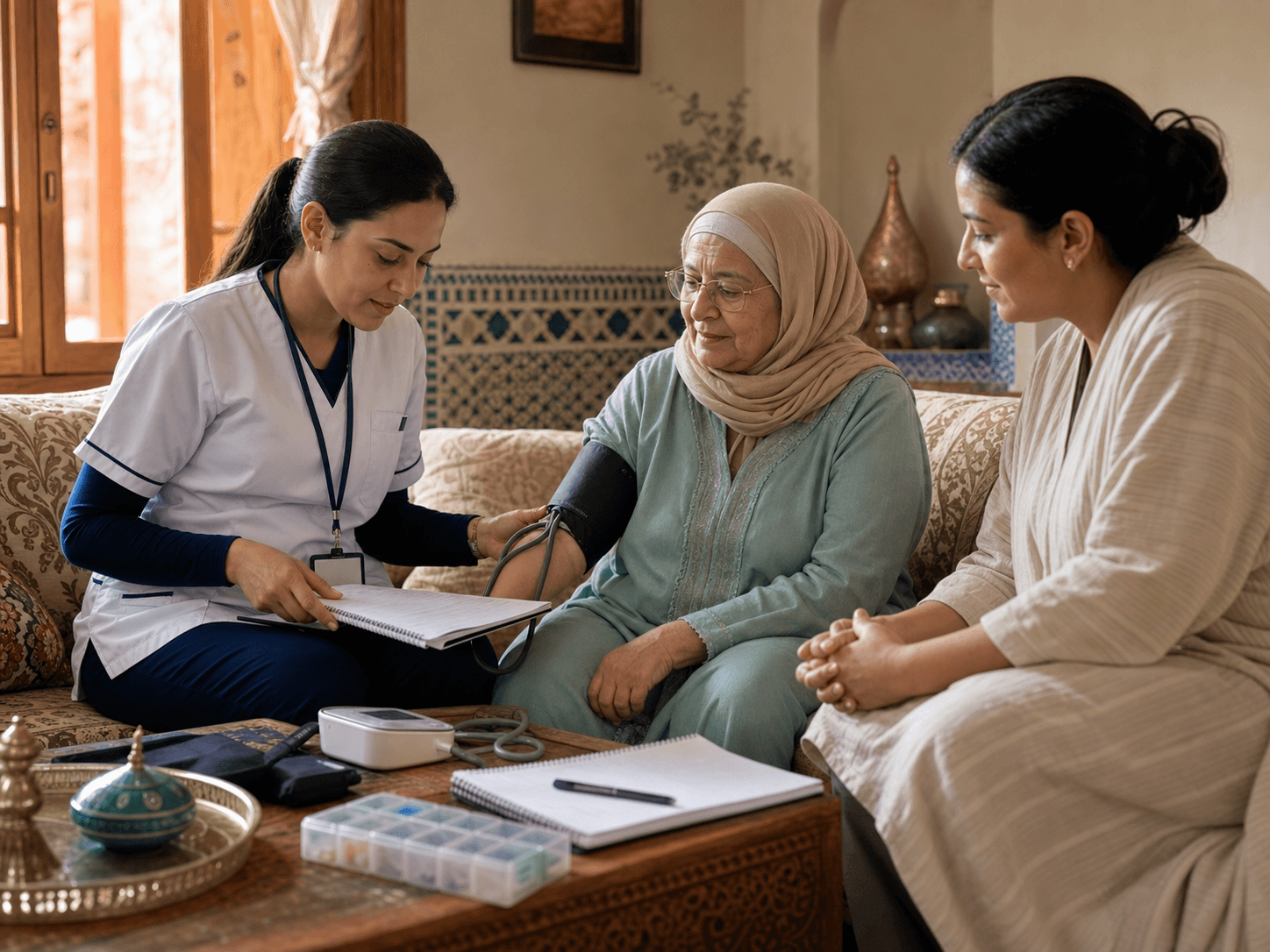
The nurse uses a validated, calibrated electronic blood pressure monitor. The measurement is taken after five minutes of rest, in a seated position, arm supported at heart level, with a cuff sized to the arm circumference. Three readings are taken one minute apart, and the average of the last two is recorded. Results are time-stamped and entered into the digital patient record.
ABPM and self-measurement: complements to nursing monitoring
Ambulatory blood pressure monitoring over 24 hours (ABPM) helps detect masked hypertension and white-coat effect. The nurse installs and retrieves the device, explaining the instructions (normal activities, activity diary). Self-measurement (rule of 3: 3 readings morning and evening for 3 days) supplements monitoring between nursing visits.
Detecting hypertensive emergencies
Blood pressure above 180/110 mmHg, combined with severe headache, visual disturbances, chest pain or shortness of breath, constitutes a hypertensive emergency. The nurse follows the alert protocol: strict rest, call to the attending physician, and referral to SAMU (141) or the emergency department if symptoms persist.
Lifestyle education and treatment adherence
The nurse advises on salt reduction (less than 5 g per day per WHO recommendations), regular physical activity (30 minutes of daily walking), stress management, smoking cessation and caffeine moderation. They check medication adherence at each visit and emphasise the importance of never stopping antihypertensive treatment without medical advice.
Data transmission and medical coordination
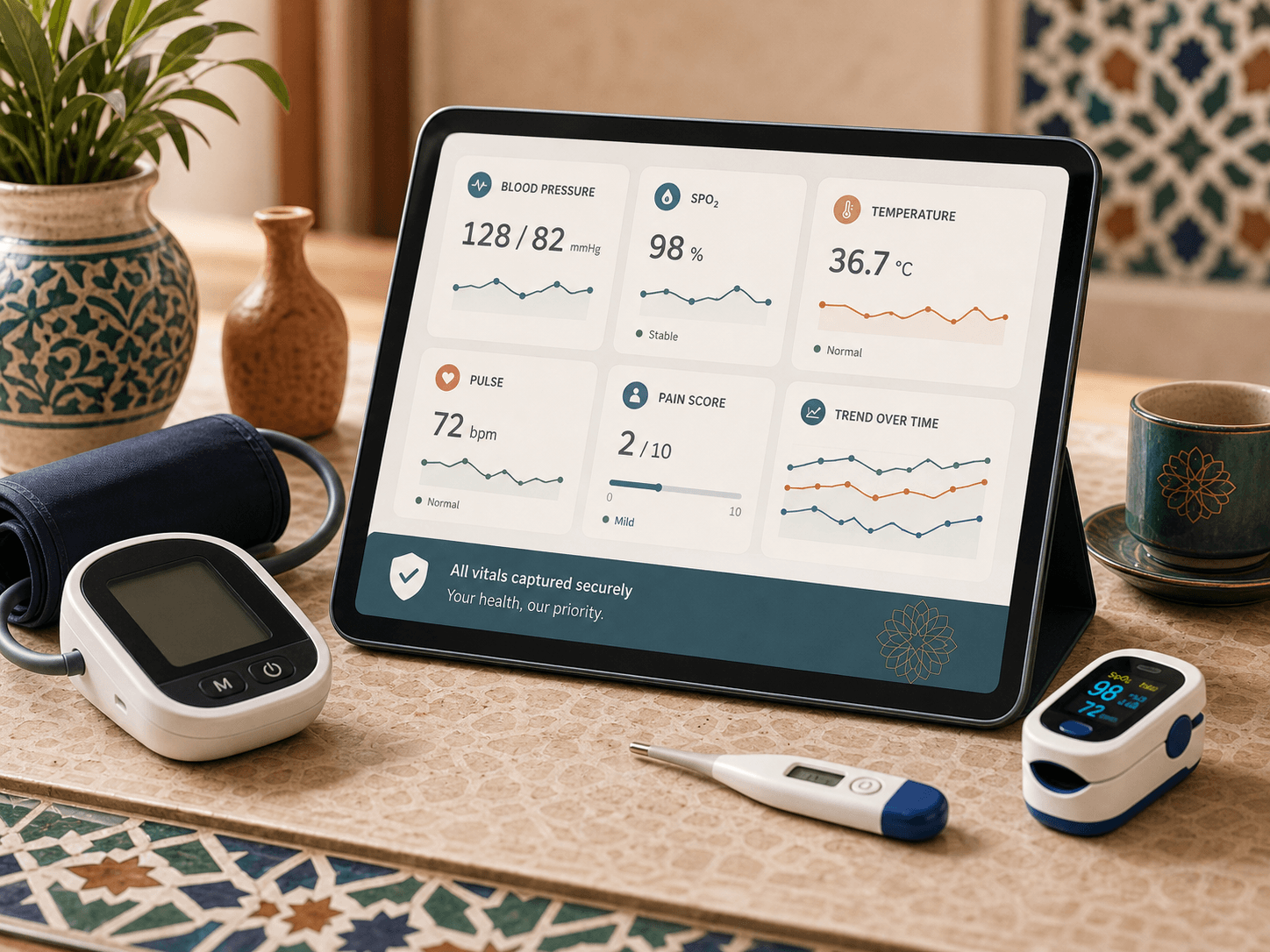
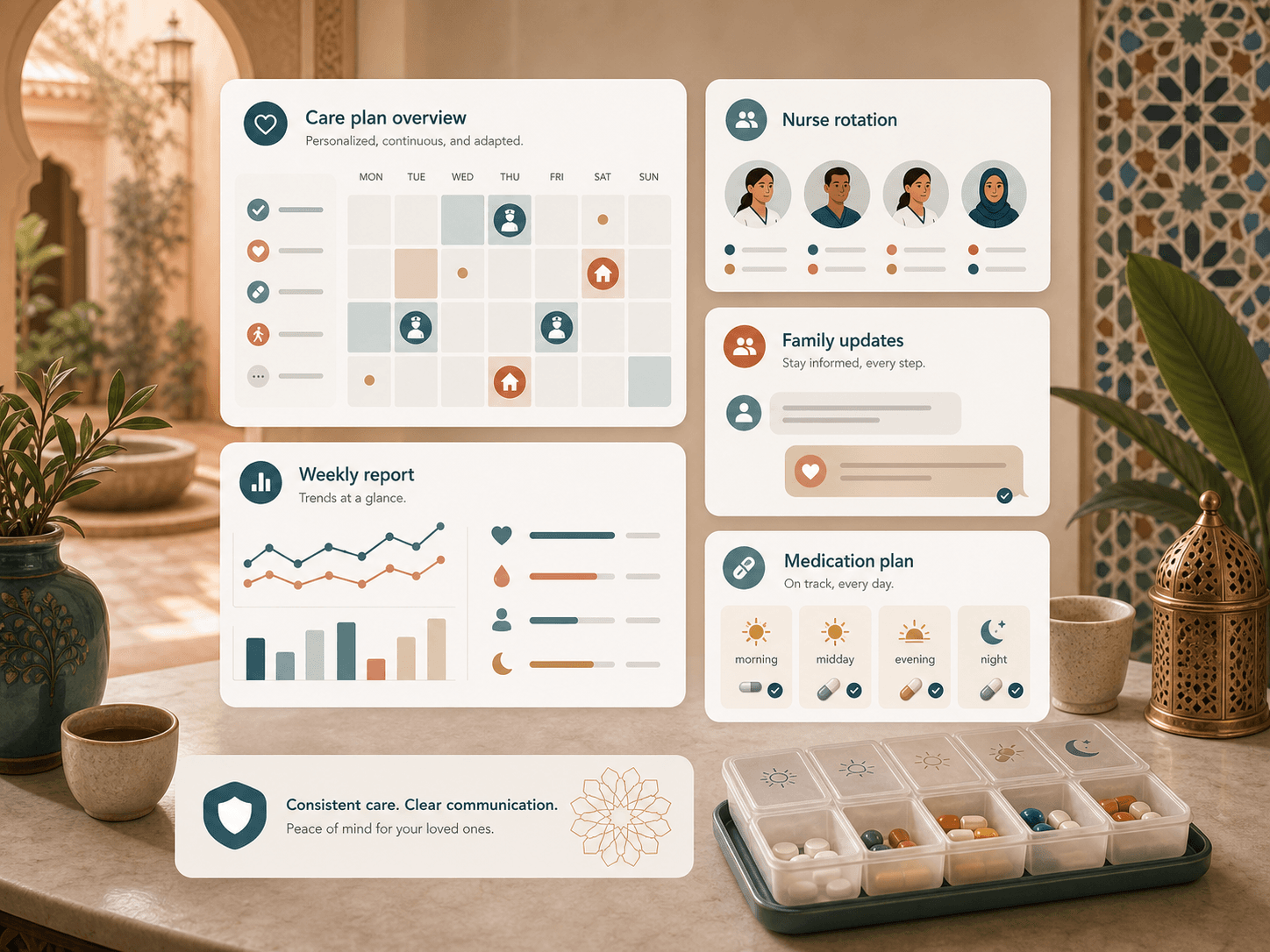
Blood pressure readings are transmitted to the attending physician via our secure platform, enabling dose adjustment without the patient needing to travel. In case of an unfavourable trend (progressive elevation, excessive variability), the nurse alerts the physician to anticipate complications. This coordinated monitoring is particularly valuable for elderly patients with limited mobility.