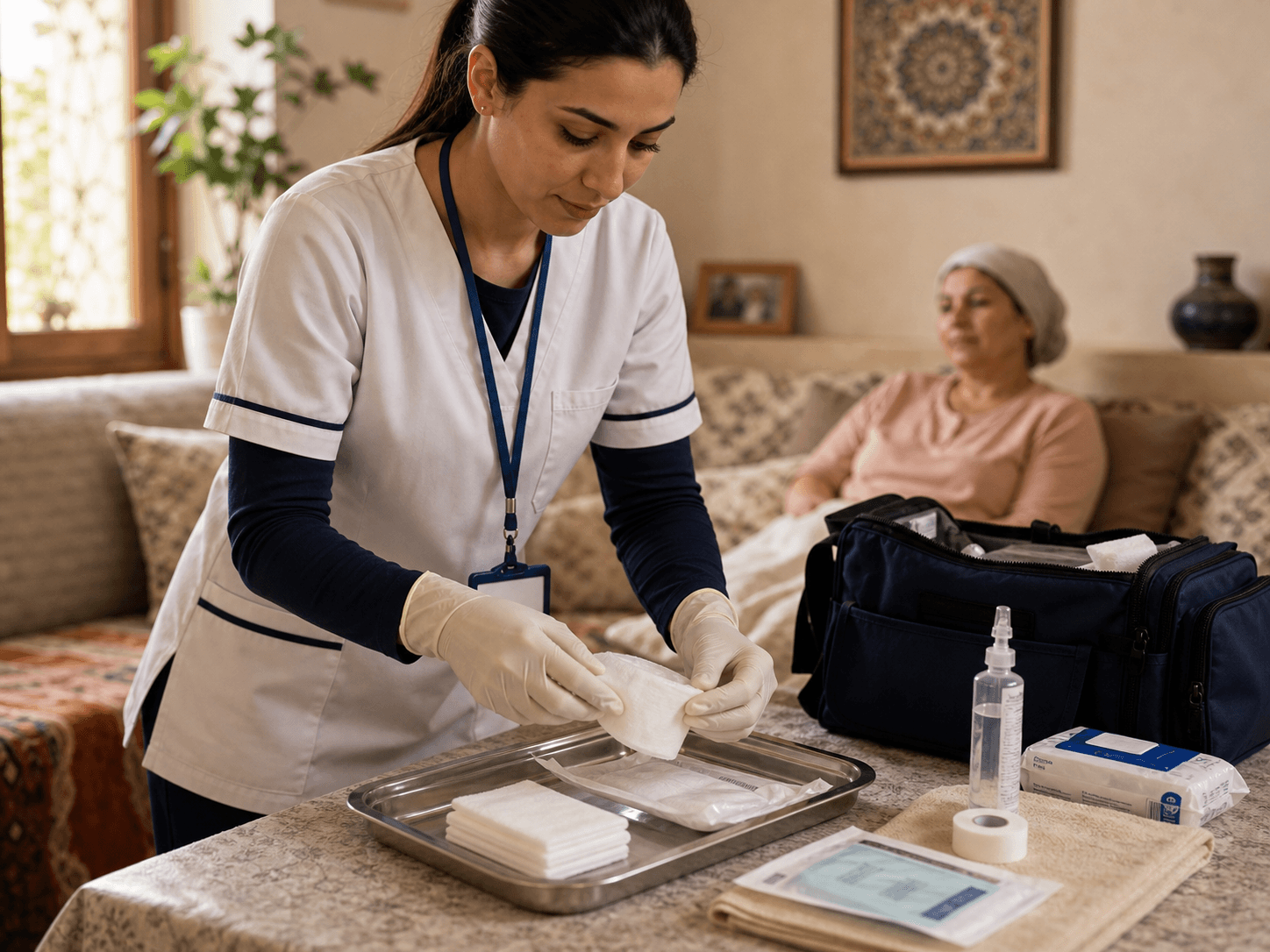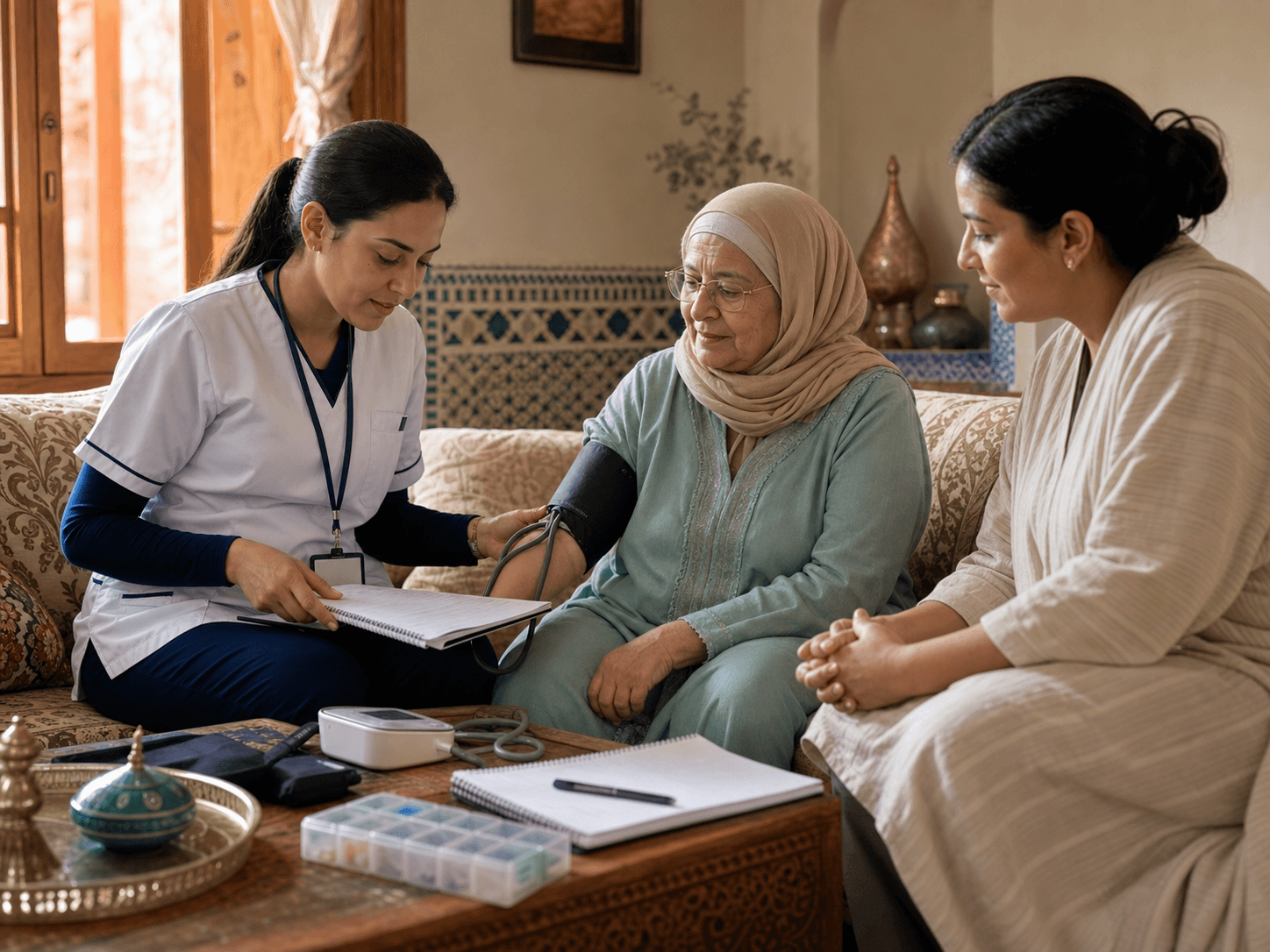
Home enteral nutrition (HEN) involves feeding the patient directly into the stomach or intestine via a nasogastric tube or gastrostomy (PEG), when oral intake is insufficient or impossible. It applies to patients with head, neck or digestive cancers, neurological swallowing disorders (stroke, ALS), or severe malnutrition. SOS Nursing provides nursing monitoring at home in Marrakech: tube verification, feed bag administration, complication prevention and patient and carer education.
HEN is prescribed when the digestive tract is functional but oral intake does not meet nutritional needs.
Indications for home enteral nutrition
HEN is prescribed when the digestive tract is functional but oral intake does not meet nutritional needs. The main indications are head, neck or oesophageal cancers preventing swallowing, neurological sequelae of stroke with aspiration, neurodegenerative diseases (ALS, advanced dementia), severe post-operative malnutrition and certain paediatric conditions. The prescription comes from the nutritionist or referring specialist.
Tube types: nasogastric and gastrostomy
The nasogastric tube (NGT) is inserted through the nose and descends to the stomach; it is used for short duration (less than 4 to 6 weeks). Percutaneous endoscopic gastrostomy (PEG) provides direct access through the abdominal wall, placed by a gastroenterologist for long-term nutrition. The gastrostomy button, more discreet, replaces the external tube after healing and is better suited for active patients or children.
Feed bag administration
The nurse verifies tube position before each administration (aspiration test, gastric pH), connects the feed bag to the flow regulator, programmes the prescribed rate (usually 50 to 150 mL/hour) and positions the patient semi-upright at 30° to prevent regurgitation. Nutrition can be administered continuously (overnight) or as intermittent boluses as prescribed.
Complication prevention
The main complications are tube blockage (prevented by flushing with warm water before and after each administration), aspiration pneumonia (prevented by the semi-upright position), diarrhoea (related to flow rate or formula composition), skin irritation around the stoma, and accidental tube displacement. The nurse checks each point at every visit.
Patient and carer education
The nurse gradually trains the patient and family in daily routines: tube flushing, bag connection, stoma cleaning, recognition of warning signs (abdominal pain, high gastric residual, peristomal redness). The goal is maximum autonomy while maintaining regular nursing follow-up for safety.