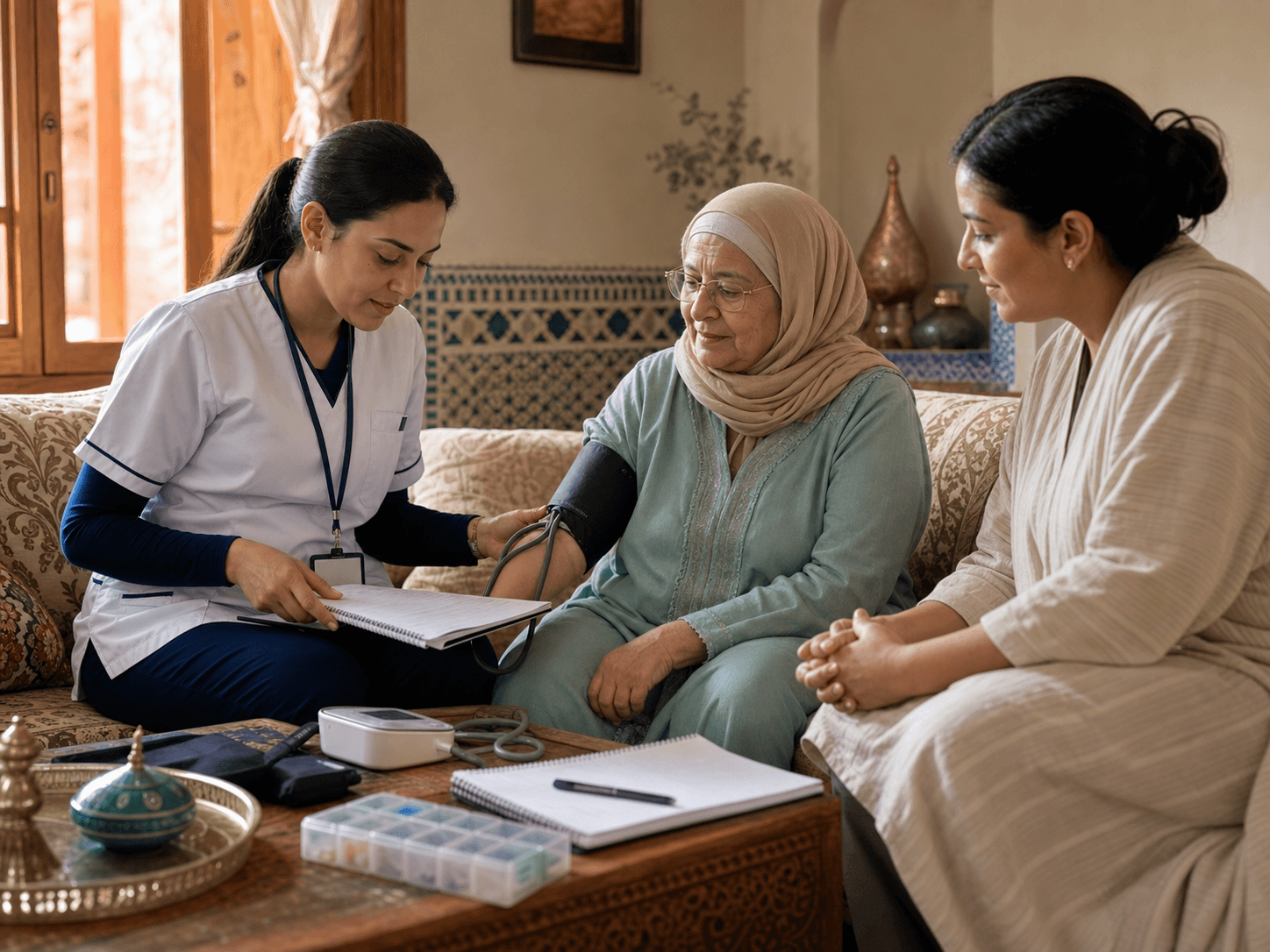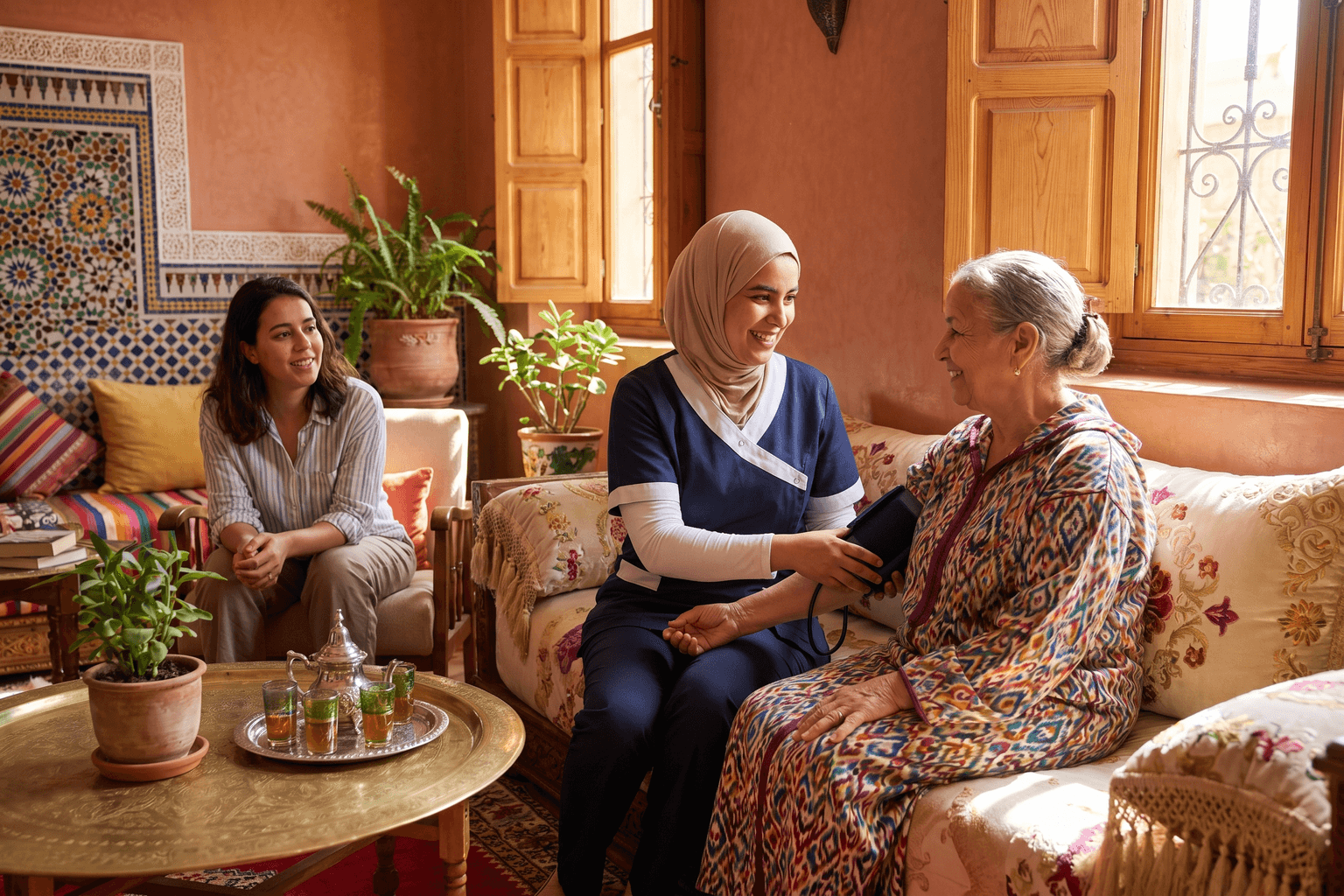
When cure is no longer the goal, care does not stop — it changes in meaning. Palliative care aims to ensure comfort, relieve pain, and preserve the dignity of a person at the end of life, while supporting their family. Many families want this time to be spent at home, in a familiar and peaceful setting. In Marrakech, SOS Nursing accompanies these situations with humanity, skill, and deep respect for each family's values.
Palliative care is not giving up — it is a different form of care.
Understanding palliative care
Palliative care is not giving up — it is a different form of care. It is for people living with a serious, progressive, or advanced disease for whom curative treatment no longer brings benefit. Its purpose is clear: relieve pain and distressing symptoms, preserve quality of life, and support the person and their family — without hastening or delaying death. It encompasses physical, psychological, social, and spiritual dimensions. Contrary to common belief, palliative care can begin well before the final days. At home, it allows this time to be lived in a familiar environment, surrounded by loved ones.
Relieving pain and symptoms
Pain control is central to palliative care. When pain is relieved, rest, conversation, and a measure of serenity become possible. The nurse administers prescribed analgesics, regularly evaluates their effectiveness, and alerts the physician whenever adjustment is needed. Other distressing symptoms are also managed: breathlessness, nausea, anxiety, sleep disturbance, dry mouth. The subcutaneous route, widely used at the end of life, allows treatments to be given gently at home. The goal is never to hasten anything, but to prevent all unnecessary suffering. A symptom that is well controlled fundamentally changes the experience for both the patient and their family.
Preserving comfort and dignity
Beyond treatment, daily comfort makes all the difference. Mouth care, pressure-sore prevention, careful positioning in bed, respectful personal hygiene, and appropriate hydration: every act is aimed at the person's wellbeing and dignity. The nurse ensures a calm, soothing environment, adapting care to the patient's own rhythm and wishes, without excess. Respecting privacy, listening to expressed wishes, and allowing moments of rest matter as much as technical acts. At home, these attentions take on particular significance: the person remains in their own space, surrounded by familiar objects and the people who love them, which profoundly contributes to their peace of mind.
Supporting the family and carers
Accompanying a loved one at the end of life is a deeply affecting experience. The family oscillates between love, exhaustion, fear, and sometimes guilt. Palliative home care includes support for carers: information about how things may progress, a listening ear, advice on day-to-day tasks, and above all a reassuring presence. Knowing that a professional visits regularly and remains reachable lightens the weight on the family's shoulders. The carer also helps them anticipate and understand what may happen, reducing the anguish of the unknown. Supporting the family means enabling them to be fully present with their loved one, without exhaustion or isolation.
Night-time care
Night is often the hardest time at the end of life: anxiety increases, symptoms may intensify, and carer exhaustion reaches its peak. A night shift covered by a nurse or companion provides decisive relief. The professional monitors comfort, administers scheduled treatments, soothes agitation, and remains present while the family finally rests. This overnight presence keeps the patient safe and protects the family from burnout — the condition for lasting the distance. For many families, knowing that someone is watching through the night transforms the experience and makes staying at home genuinely manageable.
Respecting wishes and values
Every end of life is unique, shaped by the person's history, culture, and faith. In Morocco, the family and spiritual dimension holds a central place in the accompaniment of a dying person. Palliative home care respects these values: it makes full room for family members, for the rites and practices that matter to them. The carer listens to the wishes of the patient and those around them without imposing any model. Preserving what gives meaning to the person — in respect of their dignity and beliefs — is an integral part of the care. It is also what makes accompaniment at home so precious.
Medical coordination and continuity
Palliative care requires close coordination with the physician, who adjusts treatments as the situation evolves. The nurse provides regular observations, reports new symptoms, and seeks advice without delay when necessary. This responsiveness avoids distressing emergency visits and allows care to be adapted at home. SOS Nursing ensures this continuity through a reachable coordinator and salaried nurses trained in end-of-life accompaniment. For a transfer that remains necessary, our private ambulance service can intervene. This organisation ensures the patient is never left alone with a difficulty, day or night.
SOS Nursing's support
SOS Nursing accompanies Marrakech families through some of the most intimate moments of life, with skill and humanity. Our state-certified nurses — salaried and trained in comfort care — manage symptom relief, daily care, and family support, in constant liaison with the physician. The coordinator remains available to address concerns and adjust our presence, including at night. Our role is not only technical: it is also one of listening, presence, and respect. Enabling a loved one to live this final chapter at home — surrounded, at peace, in dignity — is at the heart of our commitment.