A successful operation is only the first step: regaining strength, mobility, and independence usually requires rehabilitation. Doing so at home has real advantages, provided it is properly supported. For a hip or knee replacement, a fracture, a stroke, or a long period of immobilisation, SOS Nursing coordinates a home rehabilitation programme in Marrakech combining physiotherapy, nursing care, and monitoring — in liaison with your surgeon or physician.
Home rehabilitation combines effectiveness with comfort.
Why rehabilitate at home
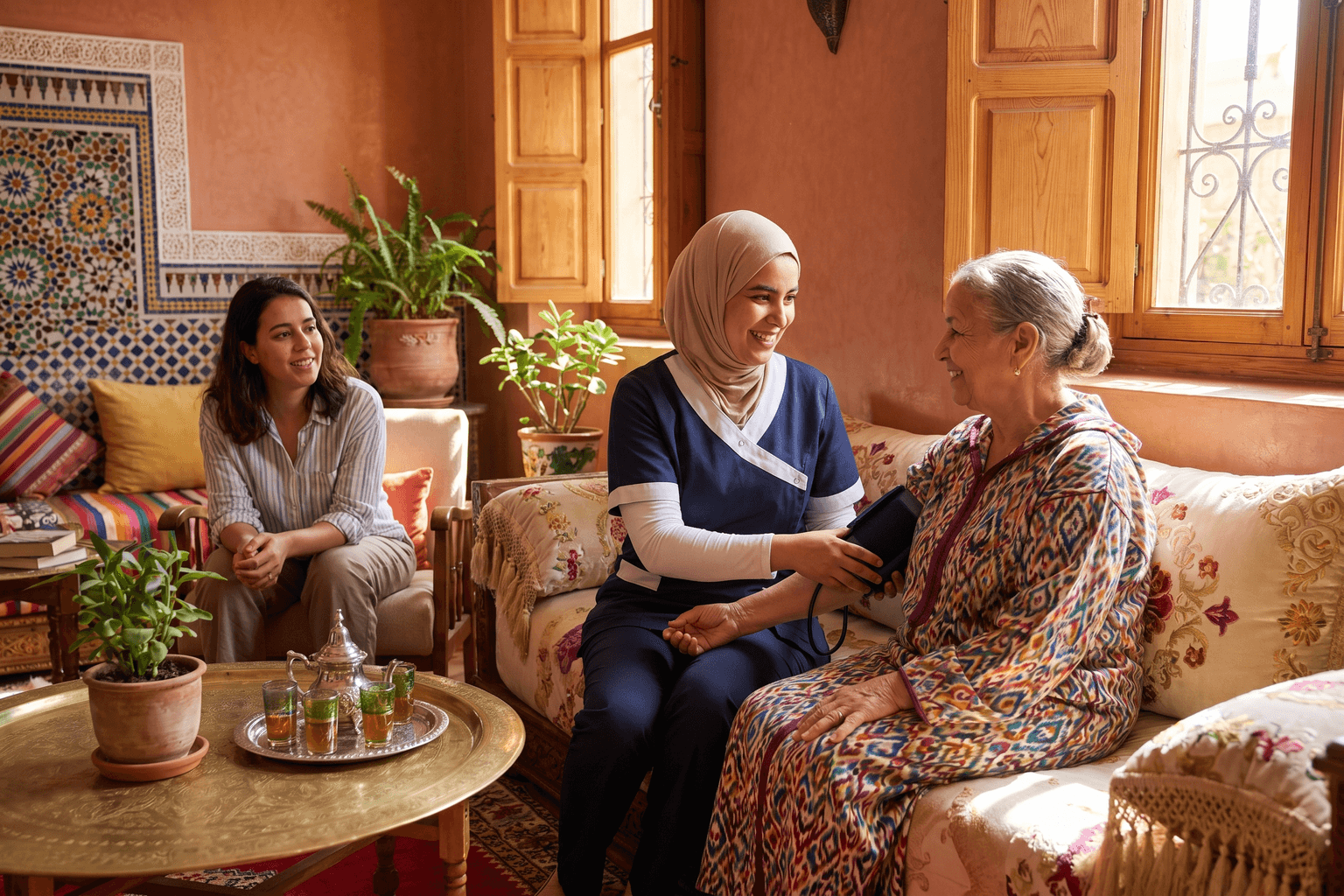
Home rehabilitation combines effectiveness with comfort. The patient avoids tiring and sometimes painful journeys to a clinic — which matters greatly after surgery or for an older person. Exercising in your own environment is meaningful: you relearn how to climb your own stairs, move around your kitchen, and use your own bathroom. Motivation is strengthened and progress translates immediately into everyday life. Well organised, home rehabilitation delivers results comparable to those of a centre while reducing the risk of isolation and making it easier to involve the family.
Who benefits
Many situations call for home rehabilitation. In orthopaedics, a hip or knee replacement, a femoral neck fracture, or back surgery all require progressive work on mobility and strength. After a stroke, rehabilitation targets motor recovery, balance, and independence. Prolonged immobilisation for any reason leads to muscle wasting that must be countered. Older adults who have fallen or lost mobility also benefit greatly from a tailored programme. In every case, the goal is to restore the greatest possible independence, safely and at the patient's own pace.
A personalised and progressive programme
Rehabilitation is only effective when it is adapted to the individual. The programme takes into account the procedure, general health, age, and the patient's goals. It begins with simple movements and builds gradually in intensity as pain decreases and strength returns. Each stage is reached at the right moment: going too fast risks setback; too slowly hampers progress. The physiotherapist designs the exercises, sets realistic goals, and re-evaluates them regularly. This tailored progression, tracked visit by visit, ensures safe and lasting recovery without sudden setbacks or discouragement from unattainable targets.
Coordination between physiotherapist and nurse
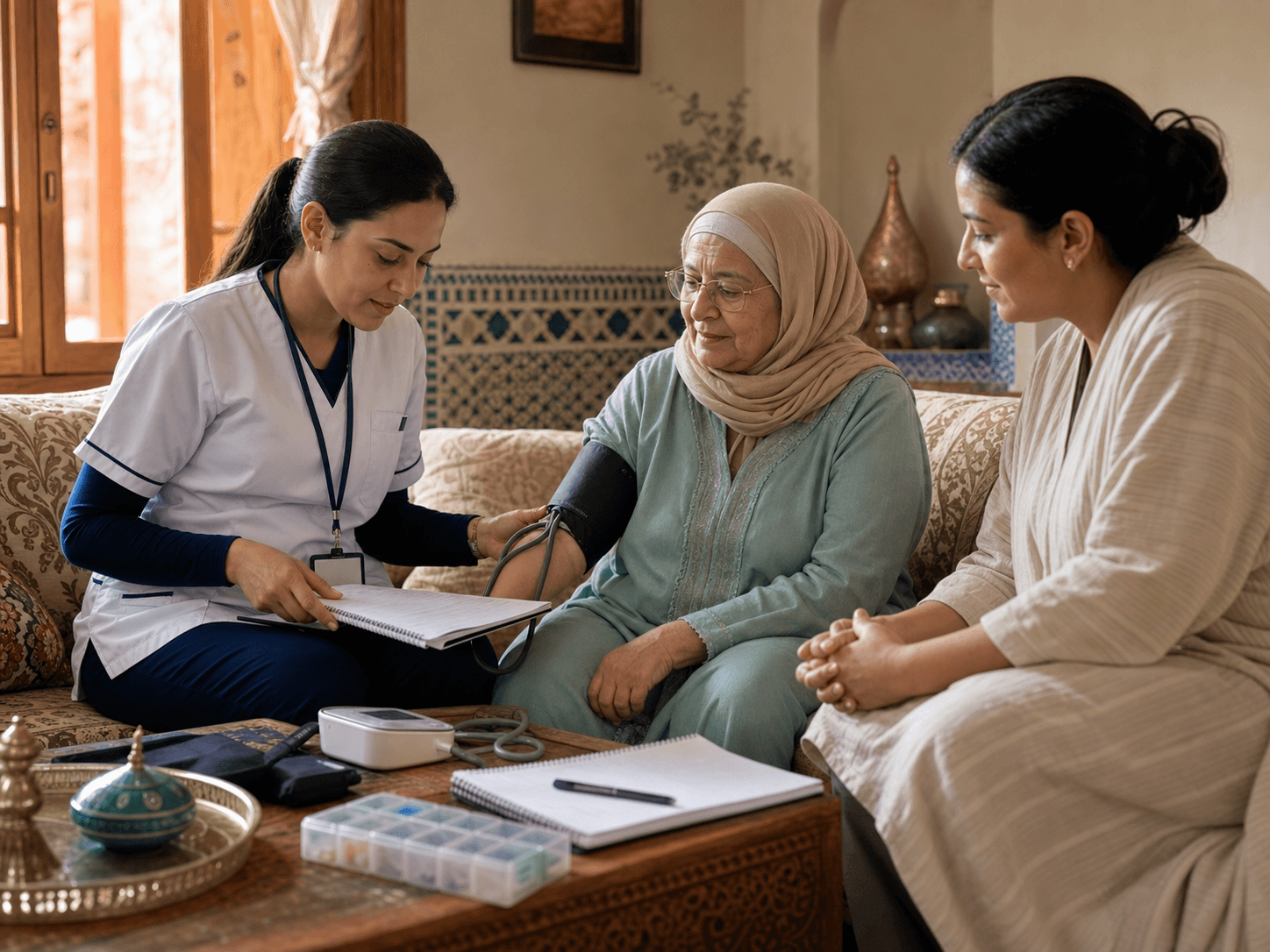
Successful rehabilitation depends on teamwork. The physiotherapist leads the exercises, while the nurse provides associated care: wound dressings, scar monitoring, pain management, anticoagulant injections, and DVT prevention. This complementarity closes the gaps. For instance, pain that prevents exercise is flagged for analgesic adjustment; a redness at the scar noticed by the nurse guides the next steps. SOS Nursing coordinates these interventions and liaises with the surgeon. The family benefits from a coherent pathway where every professional knows the patient's progress and works towards the same goal.
Preventing falls and making the home safe
During rehabilitation, the risk of falls is real — especially for older patients or those in the early stages of remobilisation. Making the home safe is therefore a priority. The carer identifies hazards: slippery rugs, cluttered floors, insufficient lighting, absence of grab rails in the bathroom. Simple adjustments and appropriate mobility aids — walker, cane — are recommended and their correct use verified. Learning how to get up from a fall is also part of the programme. This prevention builds the patient's confidence: feeling safe at home encourages more movement and accelerates progress.
Equipment and assistive devices
Rehabilitation often relies on appropriate equipment. A walker, cane, crutches, temporary wheelchair, grab rails, raised toilet seat, or adjustable hospital bed all ease movement and daily care during convalescence. The right choice depends on the procedure and the patient's progress. SOS Nursing advises families on the equipment that will be useful, how to adjust and use it, and can coordinate its provision at home in Marrakech. Poorly adjusted equipment is ineffective and can be dangerous: a cane set too high or a poorly fitting walker compromises safety. Professional guidance ensures that every aid genuinely serves its purpose.
The family's role in recovery
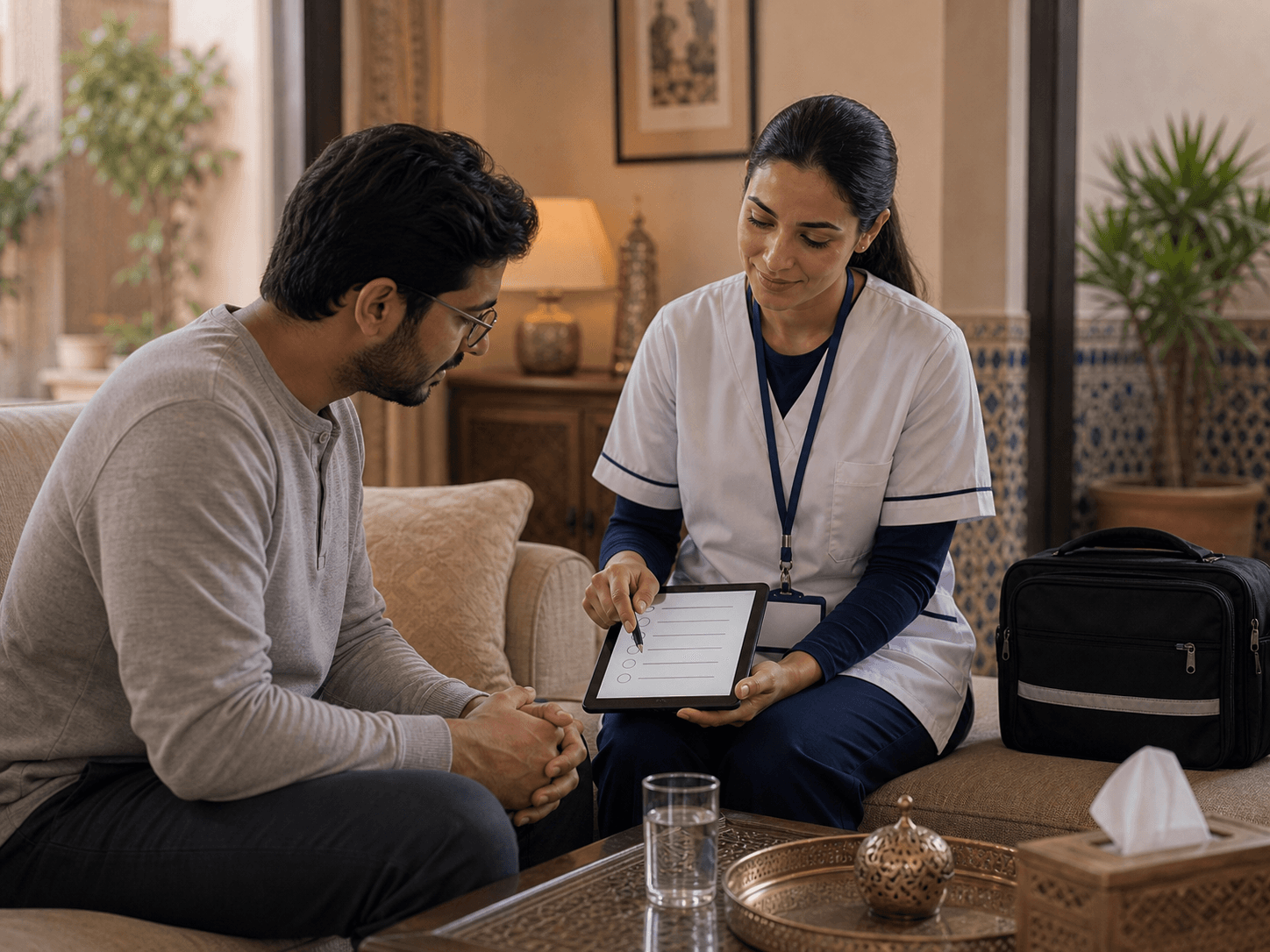
The family is a key player in home rehabilitation. Encouragement, assistance with simple exercises between sessions, ensuring regularity, and supporting morale are all part of the process. The carer trains the family in useful techniques and clarifies what is expected, without overburdening them or turning them into therapists. Limits are set: certain movements should not be forced; certain efforts must wait for the physiotherapist's approval. Finding the right balance between stimulation and protection is delicate; the professional guides the family to support recovery effectively without risk or carer burnout.
SOS Nursing's support
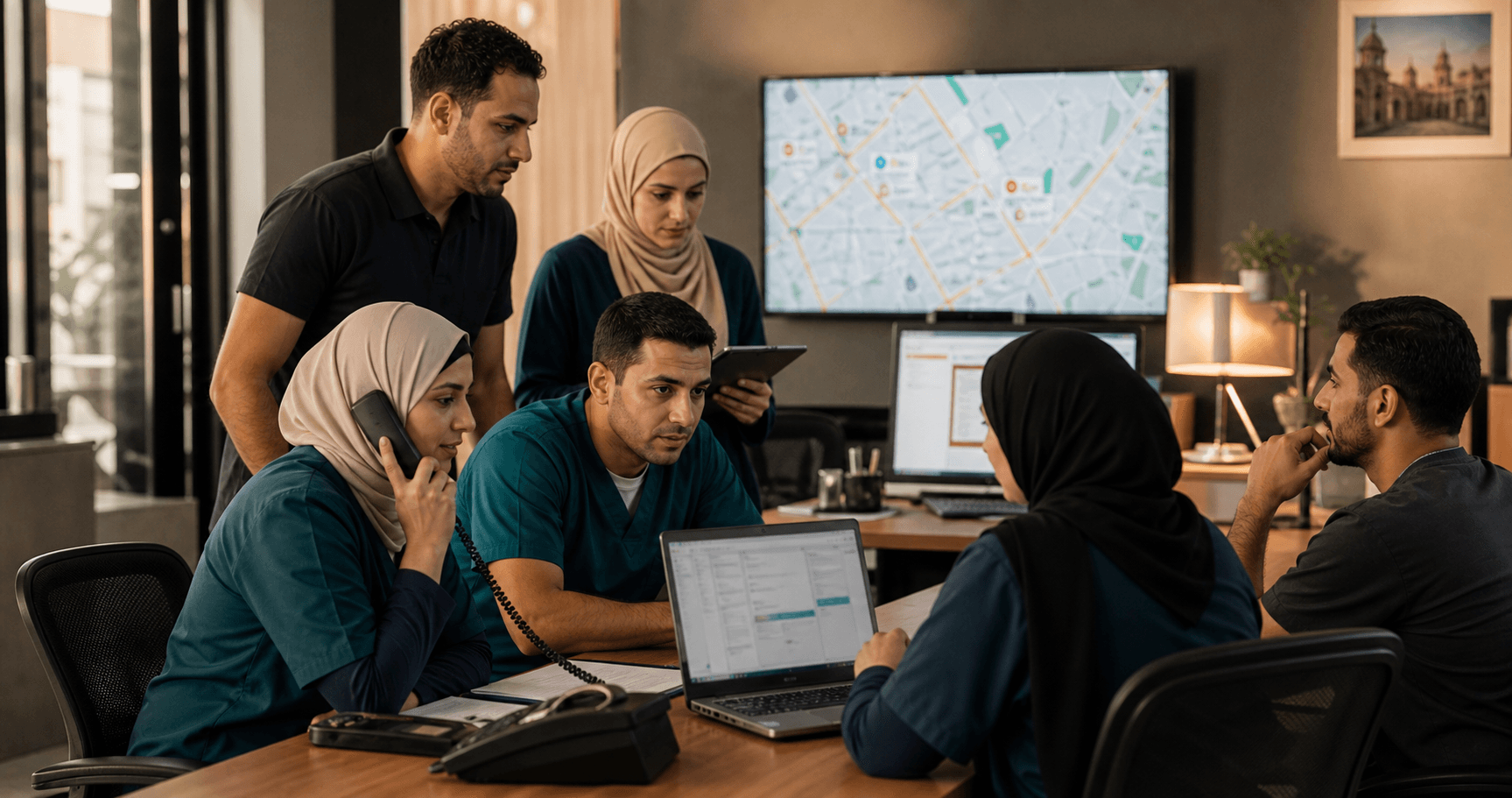
SOS Nursing organises a coherent, safe home rehabilitation pathway in Marrakech. The coordinator plans physiotherapist and nurse visits in liaison with your surgeon, and adjusts the schedule according to progress. Our professionals — qualified and salaried — follow shared protocols and send regular reports to the family and physician. This continuity, from the return home through to the restoration of independence, provides reassurance and gives meaning to every effort. The coordinator remains available for any question. The final goal is clear: to regain the best possible independence, safely, in the comfort of your own home.