Illness does not respect office hours. A fever climbing at 2 a.m., a pain settling in on a Sunday, a child who is unwell on the evening of a public holiday: what do you do when the surgeries are closed? In Marrakech, several options exist for getting medical advice at night and on weekends. This guide helps you choose between an on-call pharmacy, a home doctor, and emergency services, and explains how a night visit unfolds.
The first instinct at night is to assess the seriousness.
What to do when you fall ill at night
The first instinct at night is to assess the seriousness. Most night-time situations are not life-threatening emergencies: fever, moderate pain, vomiting, anxiety linked to a symptom. In these cases, you can wait until morning, relieve the discomfort with a suitable treatment, or call on an on-call home doctor. Conversely, certain signs make it essential to call for emergency help immediately, without waiting: chest pain, difficulty breathing, loss of consciousness, paralysis, or sudden speech difficulty. The right reflex is to take the time to calmly describe the symptoms to a coordinator, who helps with guidance: advice, a home visit, or immediate redirection to emergency services in case of seriousness.
On-call pharmacy or doctor: how to choose
In Marrakech, as everywhere in Morocco, a system of on-call pharmacies ensures the supply of medicines at night, on weekends, and on public holidays. The on-call pharmacy is the right option when you already know what you need: renewing a treatment, getting an antipyretic, a painkiller, or an essential product. However, as soon as a diagnosis, an examination, or a prescription is needed, it is a doctor you must consult. The on-call pharmacist can give initial advice and point you in the right direction, but they do not replace a medical examination. If you are unsure, describe the situation to the SOS Nursing coordinator: they will tell you whether a home medical visit is warranted or whether a trip to the on-call pharmacy is enough for the night.
How a night visit works
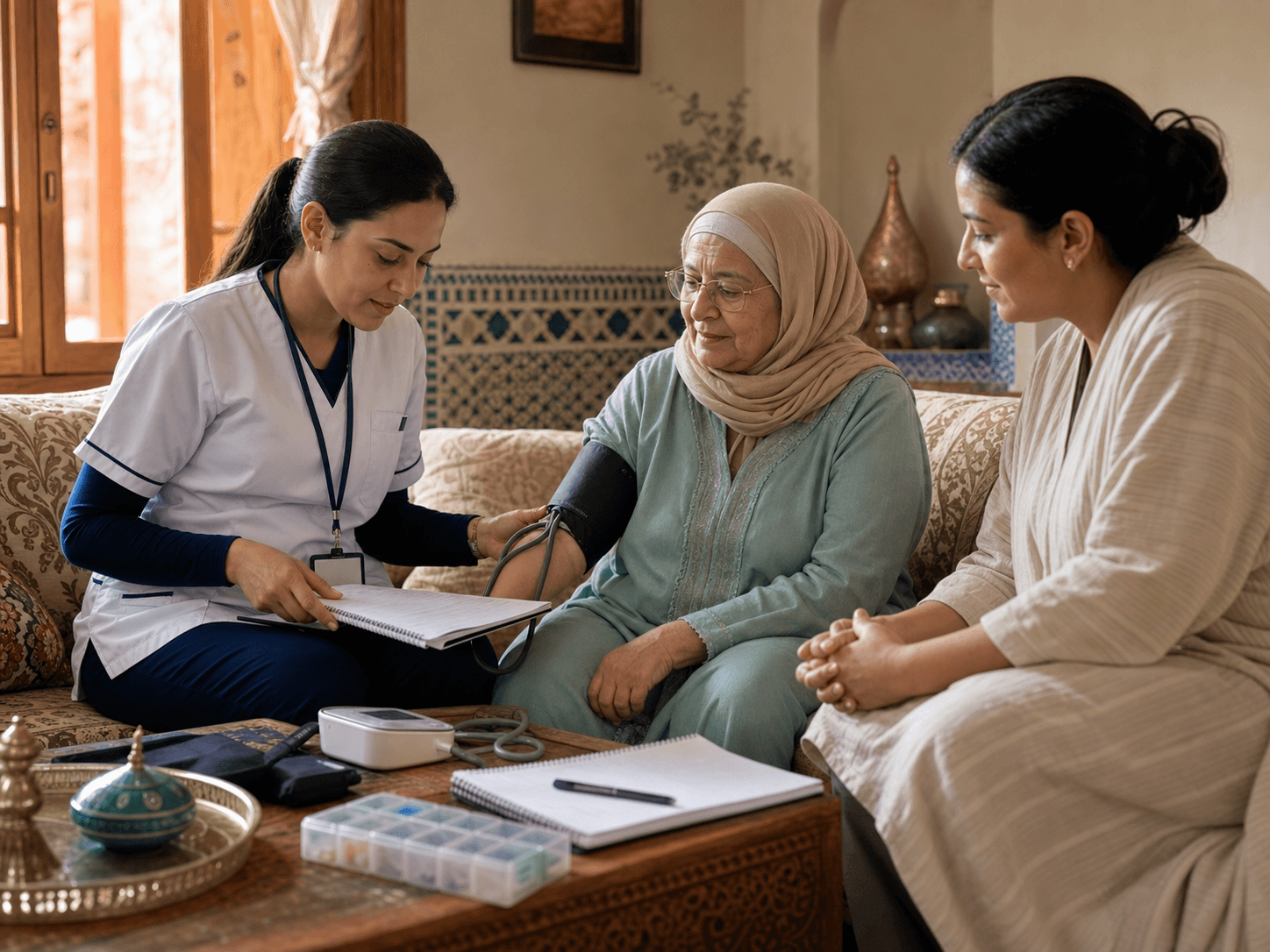
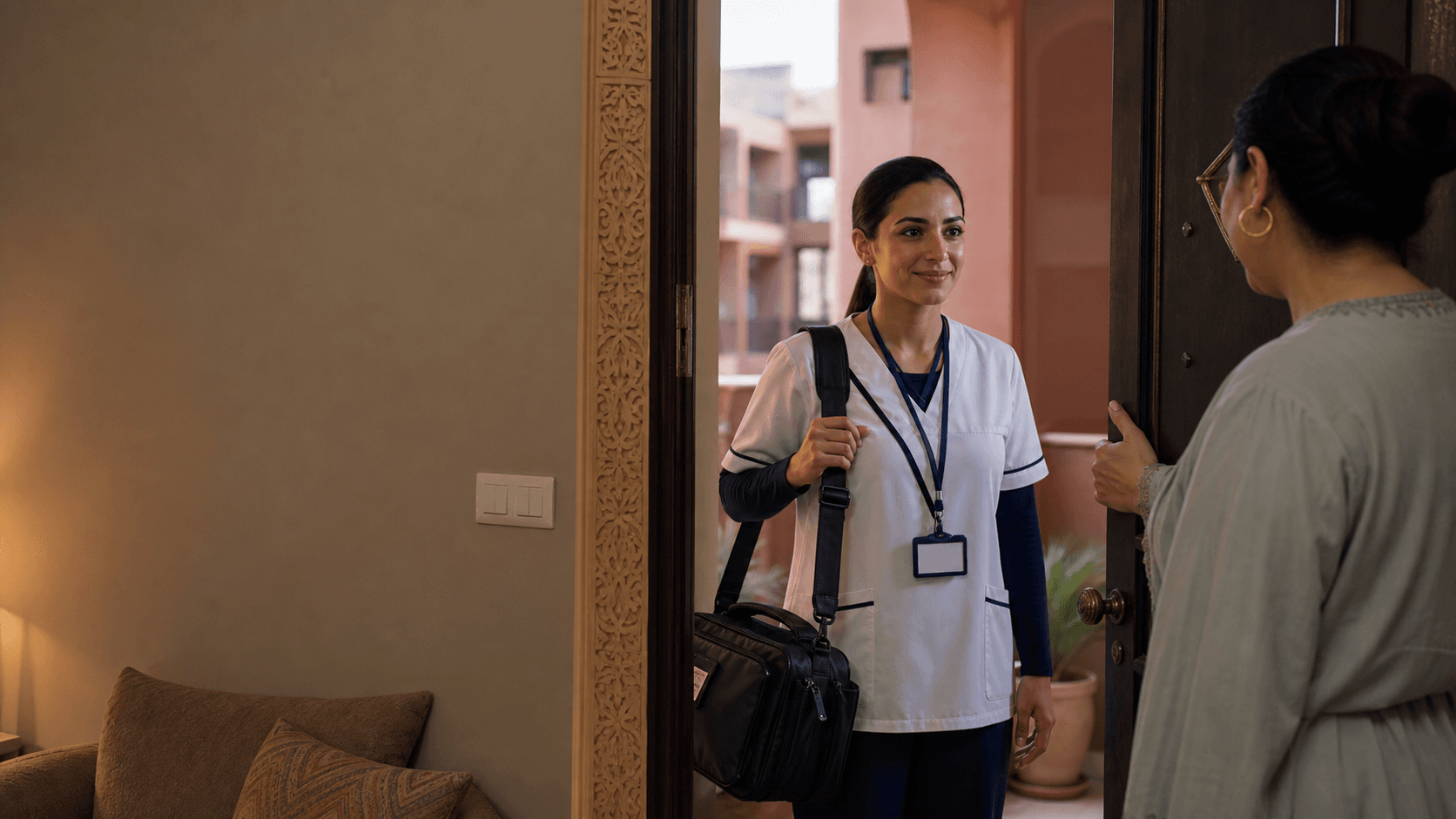
A night-time medical visit follows the same principle as during the day, with an adapted setup. You contact the coordinator, describe the symptoms and the address; they assess the urgency and arrange for a doctor to travel out. The arrival time depends on the neighbourhood and availability, and is communicated to you in advance. The doctor arrives with their kit, examines the patient calmly, makes a diagnosis, and provides a prescription if necessary. At night, they focus on what allows the patient to get safely through to morning and arrange, if needed, a handover: tests, nursing care, or a reassessment the next day. Night-time rates differ from daytime ones; the coordinator explains them clearly before the visit.
What a doctor can do at home at night
At night, a home general practitioner has the same tools as during the day: a full clinical examination, measurement of vital signs, rapid tests (blood glucose, oxygen saturation, urine dipstick), diagnosis, and prescription. They can relieve pain, treat an infection, calm an anxiety attack, manage a fever or digestive troubles, and write a prescription to present at an on-call pharmacy. Above all, they assess the level of seriousness and decide what to do: home monitoring with precise instructions, or referral to a hospital facility if the situation warrants it. What a night visit cannot replace are the hospital's heavy technical facilities; the doctor knows how to recognise these situations and arrange the transfer without losing time.
Common night-time emergencies
Certain reasons come up often at night. In adults: bouts of fever, kidney stone colic, painful crises, acute digestive troubles, spikes in blood pressure, anxiety attacks, or mild asthma attacks. In children: fever, earache, cough, vomiting, rashes. Many of these situations are managed at home with medical advice and a suitable treatment. But some, behind an ordinary appearance, may hide an emergency: intense, persistent abdominal pain, a poorly tolerated fever in an infant, difficulty breathing. The role of the on-call doctor is precisely to triage, to reassure when possible, and to refer to the hospital without delay when necessary. If there is any doubt about the seriousness even before the visit, call for emergency help.
Children and the elderly: heightened vigilance at night
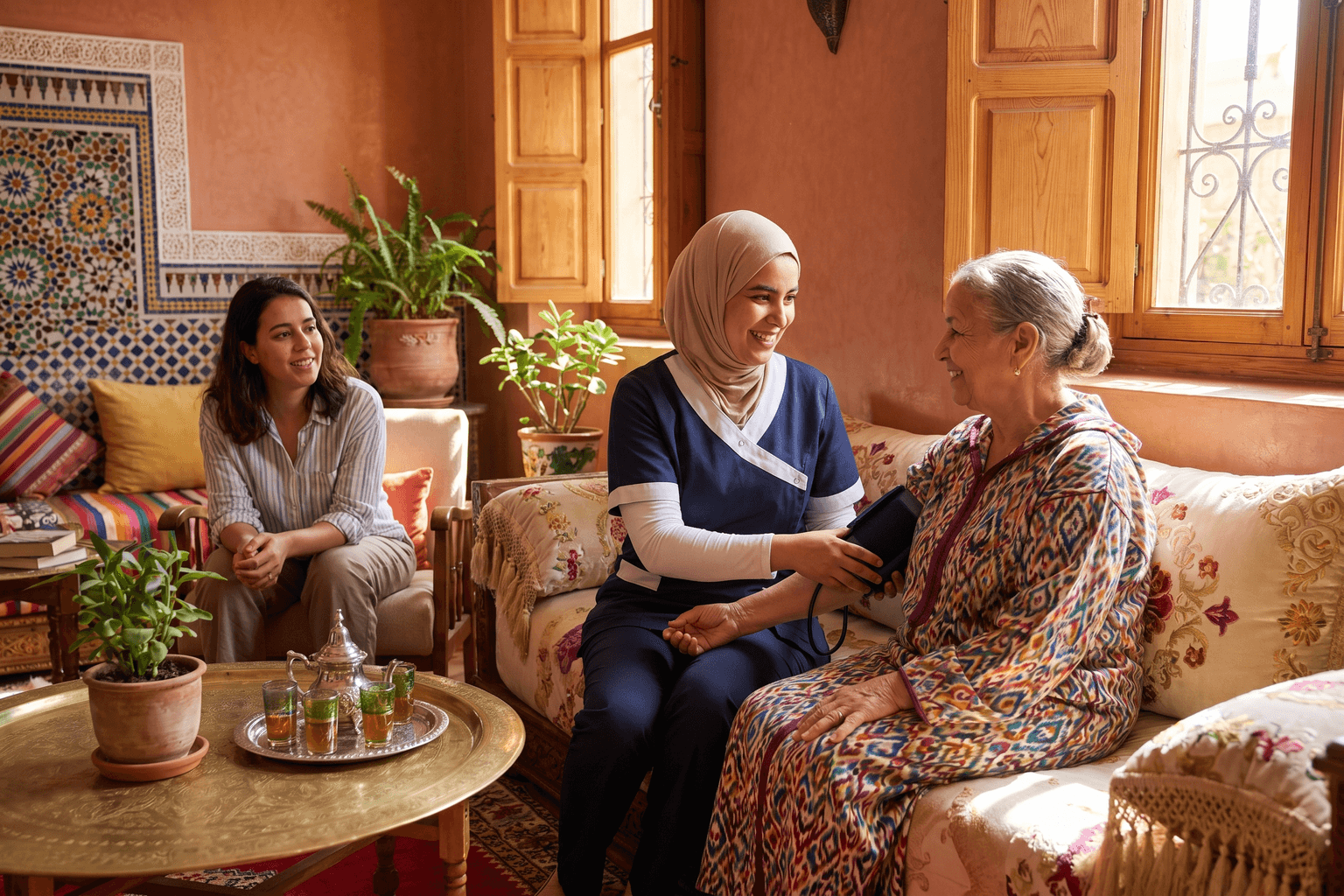
Two groups call for increased attention at night. In infants and young children, the condition can deteriorate quickly and symptoms are hard to interpret: a fever in a baby under 3 months, abnormal drowsiness, difficulty breathing, or repeated refusal to drink warrants prompt advice, or even emergency help. In the elderly, night increases the risks of falls, confusion, dehydration, or the decompensation of a chronic illness. A sudden change in behaviour, new confusion, or marked weakness must not be dismissed. For these vulnerable patients, the home visit avoids an exhausting journey and allows an assessment in the usual environment, often more accurate than at the emergency room in the middle of the night.
When to call emergency services rather than an on-call doctor
There are situations where you do not wait for a visit, even at night. Intense chest pain, difficulty breathing, loss of consciousness, paralysis or sudden speech difficulty, major bleeding, convulsions, a severe allergic reaction, or a serious injury make it essential to call emergency services immediately. These services have the means for emergency intervention and medical transport. SOS Nursing is a private home-care service that works alongside, never in place of, emergency services. The rule is constant, by day as by night: faced with a sign of seriousness or in case of doubt, call for emergency help first, then alert your care team.
Weekends and public holidays in Marrakech
Weekends and public holidays raise the same questions as the night, over a longer period. Surgeries and many laboratories are closed, but health needs remain: monitoring a treatment, nursing care, a test, or a new acute episode. Having a service able to arrange a medical visit, nursing care, or a blood draw at home, even on a Sunday or a public holiday, avoids waiting until Monday or crowding the emergency room for a non-life-threatening reason. The SOS Nursing coordinator remains reachable to assess the situation, arrange the appropriate intervention, and ensure continuity with the treating physician as soon as they reopen. This availability is particularly valuable for chronic patients and elderly people followed at home.
The SOS Nursing on-call doctor + nurse network
The strength of an organisation like SOS Nursing, at night and on weekends, lies in the coordination between doctor and nurse. Once the diagnosis is made, if care is required — an injection, an infusion, a dressing, a blood draw — a qualified nurse can step in at home without you having to travel again. The coordinator orchestrates the whole process, keeps the record coherent, and ensures the link with the treating physician. This continuity avoids the scattering of arrangements at the very moment you are most vulnerable. For a family facing a health problem in the middle of the night or on a Sunday, having a single point of contact who mobilises doctor and nurse according to the real need brings a peace of mind that matters as much as the care itself.