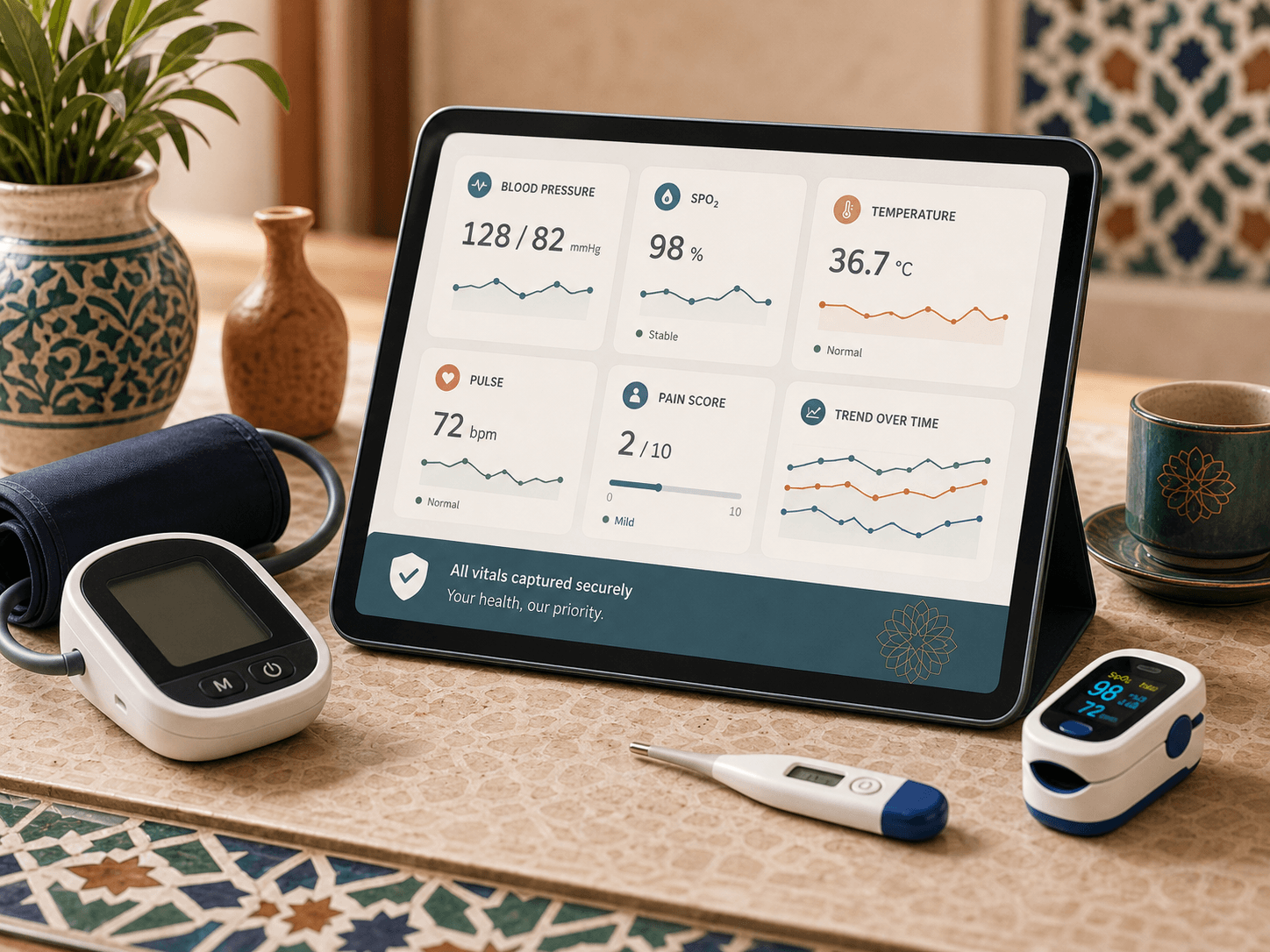
The electrocardiogram, or ECG, is one of the most useful and accessible heart tests. Performed in a few minutes, it records the heart's electrical activity and helps detect many disorders. Doing it at home saves a vulnerable patient a journey and makes it possible to act quickly when symptoms appear. This guide explains what an ECG detects, who needs one, how the test is done at home, and where its limits lie.
The electrocardiogram records the heart's electrical activity using electrodes placed on the chest, wrists, and ankles.
What is an ECG and what does it detect?
The electrocardiogram records the heart's electrical activity using electrodes placed on the chest, wrists, and ankles. The resulting tracing reflects how the electrical impulse spreads with each beat. It can detect many abnormalities: rhythm disorders (beats that are too fast, too slow, or irregular, such as atrial fibrillation), signs of a lack of oxygen to the heart muscle, the after-effects of a heart attack, conduction abnormalities, or the impact of certain disturbances, for example a potassium imbalance. It is a painless, quick, and safe test that requires no needle or product. On its own, it does not tell everything about the heart, but it is often the valuable first step of a cardiac work-up.
Why have an ECG at home
Having an ECG at home offers several advantages. First, it spares an elderly person, a tired cardiac patient, or someone actually experiencing symptoms a journey that is sometimes painful or risky. Next, it allows the tracing to be recorded at the very moment the discomfort occurs, which is valuable because some rhythm disorders are intermittent. It also fits naturally into home follow-up: regular monitoring of a patient with high blood pressure or heart failure, a check before starting a treatment, or the assessment of a fainting episode. Performed by a professional equipped with a portable device, then interpreted by a doctor, the home ECG combines comfort and responsiveness. It does not, of course, remove the need for transfer to hospital if the situation demands it.
Who needs an ECG?
An ECG may be indicated in many situations. It primarily concerns people with symptoms suggestive of a heart problem: palpitations, chest pain or tightness, unusual shortness of breath, faintness, or loss of consciousness. It is also part of the follow-up of patients with chronic illnesses: high blood pressure, heart failure, diabetes, a history of heart attack or rhythm disorder. It is often requested before certain procedures or before starting medications that may affect the heart. Finally, it can be part of a health check in people at cardiovascular risk (age, smoking, heredity, excess weight). It is always the doctor who judges the relevance and frequency of the test, according to each patient's clinical context.
How a home ECG unfolds
The test is simple and quick. The patient lies down, chest bare, in a quiet place. The professional places adhesive electrodes or clips on the chest, wrists, and ankles, after cleaning the skin if needed for good contact. The portable device then records the tracing for a few seconds, during which you must stay still and relaxed to avoid interference. The recording is painless and takes only a few minutes in total. The tracing is then sent to a doctor for interpretation. No heavy preparation is needed: you simply need to be at rest, avoid moving or talking during the recording, and report your current treatments, which can influence how the tracing is read.
Symptoms that warrant an ECG
Several symptoms should prompt consideration of an ECG. Palpitations — that is, the abnormal awareness of one's own heartbeats (a racing heart, skipped beats, or an irregular rhythm) — are a common reason. Shortness of breath on exertion or at rest, faintness, dizziness, and loss of consciousness can also reflect a heart disorder. Tightness or pain in the chest always deserves particular attention. Be careful, however: if chest pain is intense, prolonged, radiates to the arm or jaw, and is accompanied by sweating, shortness of breath, or faintness, you must not wait for a home ECG but call emergency services immediately, as it may be a heart attack — a life-threatening emergency.
Interpretation: who reads the ECG
An ECG is only of value if it is interpreted by a doctor. The tracing, which can seem abstract, requires careful reading: rhythm, rate, axis, duration, and shape of the various waves. The doctor relates these elements to the patient's symptoms, history, and treatments. In the context of a home ECG, the professional who carries out the recording sends the tracing to the doctor, who analyses it and gives an opinion. It is this medical interpretation, and not the device alone, that allows a conclusion to be reached. The same tracing can be perfectly normal in one person and reveal a problem in another: only the doctor, by combining the test and the context, can draw the right conclusions and decide on the next step.
Normal or abnormal ECG: what next?
A normal ECG is reassuring, but it does not cover everything: it records the heart at a given moment and may miss an intermittent disorder. Depending on the symptoms, the doctor may then order further tests: a prolonged 24-hour recording, a cardiac ultrasound, a stress test, or blood tests. Conversely, an abnormal ECG does not mean seriousness: it guides the diagnosis and leads, again, to targeted tests or a specialist opinion. The advantage of an integrated service is to chain these steps without interruption: a home blood draw, transmission of the results, medical reassessment. The coordinator ensures that nothing is lost between the test, its interpretation, and the decisions that follow.
ECG and follow-up of chronic heart disease
For patients with cardiovascular disease — heart failure, rhythm disorders, complicated high blood pressure, the aftermath of a heart attack — the ECG is a regular monitoring tool. It helps track the stability of the disease, assess the effect of a treatment, and detect a change before it shows up as a clinical worsening. Performed at home, it fits into overall follow-up combining blood pressure measurement, weight monitoring, observation of symptoms, and, if necessary, laboratory tests. This close monitoring, coordinated with the treating physician and the cardiologist, makes it possible to adjust care at the right time. For elderly people or those with limited mobility, it avoids repeated journeys while maintaining a high level of vigilance.
When the ECG is not enough: recognising an emergency
It is essential to remember that the home ECG is a diagnostic and follow-up tool, not a response to a life-threatening emergency. Faced with intense, persistent chest pain, especially if it radiates to the arm, shoulder, or jaw and is accompanied by sweating, nausea, shortness of breath, or faintness, you must call emergency services without delay. The same goes for a loss of consciousness, sudden difficulty breathing, or very poorly tolerated palpitations. In these situations, every minute counts, and the priority is getting to an emergency facility. SOS Nursing is a private home-care service that works alongside emergency services, never in their place: when in doubt, call for emergency help.