Diabetes has become one of Morocco's leading chronic diseases, and Marrakech is no exception. Well controlled, it allows a normal life; poorly managed, it exposes patients to serious complications affecting the heart, kidneys, eyes, and feet. The key lies in daily consistency. SOS Nursing supports diabetic patients at home with state-certified nurses, working closely with the treating physician.
Diabetes is characterised by excess sugar in the blood, resulting from insufficient or ineffective insulin.
Understanding diabetes and what is at stake
Diabetes is characterised by excess sugar in the blood, resulting from insufficient or ineffective insulin. Type 1 diabetes requires insulin from diagnosis; type 2 is more common, often silent for years, and lifestyle-related. The real danger is not the disease itself but its complications, which develop insidiously when blood glucose remains chronically elevated. In Morocco, late diagnosis is common. Understanding the disease is the first step: a well-informed patient, supported by a nurse, manages treatment more effectively and recognises warning signs earlier.
Monitoring blood glucose at home
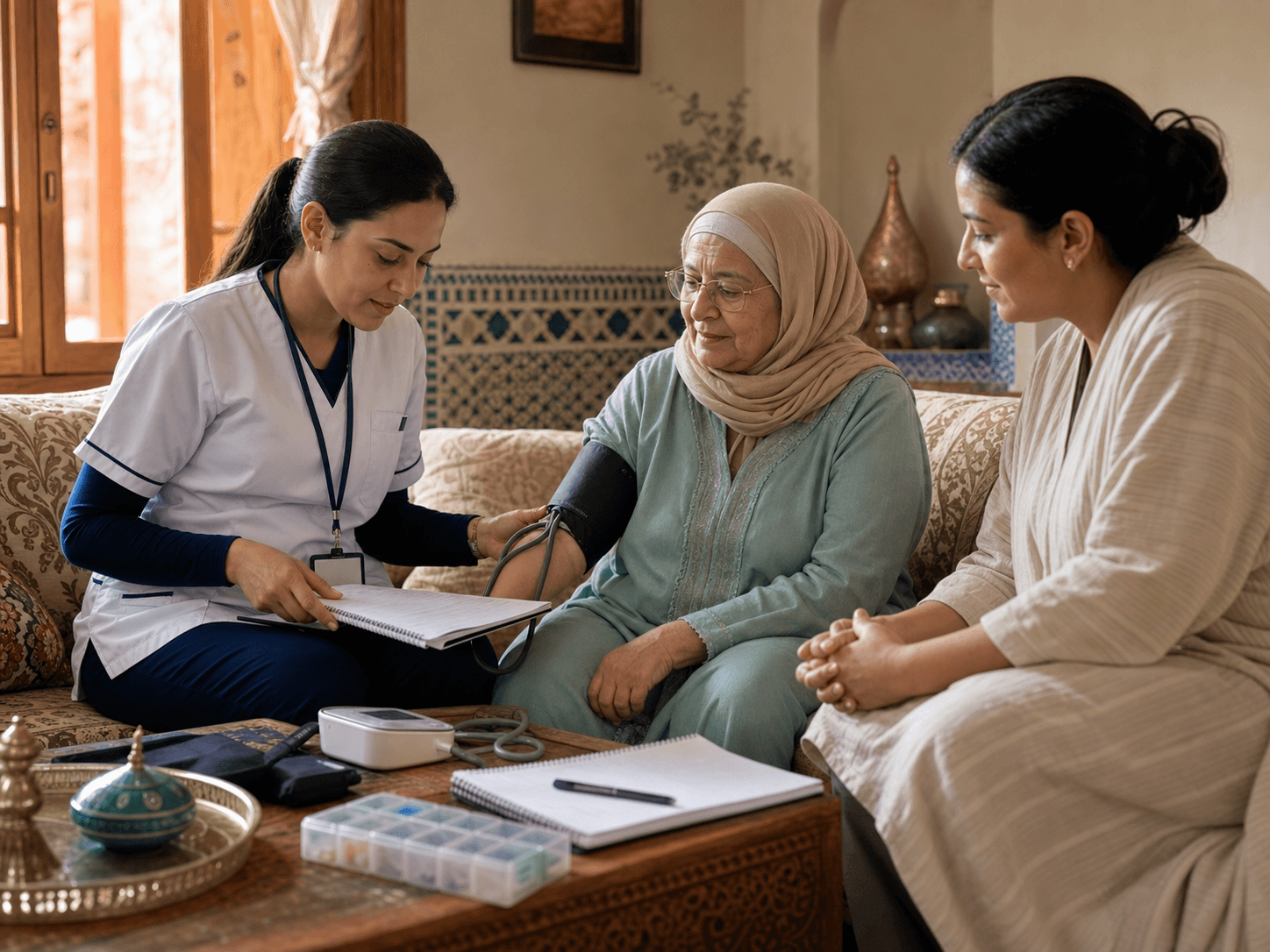
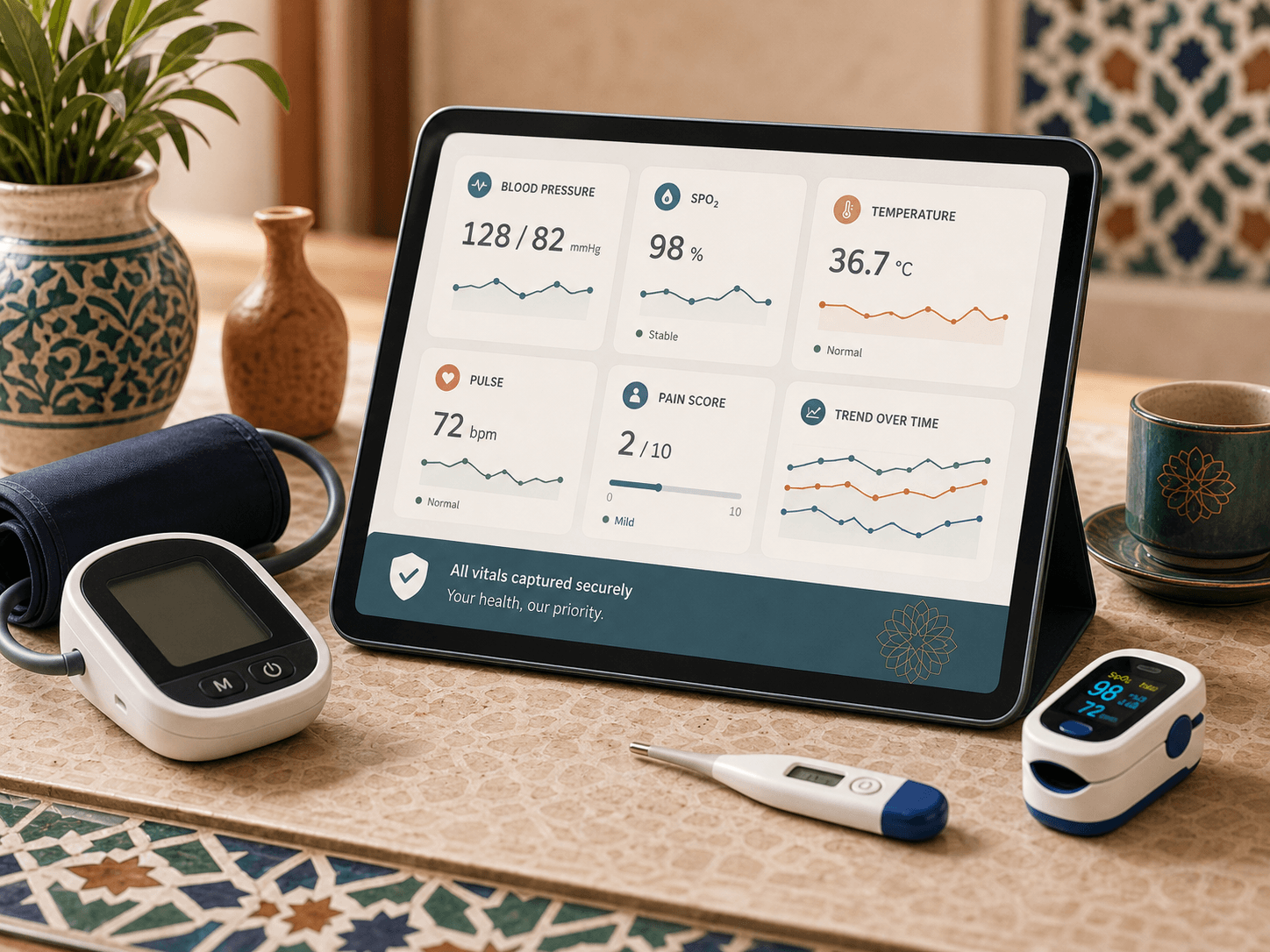
Self-monitoring of blood glucose is central to diabetes management. According to the prescription, the patient or nurse measures capillary blood glucose while fasting, before meals, or at bedtime, and records the results in a logbook. These figures guide the physician's treatment adjustments. The nurse verifies that the correct sampling technique is used, that the meter is calibrated, and that test strips are stored correctly — they are sensitive to Marrakech's heat. The nurse also explains how to interpret a high or low reading and when to act. Regular, well-kept monitoring is more valuable than sporadic checks: it is the trend, not an isolated figure, that matters.
Insulin and treatments: safe injections
Many patients depend on insulin. Its administration requires precision and regularity: correct dosage, correct injection site, site rotation to prevent lipohypertrophy, and refrigerated storage. The nurse performs or supervises injections, trains the patient and family towards self-management, and adjusts monitoring to include any associated oral medications. The nurse emphasises that no dose should be modified without medical advice, even in response to an unusual blood glucose reading. In Marrakech's warm climate, insulin storage requires particular attention: a pen left exposed to heat loses effectiveness. These steps, straightforward in appearance, determine the patient's balance and safety.
Balanced diet and Moroccan cuisine
Eating well does not mean giving up Moroccan cuisine. The goal is to adapt habits: limit white bread, honey pastries, and sugary drinks; favour vegetables, legumes, olive oil, and wholegrain cereals. The ubiquitous heavily sweetened mint tea is worth moderating. The nurse advises on balanced, well-spaced meals that avoid blood glucose spikes, and educates the family members who often prepare meals. During Ramadan, fasting requires medical advice beforehand and specific treatment adjustments. Dietary control remains the cornerstone of managing type 2 diabetes.
The diabetic foot: prevent before treating
The foot is the diabetic patient's Achilles heel. The disease reduces sensation and circulation: a minor wound can go unnoticed, become infected, and in severe cases lead to amputation. Prevention, however, is straightforward. The nurse inspects the feet at every visit, identifies corns, cracks, fungal infections, or redness, and teaches good habits: daily washing, drying between the toes, appropriate footwear, and never going barefoot. Any wound, however small, must be taken seriously and treated without delay. This regular foot monitoring is one of the most effective measures for preventing serious and irreversible complications.
Recognising hypoglycaemia and hyperglycaemia
Two contrasting situations threaten the diabetic patient. Hypoglycaemia — low blood sugar — presents with sweating, trembling, sudden hunger, palpitations, or confusion; it requires immediate sugar intake. Hyperglycaemia causes thirst, frequent urination, fatigue, and at an advanced stage nausea and a distinctive breath odour, which call for urgent medical attention. The nurse teaches the patient and family to recognise these signs and respond correctly. Keeping fast-acting sugar within easy reach is a golden rule. When identified promptly, both situations resolve quickly; left unaddressed, they can become emergencies.
Monitoring for complications and regular check-ups
Diabetes requires long-term surveillance to detect complications early. Glycated haemoglobin (HbA1c), measured every three months, reflects average blood glucose control. This is complemented by regular checks of blood pressure, kidney function, eye health via fundoscopy, feet, and lipid levels. At home, the nurse performs prescribed blood draws, monitors blood pressure, and coordinates specialist appointments with the coordinator. This network prevents complications from developing silently. Home-based follow-up makes life easier for older or less mobile patients, a common profile among long-standing diabetics.
Daily support from SOS Nursing
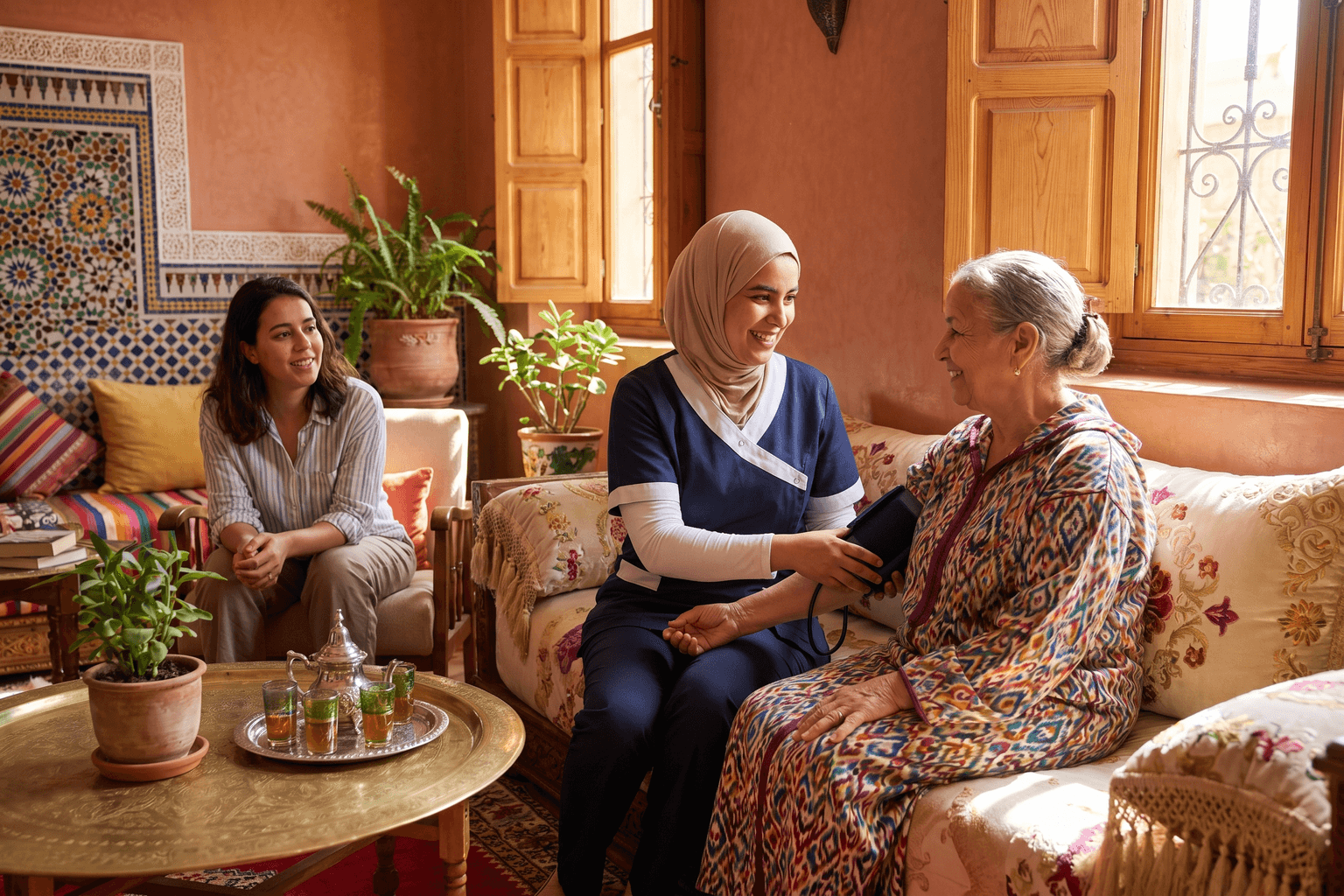
Living with diabetes means managing a thousand details every day. SOS Nursing eases this burden with structured support: regular visits for injections and monitoring, therapeutic education for the patient and family, foot surveillance, and coordination with the physician. Our nurses, salaried and trained to consistent protocols, provide the continuity that families appreciate — especially for elderly or isolated individuals. The coordinator is available for any question. This support transforms a demanding condition into a manageable daily routine, where the patient retains independence while receiving solid, reliable backing.