Home urinary catheterisation is for patients with urinary retention, severe incontinence or post-urological surgery. The insertion and maintenance of a urinary catheter require rigorous technique and regular monitoring to prevent catheter-associated urinary tract infections, the leading cause of hospital-acquired infections. SOS Nursing provides experienced registered nurses to perform these procedures at home in Marrakech, following the strictest hygiene protocols.
The main indications are acute or chronic urinary retention (prostatic adenoma, neurogenic bladder), post-operative drainage following urological or pelvic surgery, urine…
Indications for home urinary catheterisation
The main indications are acute or chronic urinary retention (prostatic adenoma, neurogenic bladder), post-operative drainage following urological or pelvic surgery, urine output monitoring in patients with renal insufficiency, and patient comfort in end-of-life palliative care. The type of catheterisation (intermittent or indwelling) is prescribed by the physician.
Catheter types and equipment selection
The Foley catheter (with balloon) is used for indwelling catheterisation with a collection bag. Clean intermittent catheterisation uses self-lubricated straight catheters, changed 4 to 6 times per day. The nurse selects the appropriate calibre (12 to 18 French gauge depending on the patient) and verifies compatibility with the patient's anatomy and medical history.
Aseptic insertion technique
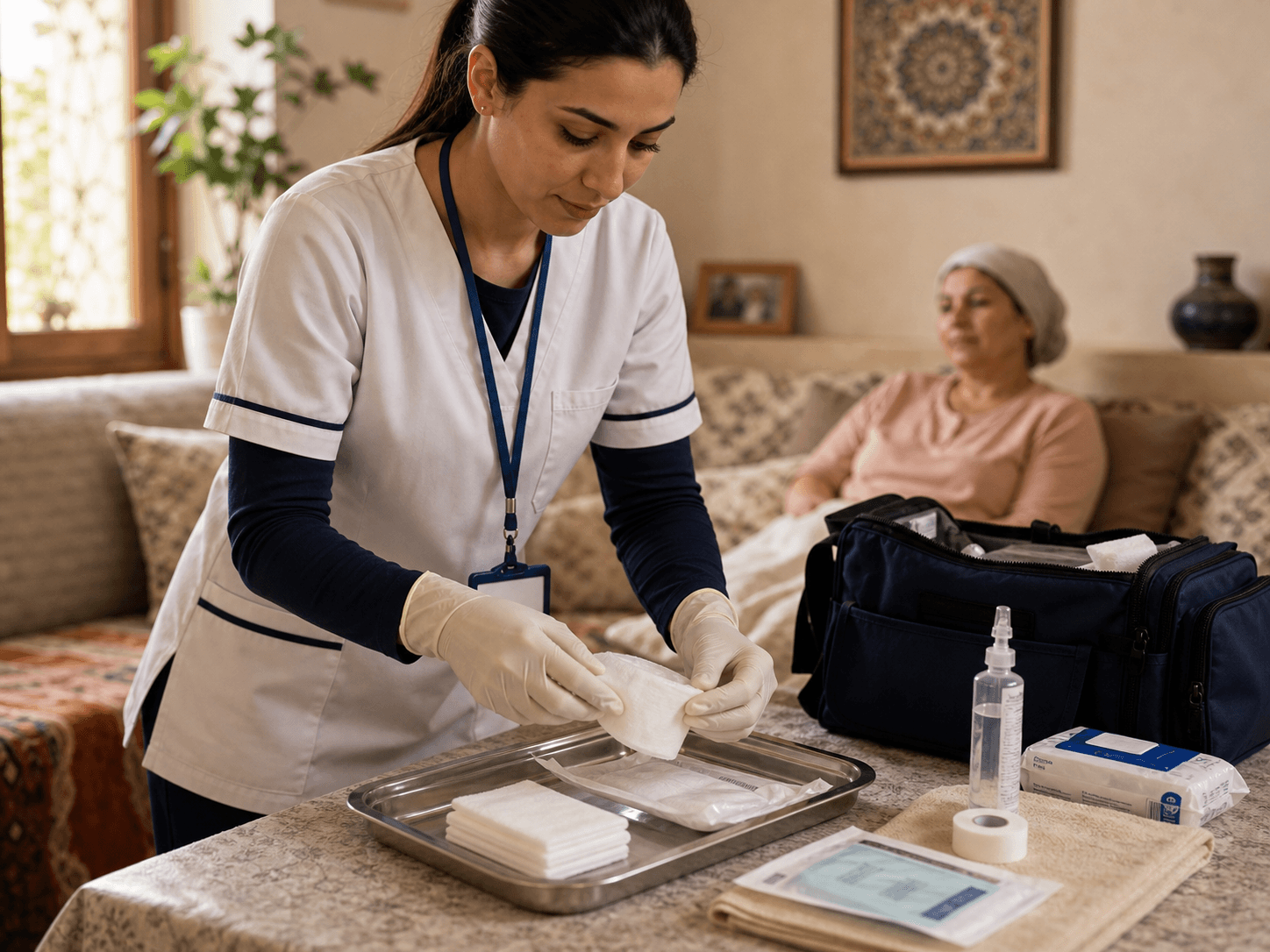
The nurse performs a surgical hand wash, prepares a sterile field, disinfects the urethral meatus and lubricates the catheter before insertion. Balloon inflation is checked, the catheter is secured to prevent traction, and the collection bag is positioned below bladder level. The procedure takes approximately 10 to 15 minutes under optimal conditions.
Monitoring and infection prevention
At each visit, the nurse checks catheter patency, urine appearance (colour, turbidity, sediment), absence of leakage, closed system integrity and urethral meatus condition. Adequate hydration (1.5 to 2 litres per day) is recommended to promote urine flow. Any sign of infection (fever, cloudy urine, pain) triggers a report to the physician.
Catheter changes and patient education
The indwelling catheter is changed every 3 to 4 weeks as per guidelines. The nurse trains the patient and carers in daily hygiene routines: regular bag emptying, meatal cleansing, and recognising warning signs. For intermittent catheterisation, the patient is gradually supported towards full autonomy in performing the procedure.