Palliative care aims to relieve the physical, psychological and spiritual suffering of patients with serious progressive illnesses, when curative treatment is no longer possible or desired. In Morocco, the National Palliative Care Development Plan encourages deployment outside hospitals. SOS Nursing offers palliative nursing care at home in Marrakech, in coordination with the attending physician, oncologist or geriatrician, so that patients can live their final days in the comfort and dignity of their own home.
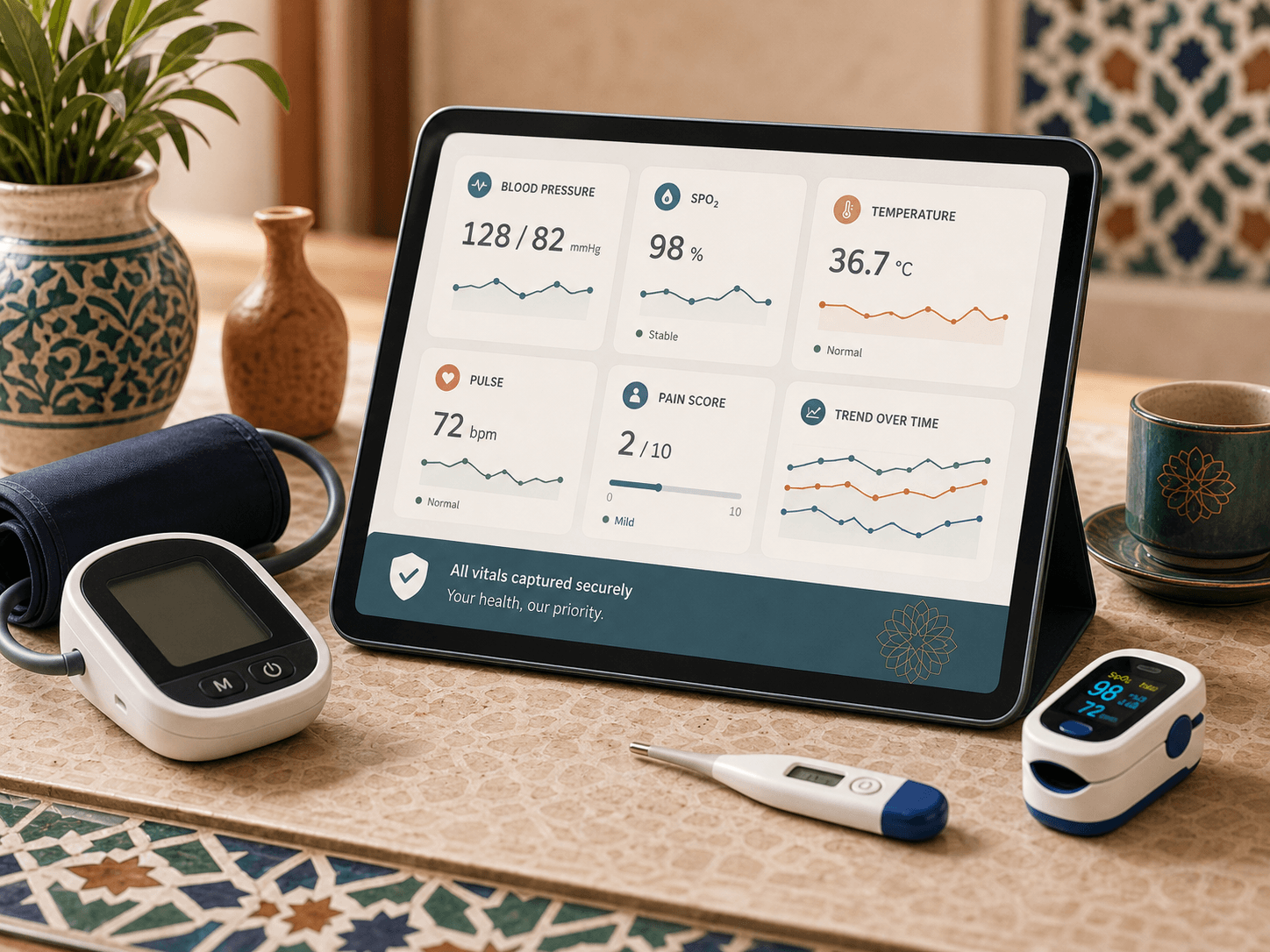
The nurse assesses pain at each visit using the Visual Analogue Scale (VAS) or the Faces Scale for non-communicative patients.
Pain and symptom management
The nurse assesses pain at each visit using the Visual Analogue Scale (VAS) or the Faces Scale for non-communicative patients. They administer prescribed analgesics (WHO ladder tiers I to III, including morphine), monitor side effects (constipation, nausea, drowsiness) and adjust administration times in liaison with the physician. Managing other symptoms — dyspnoea, nausea, anxiety, insomnia — is an integral part of the care plan.
Comfort care and nursing
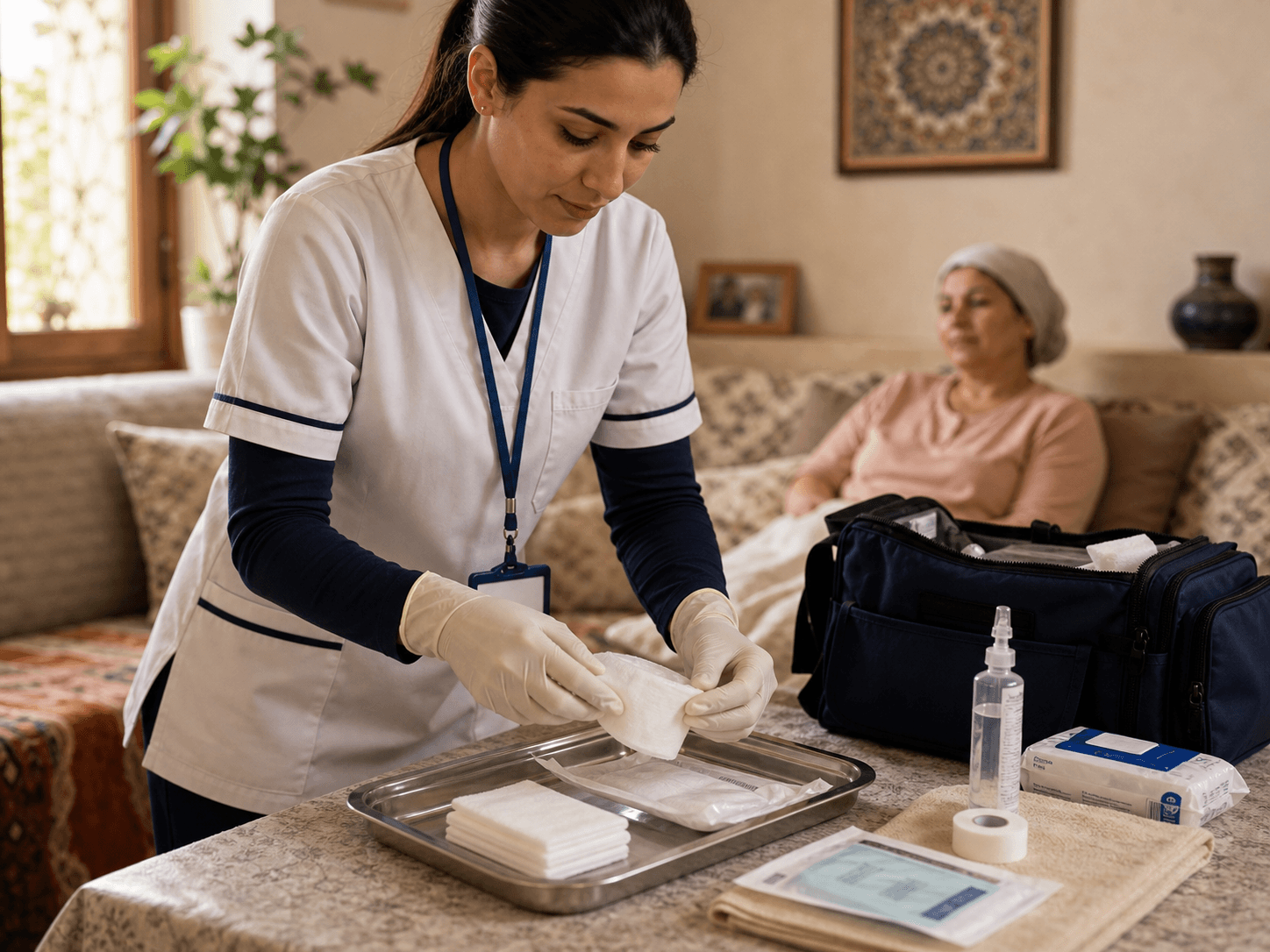
Comfort care includes bed baths, oral care (preventing dryness and oral thrush), pressure sore prevention (positioning, alternating pressure mattress, skin care), tube and infusion management, and dietary adaptation to swallowing capacity. Every procedure aims to preserve the patient's well-being and dignity.
Psychological support for patient and family
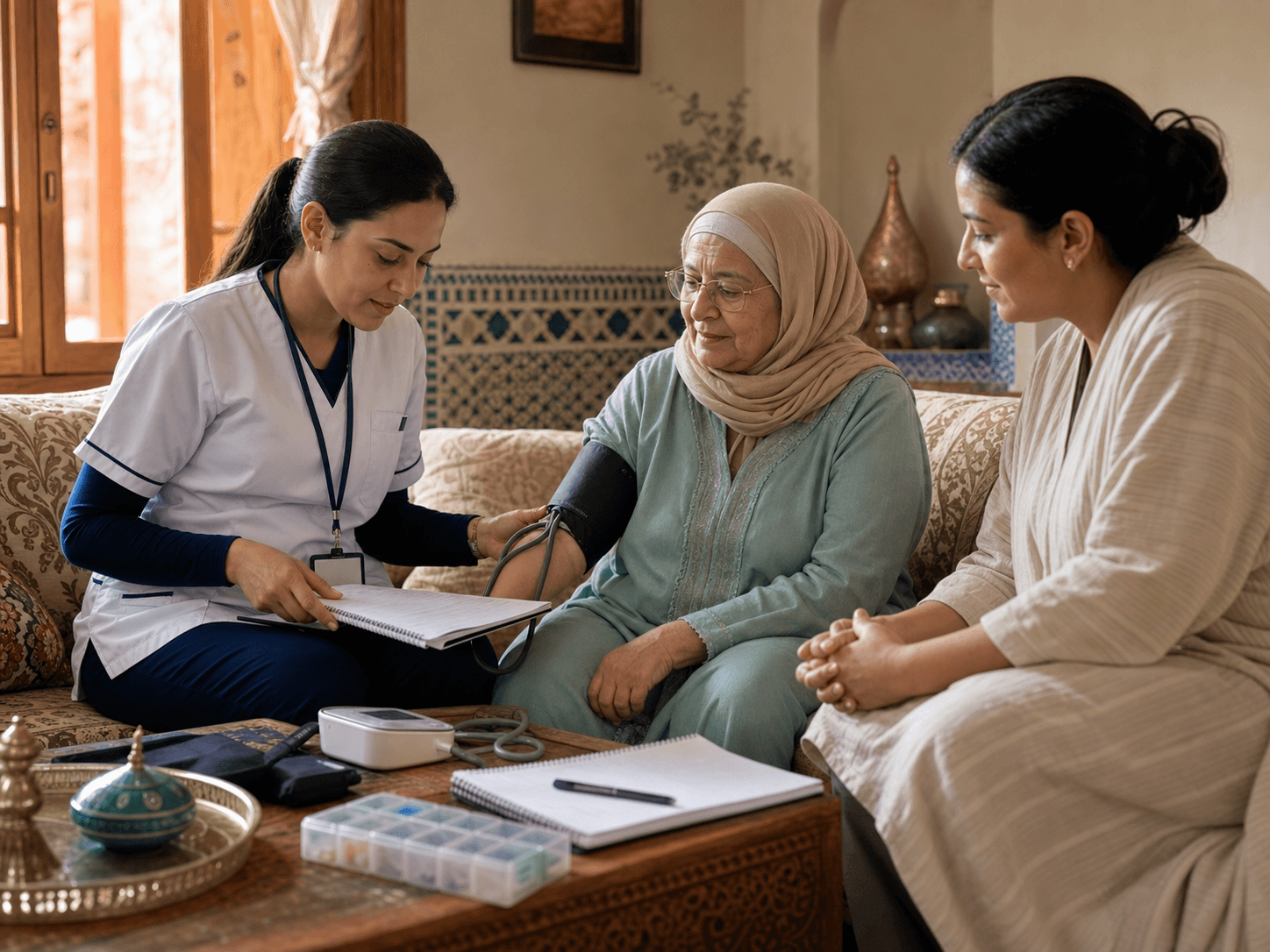
The palliative nurse is trained in active listening and emotional support. They help the patient express wishes and fears, refer to a psychologist when needed, and support family carers facing exhaustion, anticipatory grief and difficult decisions. The family is involved in the care plan and trained in comfort techniques.
Multidisciplinary coordination
Home palliative care involves coordination between the nurse, attending physician, specialist (oncologist, geriatrician, neurologist), pharmacist and, if needed, a social worker. SOS Nursing liaises between these professionals, transmits regular reports and organises case conferences to adapt the care plan to the patient's evolving condition.
Regulatory framework and coverage in Morocco
Morocco has integrated palliative care into its national health strategy. Access to tier III analgesics (opioids) is regulated under controlled substance legislation, with secure prescriptions issued by the physician. Palliative nursing procedures at home are reimbursable by the AMO on prescription. SOS Nursing assists families with the administrative steps related to coverage.