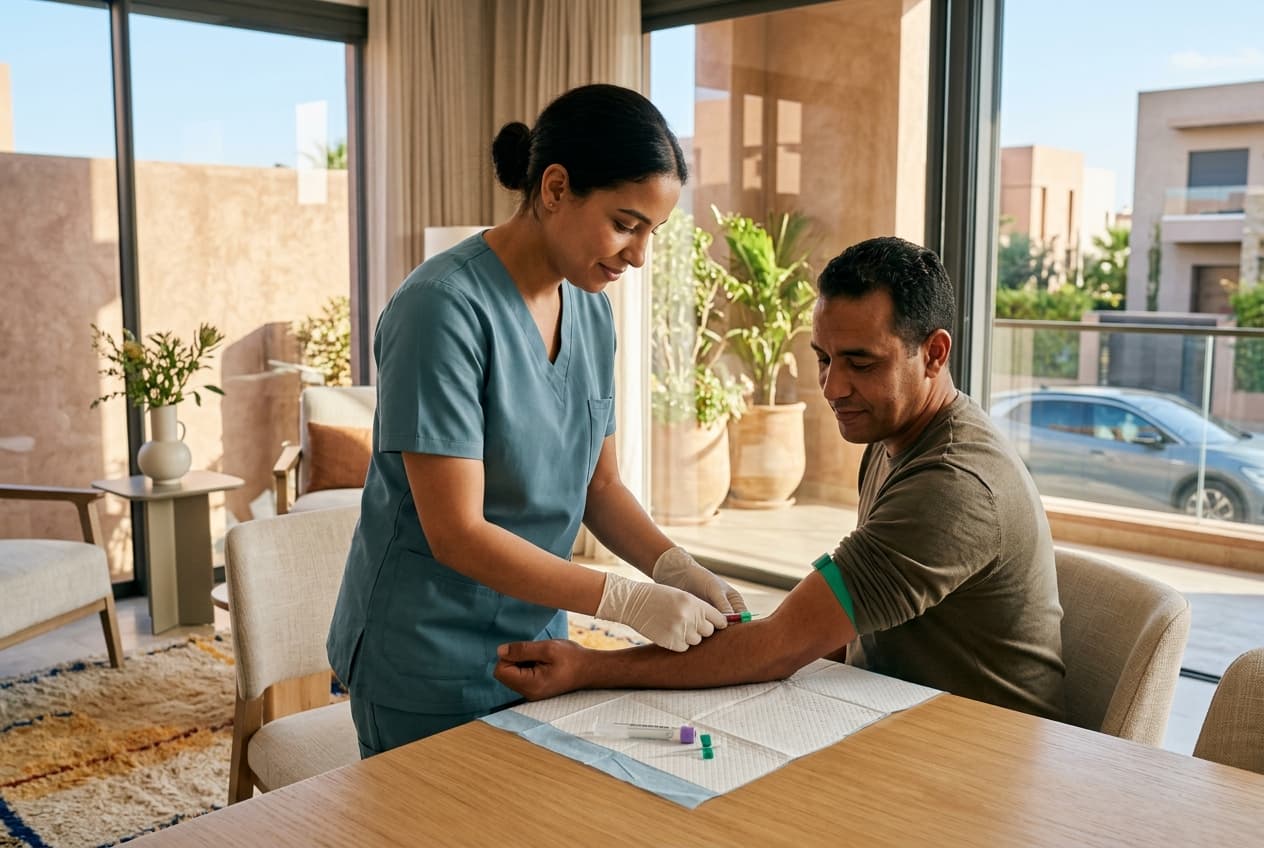
A complete home blood panel brings together in a single sample the key analyses of your health: blood count, blood glucose, renal and liver function, lipid profile, and depending on the prescription, thyroid, iron, or vitamins. A state-registered nurse travels to your home and an accredited partner laboratory carries out the analyses, with digital results within 24 to 48 hours. It is the ideal formula for an annual check-up, the follow-up of a chronic illness, or a targeted check, without going through the waiting room. Having your panel done at home makes regular follow-up easier, particularly for seniors, busy people, and patients with reduced mobility. This guide details the contents of a complete panel, the preparation required, indicative prices, the interpretation of results, and the recommended frequency according to your profile.
A complete panel generally combines several major examinations.
What a complete blood panel contains
A complete panel generally combines several major examinations. The full blood count assesses the red cells, white cells, and platelets, and screens for anaemia or infection. The fasting blood glucose measures blood sugar, the renal panel (urea, creatinine) reports on kidney function, and the liver panel (transaminases, gamma-GT) on liver function. The lipid profile (total cholesterol, HDL, LDL, triglycerides) assesses cardiovascular risk. Depending on the prescription, you can add TSH for the thyroid, vitamin D, ferritin for iron stores, uric acid, or HbA1c for diabetes follow-up. The doctor composes the panel according to your age, your medical history, and your symptoms.
Preparation: fasting and hydration
Good preparation determines the reliability of the results. For a complete panel including blood glucose and lipids, a 12-hour fast is recommended, while continuing to drink still water to stay hydrated and make the sample easier. Avoid alcohol the day before, very fatty meals, and intense physical effort on the morning of the sample, which can alter certain parameters. Report your current treatments without stopping them, unless your doctor advises otherwise, since some medications influence the assays. A normal night's sleep and the absence of acute stress are also preferable. If you are diabetic on insulin, seek advice on adapting the timing of the sample to avoid hypoglycaemia during the fast.
Indicative price of a home panel
The cost of a panel depends on the number of parameters analysed. On the Marrakesh market, a complete profile often exceeds 200 DH, a renal panel is around 180 to 280 DH, and each additional assay (TSH, vitamin D, ferritin) adds to it. To this is added a travel charge of about 50 to 150 DH, billed only once regardless of the number of analyses. The exact price, calculated from your prescription, is communicated before the sample. Grouping several analyses in one panel optimises the cost, since the travel is not multiplied. Keep the named invoice and the prescription: they are needed for a reimbursement claim with the AMO/CNSS or your mutual fund.
Interpretation and follow-up
The results are validated by the accredited partner laboratory and transmitted within 24 to 48 hours digitally, with the reference values shown next to each parameter. A result outside the norms does not necessarily mean illness: it must be interpreted by your doctor, in the context of your age, your medical history, and your treatment. Avoid anxiety-inducing self-interpretation based on information found online. Depending on the results, the doctor may request a further examination, a follow-up check, or a treatment adjustment. If needed, we can schedule a control sample or home nursing follow-up, and pass the results to your treating doctor for coordinated care.
How often to have a panel
The recommended frequency depends on your health profile. An annual health check is a good basis for an adult with no condition, allowing early screening for diabetes, a lipid abnormality, or a deficiency. It becomes more frequent (every 3 to 6 months, or even more) in cases of diabetes, hypertension, high cholesterol, kidney disease, or long-term treatment requiring biological monitoring. Before the age of 40 and with no risk factor, a check every two to three years may be enough, according to the doctor's advice. Carrying out this check at home makes regularity easier, especially for seniors and busy people who tend to put off a trip to the laboratory.
A targeted panel according to your health profile
Beyond the general check-up, the panel can be targeted according to your situation. For a diabetic patient, HbA1c and blood glucose are the priority; for cardiovascular follow-up, the lipid profile and sometimes specific markers. A tired woman may benefit from a ferritin assay and a full blood count to look for anaemia, which is common. Before or during pregnancy, specific panels are prescribed. Seniors benefit from monitoring of kidney function, vitamin D, and the thyroid. An athlete or a person on a particular treatment will have their own parameters to monitor. The nurse takes the sample according to the prescription, and it is the doctor who adapts the contents of the panel to your real needs.
Who the home panel is particularly useful for
A home panel brings real convenience to certain groups. Elderly people and those with reduced mobility avoid a tiring and risky trip. Chronic patients gain in regularity of follow-up, which improves the control of their illness. Overloaded working people fit the sample easily into their schedule, early in the morning before work. Families can have several members sampled during a single visit. Travellers and expatriates access a reliable check without knowing the local laboratories. In every case, the service guarantees the same quality of analysis as the laboratory, with the added convenience of home and multilingual support for the international clientele.