While travelling in Marrakesh, you can have your blood tests done without leaving your hotel or riad: a state-registered nurse travels to you and an accredited partner laboratory processes the samples, with digital results within 24 to 48 hours. An unexpected health problem, a check needed during a long-term treatment, a certificate required for an activity, or simply the wish to verify a symptom: all of these are reasons to use a home sample far from home. The service is multilingual (French, English, Spanish, German, Arabic) and can be coordinated with your travel insurance and your usual doctor. This guide explains how it works for a visitor, which analyses are possible, how the results will be usable when you return, and how to manage billing and insurance.
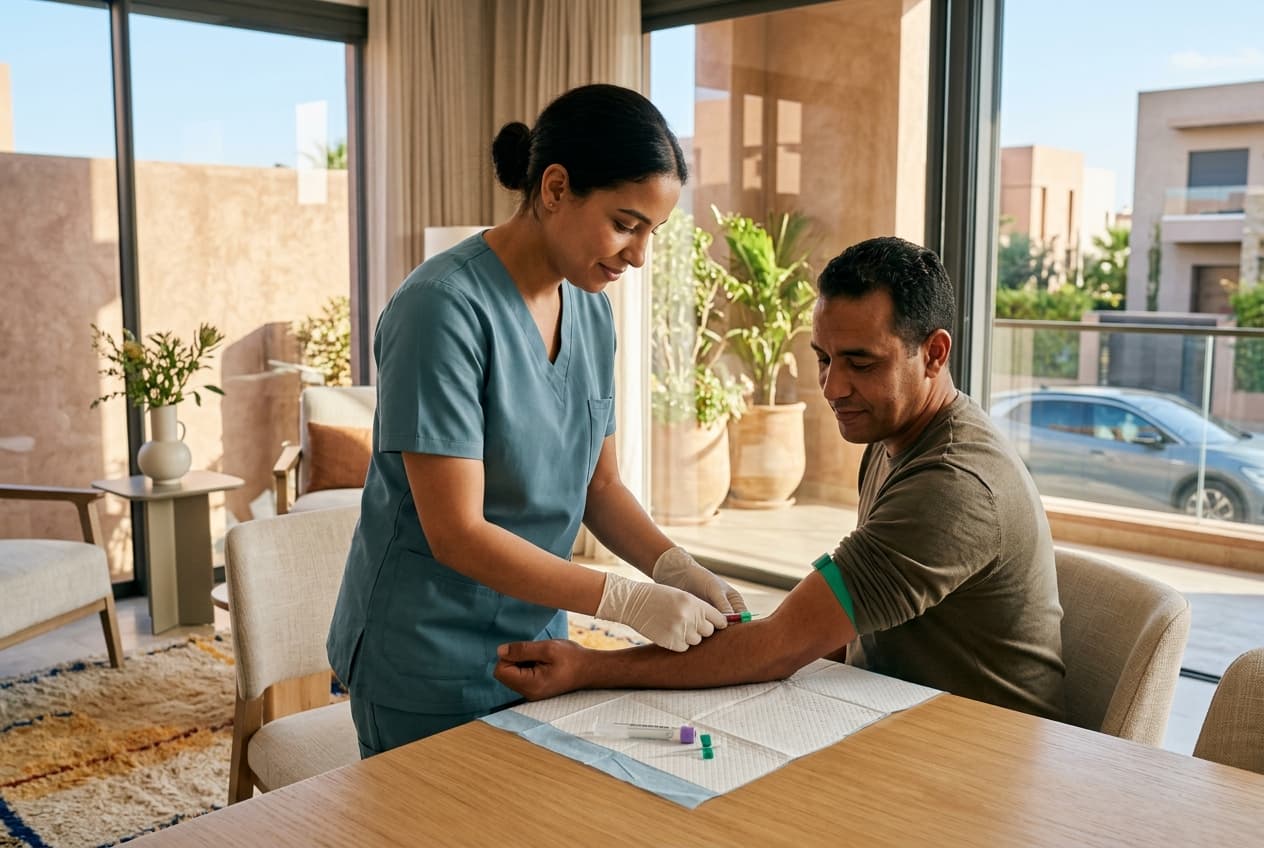
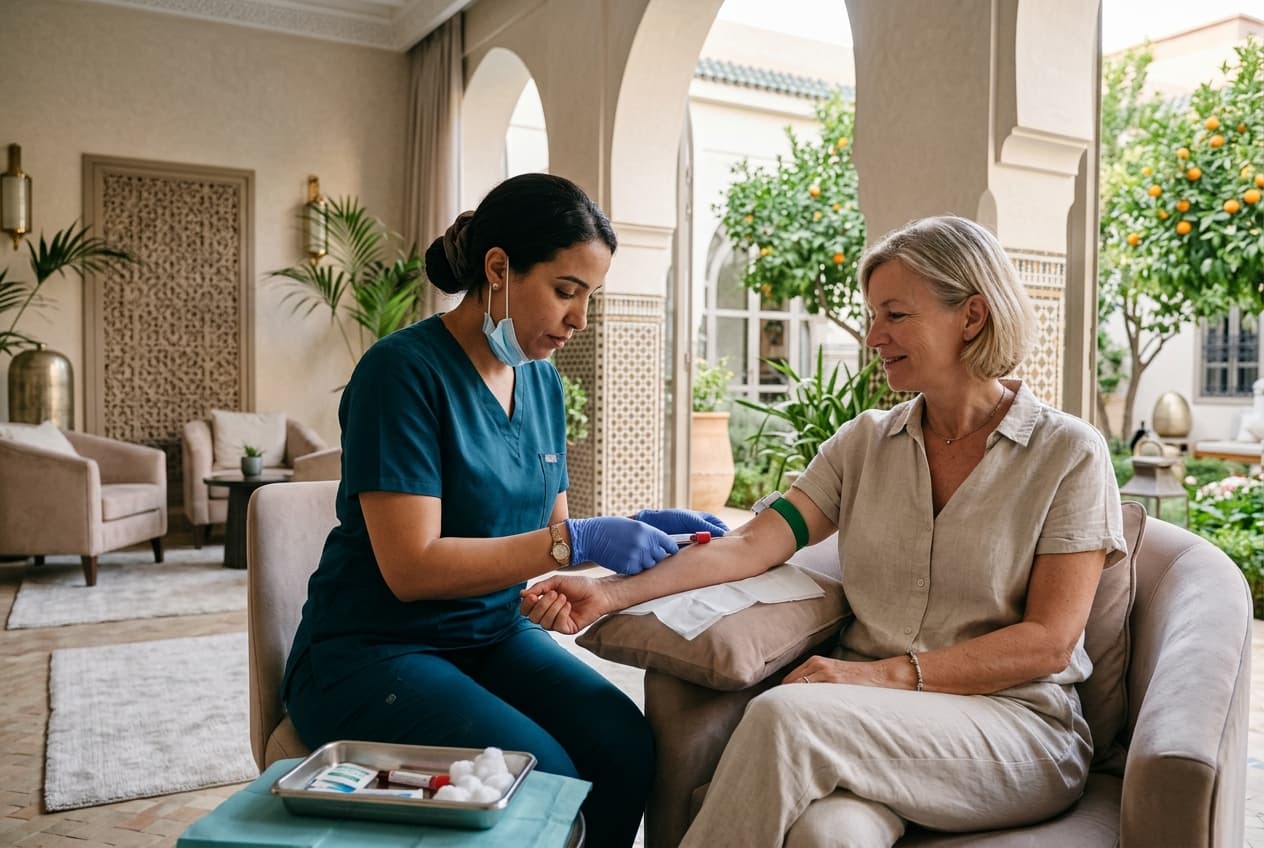
The sample is taken directly in your hotel room, your riad, or your rental, at the slot that suits you, without having to find a laboratory in an unfamiliar city.
Analyses at your hotel or riad
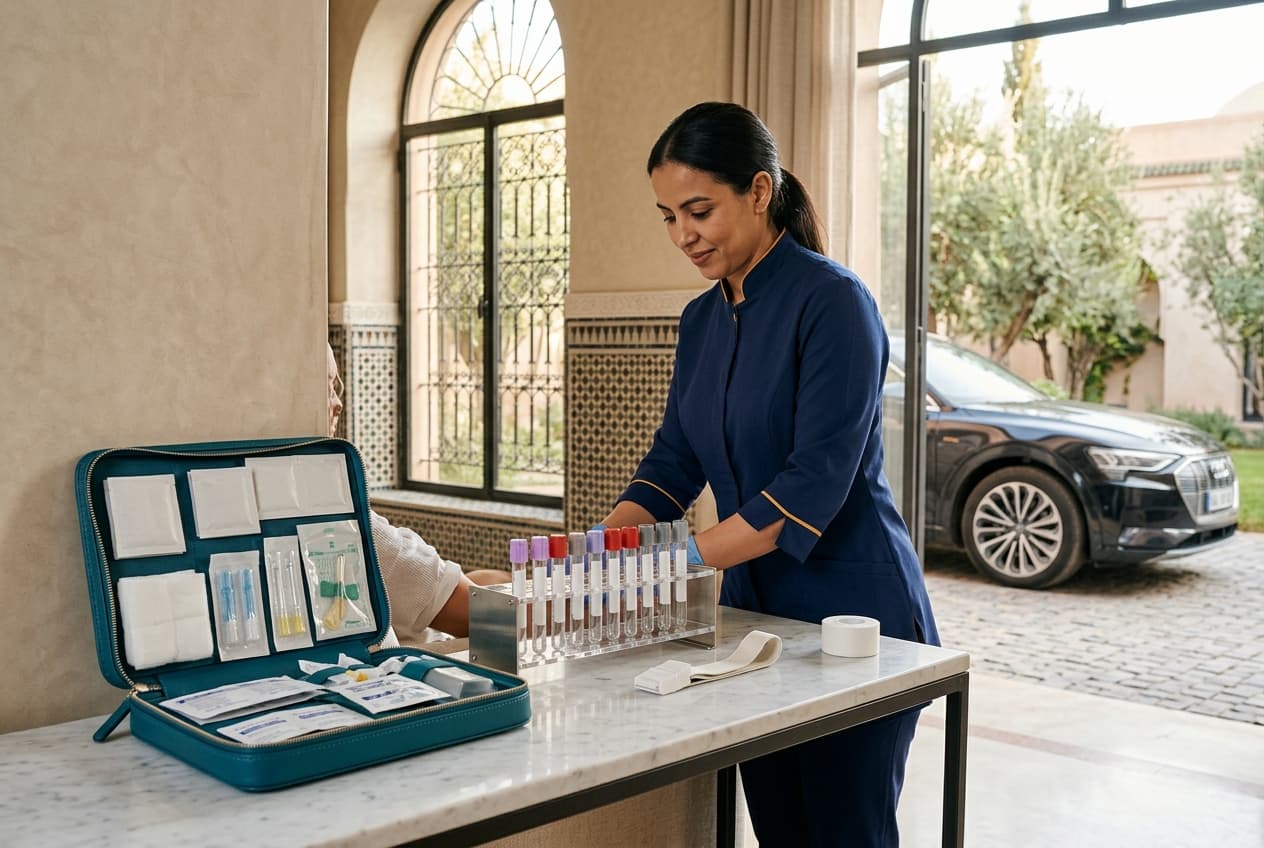
The sample is taken directly in your hotel room, your riad, or your rental, at the slot that suits you, without having to find a laboratory in an unfamiliar city. It is particularly convenient for families with children, seniors travelling, couples on honeymoon, or business travellers with a busy schedule. You avoid taxi journeys, waiting in a room, and the language barrier in a local establishment. The nurse arrives with all the necessary sterile equipment and applies the same standards of hygiene as in a laboratory. The hotel reception or the riad host can help coordinate the appointment and access to the room.
A multilingual service
The language barrier is often the main obstacle to getting care abroad. Unlike most local providers who only speak French or Arabic, our support is provided in French, English, Spanish, German, and Arabic. The preparation instructions, the explanations during the sample, the reports, and the coordination with your doctor or your insurer are done in your language. This smooth communication reduces stress and misunderstandings, and ensures that you understand precisely what is being done and why. For an international family or a lone traveller, being able to discuss a health matter in your own language is a guarantee of peace of mind and safety.
Which analyses for a traveller
Most routine analyses can be carried out during your stay. A traveller may need a control panel as part of a chronic treatment, anticoagulant follow-up (INR), a check after a digestive upset common when travelling, a test in the event of fever or unexplained fatigue, or analyses required for a formality. The full blood count, blood glucose, renal and liver panels, lipid profile, CRP, electrolyte panel, urine tests, and many other assays are possible at home. The nurse takes into account the transport conditions specific to certain analyses. If a particular test requires a specific platform that cannot be done with a home sample, you will be directed accordingly.
Turnaround and format of the results
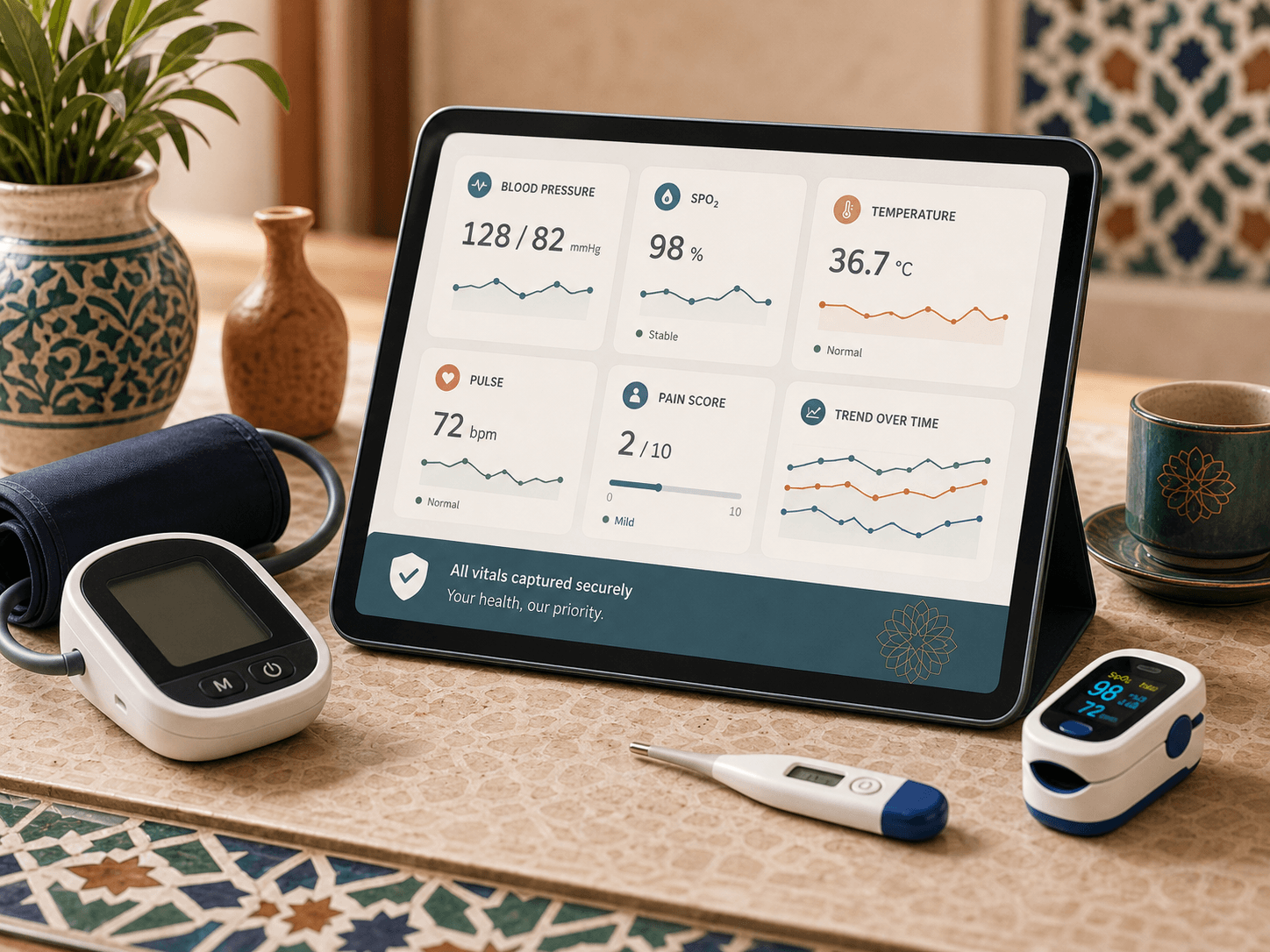
Digital results are generally available within 24 to 48 hours depending on the analyses, which is compatible with the length of a holiday stay. They are sent by email or WhatsApp in a clear, standard format, usable abroad by your doctor when you return home. The accredited partner laboratory validates each file, which guarantees the reliability of the values and their compliance with international presentation standards. You can thus continue your follow-up without interruption once back home. The reports state the units and reference values, making comparison with your usual analyses easier. In the event of a concerning result, a referral to a local doctor can be arranged quickly.
Travel insurance and supporting documents
The question of reimbursement is central for a visitor. Always keep the itemised invoice and the prescription: they are needed for a claim with your travel insurance. We provide the documents in a clear format and we can liaise with your assistance company if coverage is planned. Many travel insurance contracts cover medical costs incurred abroad, sometimes subject to prior agreement or a claim declaration within a given time. Notify your assistance company as soon as possible and keep all supporting documents (named invoice, prescription, reports). This administrative care greatly eases reimbursement on your return.
Health while travelling: practical tips in Marrakesh
A few precautions limit health worries during a stay in Marrakesh. Hydrate generously, especially in the hot season, and prefer sealed bottled water. Be careful with raw foods and ice cubes to avoid traveller's digestive upsets. Bring a kit containing your usual treatments in sufficient quantity, together with the prescriptions, and a sheet summarising your medical history and allergies, ideally translated. Protect yourself from the sun and adapt your activity to the heat, especially elderly people or those with heart conditions. In the event of a persistent symptom, a home sample allows a quick diagnosis. For a life-threatening emergency, the reflex remains the SAMU (141) or Civil Protection (150).
Prices for travellers
Pricing is transparent and announced in advance. The price depends on the analyses requested: as a guide on the market, a full blood count costs about 80 DH and a complete profile more than 200 DH, to which a travel charge of about 50 to 150 DH is added depending on the zone and time of day. A clear quote is communicated before the visit, with no hidden charges or overpricing linked to tourist status. Payment is simple and an itemised, named invoice is issued for your insurer. Grouping several analyses in one visit optimises the cost, since the travel is billed only once. Ask for the breakdown of items to compare calmly and anticipate reimbursement by your travel insurance.