Teleconsultation has become a lasting fixture of the Moroccan medical landscape. Convenient for a quick opinion, a prescription renewal, or a follow-up question, it nevertheless does not replace everything. You still need to know when it is appropriate, what the law says, how to get reimbursed, and where its limits lie. This guide reviews online medical consultation in Morocco and explains how to combine it intelligently with a home visit.
Teleconsultation is a medical act carried out remotely, by video or telephone, between a patient and a doctor.
What is teleconsultation?
Teleconsultation is a medical act carried out remotely, by video or telephone, between a patient and a doctor. It is part of telemedicine, which encompasses all remote medical practices. In practice, you talk with a doctor by video call: they ask you about your symptoms, observe what is visible on camera, review the documents you send them (prescriptions, test results, photos of a lesion), and give you an opinion. They can write an electronic prescription, refer you for an examination, or recommend an in-person consultation. Teleconsultation is not limited to the pandemic that popularised it: it meets a lasting need for accessibility and speed, particularly for patients who are far away or have limited mobility.
How a teleconsultation unfolds
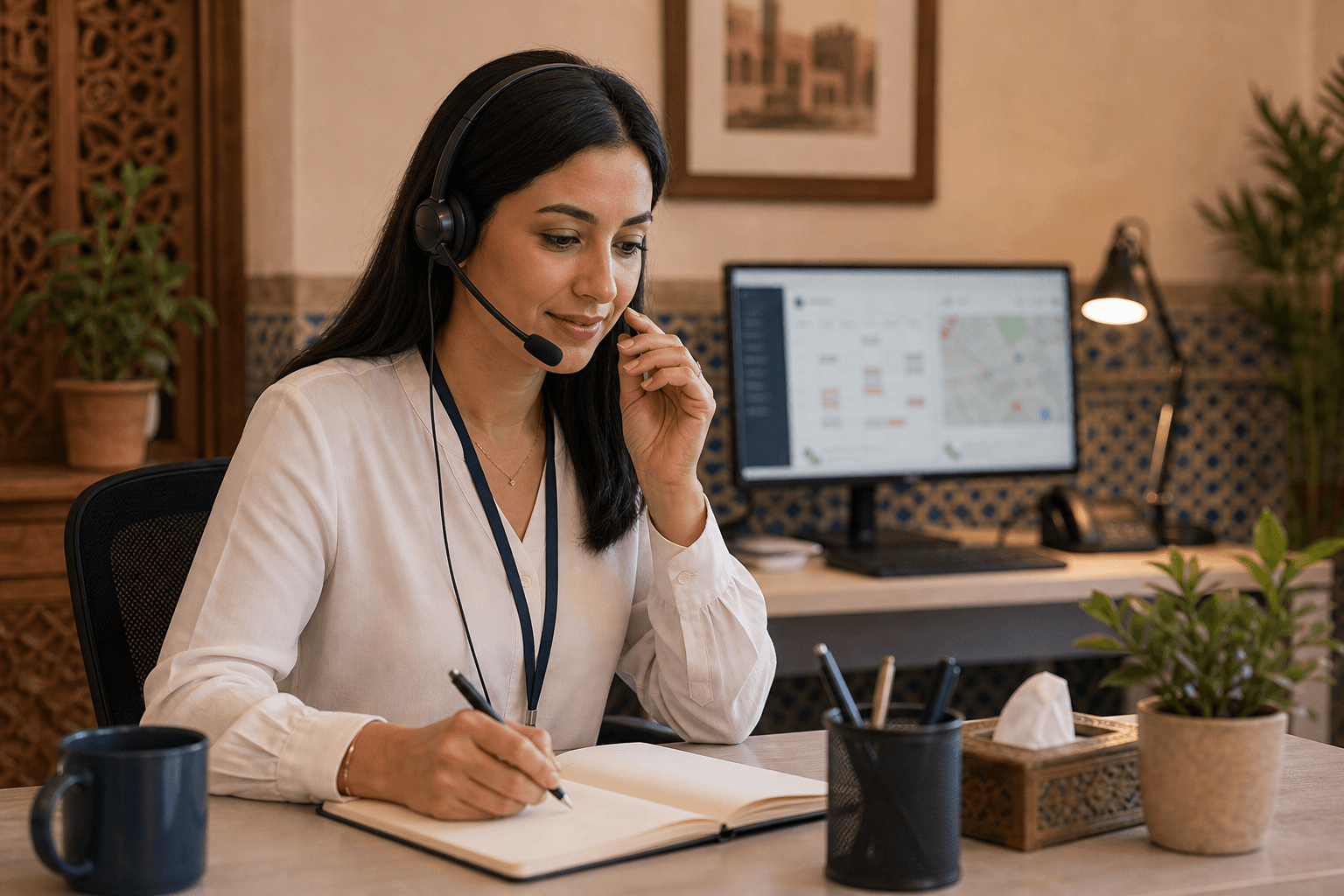
The process is simple. You book an appointment through a platform or with a coordinator, then you connect at the agreed time from a smartphone, tablet, or computer. Prepare your medical documents, the list of your treatments, and your questions in advance. Settle in a quiet, well-lit place where you can speak freely. The doctor leads the interview as they would at the office: reason for the visit, medical history, symptoms. They may ask you to show an area of the body, take your temperature, or describe readings (blood pressure, blood glucose) if you have home devices. At the end, they provide you with a report, a prescription if necessary, and clear instructions on what to do and on follow-up.
The legal framework for telemedicine in Morocco
Telemedicine in Morocco is governed by a regulatory framework that defines the conditions for its practice. The essential principles are the patient's informed consent, respect for medical confidentiality, the quality and safety of the procedures, and the traceability of the consultation in the patient's record. The teleconsultation must be carried out by a doctor authorised to practise in Morocco, in compliance with professional ethics. It is only appropriate when it suits the clinical situation: the doctor remains free, and indeed obliged, to redirect to an in-person consultation if the remote examination does not allow a safe conclusion. This framework aims to protect the patient as much as to guarantee a quality medical act, equivalent in rigour to a standard consultation.
AMO, CNSS, and reimbursement
Reimbursement for telemedicine procedures falls within the framework of compulsory health insurance (AMO). For private-sector employees, AMO is managed by the CNSS; other schemes cover civil servants and the self-employed. Coverage depends on reference rates, the applicable percentages, and the conditions specific to each insurer. To stand a chance of reimbursement, it is essential to keep the supporting documents: the invoice, the teleconsultation report, and the prescription. A mutual insurer or supplementary insurance may cover the remaining balance. As the terms change regularly, it is wise to check with your fund the exact conditions applicable to teleconsultation at the time of your claim, in order to build a complete file.
When teleconsultation is appropriate (and its limits)
Teleconsultation excels for situations that do not require a physical examination: an opinion on mild symptoms, renewal of a stable chronic treatment, interpretation of test results, prevention advice, remote follow-up of a known condition, or guidance within the healthcare system. It does, however, have clear limits. It does not allow listening to the chest, palpating, or carrying out examinations that require physical contact. It is unsuitable for urgent or potentially serious situations. Faced with chest pain, difficulty breathing, a feeling of faintness, or any worrying sign, you do not wait for a teleconsultation: you call emergency services immediately. The rule is simple: teleconsultation helps to triage and follow up, not to manage an emergency.
Teleconsultation, home visit, or clinic: how to choose
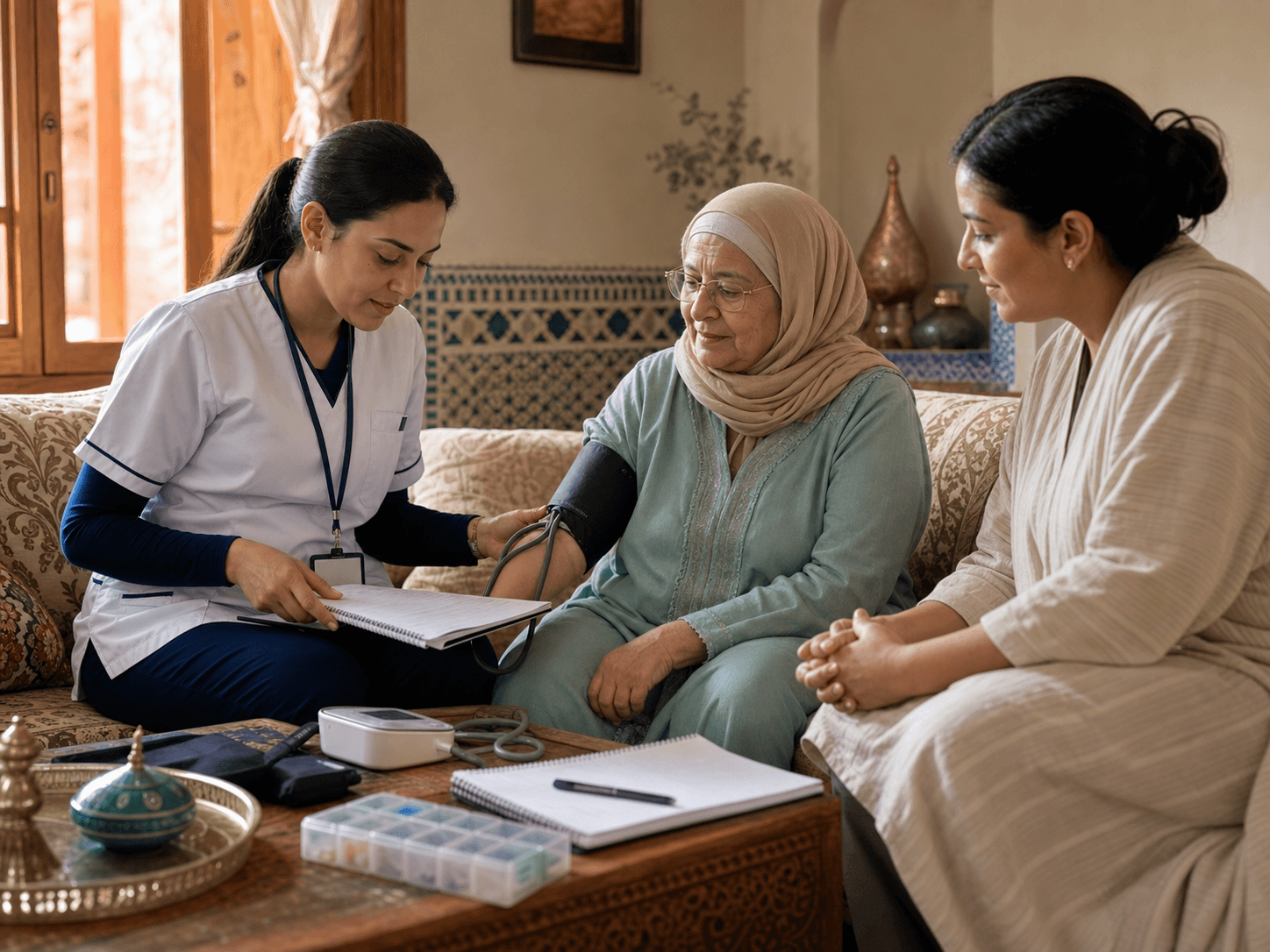
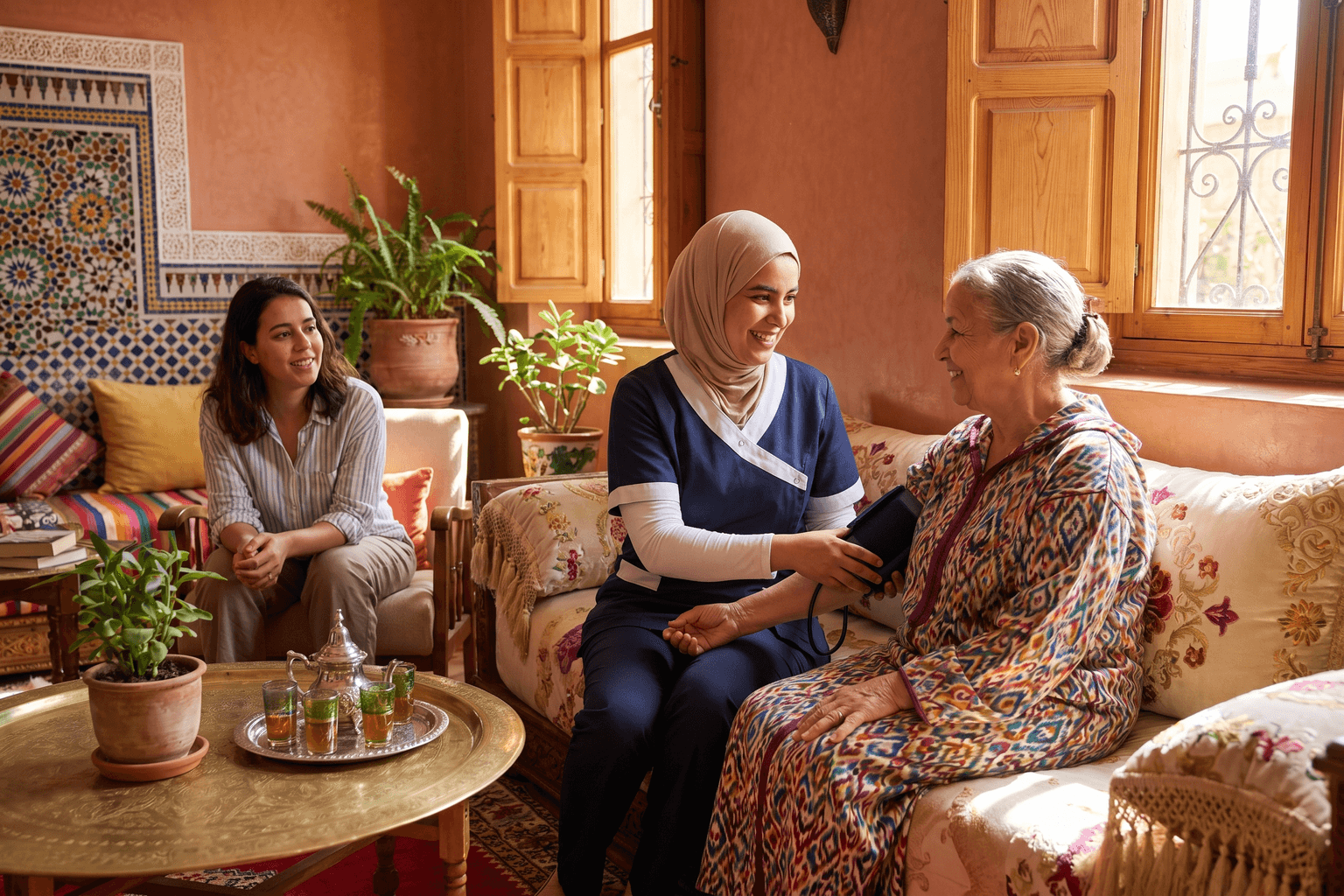
These three options are complementary. Teleconsultation is ideal as a first step, for a quick opinion or a follow-up that does not require a physical examination. The home visit becomes necessary when a clinical examination is needed but travel is difficult: a feverish child, an elderly person, a patient recovering from illness. The clinic or hospital remains essential as soon as technical facilities are needed — imaging, urgent tests, an intervention. The advantage of a service like SOS Nursing is being able to switch from one to the other without interruption: if the teleconsultation reveals the need for an examination or care, a doctor or a nurse can be arranged at home straight afterwards, with a shared record and a coordinator ensuring continuity.
Prescription, tests, and follow-up after the teleconsultation
At the end of a teleconsultation, the doctor can issue an electronic prescription that you present at the pharmacy, order laboratory tests, or recommend a further examination. This is where an integrated service makes full sense: the prescribed blood draw can be carried out at home by a nurse, the results sent, then interpreted during a new exchange. Likewise, an injectable treatment or a dressing prescribed remotely can be carried out at home without another trip. Follow-up is essential: the doctor sets a checkpoint, and the coordinator ensures that the steps — tests, care, reassessment — follow on without loss of information. This continuity turns a simple online consultation into genuine, complete care.
Data protection and confidentiality
An online consultation handles health data, among the most sensitive there is. In Morocco, its processing is governed by the legislation on the protection of personal data, under the supervision of the CNDP (National Commission for the Control of Personal Data Protection). In practice, this requires obtaining your consent, using secure tools, restricting access to only the professionals concerned, and keeping exchanges confidential. As a patient, favour a private connection, avoid unsecured public Wi-Fi networks for discussing medical matters, and make sure the platform used meets these requirements. A serious service informs you about how your data is collected, stored, and protected, and guarantees medical confidentiality.
The SOS Nursing approach: teleconsultation + home handover
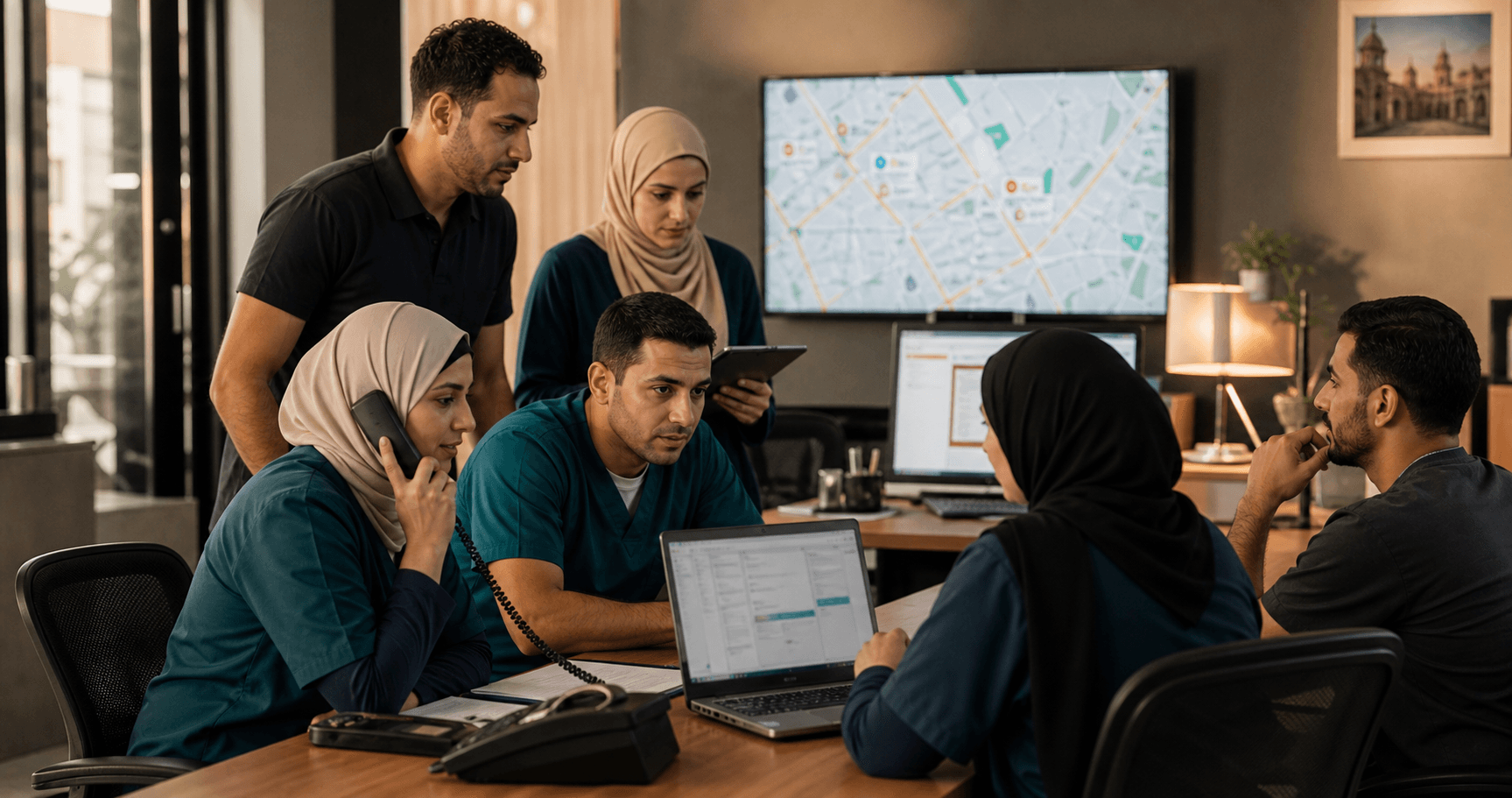
At SOS Nursing, teleconsultation is not a standalone service but the first link in a chain of care. It allows a situation to be assessed quickly, to provide guidance, and to decide on the next step: is simple advice enough, is a physical examination needed, care, tests? If a concrete procedure is required, the team arranges a doctor or a nurse at home without delay, with the same record and the same coordinator. This coordination avoids the common pitfall of the standalone teleconsultation, which sometimes leaves the patient alone with a prescription but no practical solution. By linking the remote and the in-person, you get coherent care that is fast and suited to the daily life of Marrakech families.