A new baby turns daily life upside down, especially for first-time parents. Between exhaustion, breastfeeding, newborn care, and the mother's recovery, new parents can feel overwhelmed. Professional support at home makes an enormous difference. In Marrakech, SOS Nursing offers visits from a qualified nurse or midwife to help make those first weeks safe, support breastfeeding, and monitor the health of both mother and child.
Discharge from the maternity unit often happens quickly, while everything is still new.
Why home follow-up matters after the birth
Discharge from the maternity unit often happens quickly, while everything is still new. Back home, questions come thick and fast: is the baby eating enough, is the cord healing properly, is this much crying normal? A home visit provides practical answers and reassurance. The carer observes the baby, supports the mother, identifies difficulties before they take hold, and demonstrates simple techniques. This support reduces anxiety, prevents certain complications, and helps parents build confidence. In an emotionally vulnerable period, knowing that a professional will visit regularly profoundly changes the experience of those first weeks.
Umbilical cord care
The umbilical cord requires daily care until it falls off — usually between five and fifteen days after birth. The carer shows parents how to clean and dry the area, recognise a cord that is healing normally, and spot warning signs: extensive redness around the navel, purulent discharge, unpleasant odour, or the baby's temperature rising, all of which warrant medical advice. Good hygiene and careful drying are usually all that is needed. These procedures feel daunting to new parents but quickly become simple once demonstrated. Cord monitoring is one of the points checked at every home visit.
Breastfeeding support
Breastfeeding, though natural, does not always go smoothly. Soreness, cracked nipples, doubt about milk supply, and difficulty with latching can discourage mothers from the very first days. The carer observes a feed, corrects positioning and latch, advises on feeding frequency, and reassures parents with the signs of a well-fed baby: wet nappies, regular stools, and weight gain. If bottle-feeding is chosen or necessary, the carer also guides preparation and sterilisation. This personalised, non-judgemental support helps each mother find the feeding approach that works for her and her baby.
Monitoring the newborn's health
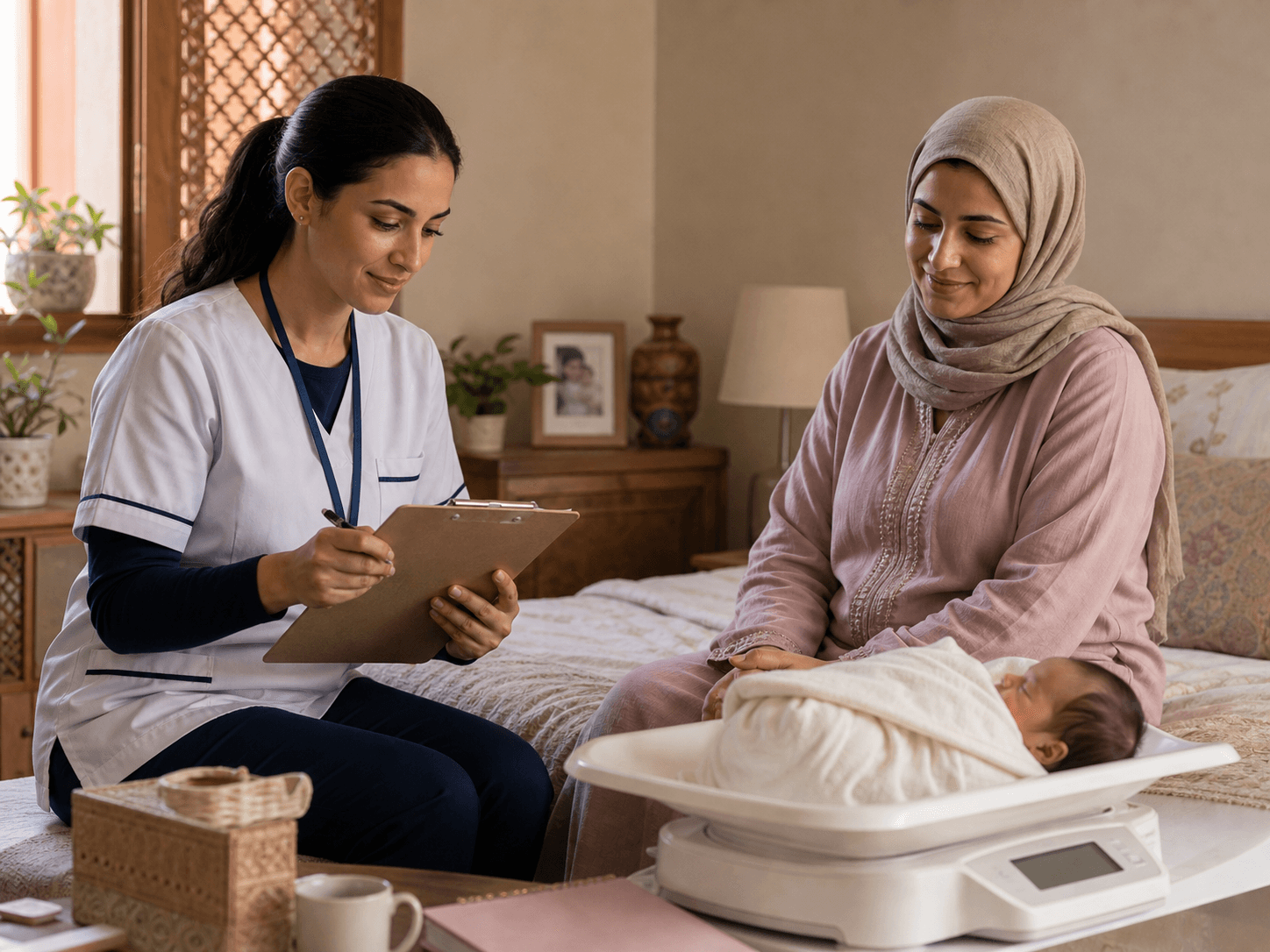
The newborn receives careful monitoring at each visit. The carer checks weight — the key indicator of health — observes skin colour for jaundice, assesses hydration, behaviour, sleep, and stools. Temperature is recorded and warning signs noted: refusal to feed, excessive sleepiness, fever, breathing difficulty, or marked jaundice. Detected early, these signs lead to prompt paediatric review. This professional vigilance complements medical follow-up and reassures parents who do not always know what is normal in such a tiny person.
Taking care of the mother
The postnatal period concerns the mother too, whose health is sometimes overlooked in the focus on the baby. The carer monitors healing — whether from a caesarean section or an episiotomy — checks bleeding, blood pressure, and signs of infection. Fatigue, diet, bowel recovery, and emotional wellbeing are also addressed, because baby blues and postnatal depression are common and too often go unspoken. Identifying a mother in distress allows timely referral. Taking care of the mother is also taking care of the baby: a supported, rested mother is better able to welcome and bond with her child.
Recognising warning signs
Certain signs in either the baby or the mother call for prompt advice. In the newborn: fever, persistent refusal to feed, unusual drowsiness, worsening jaundice, breathing difficulty, or an infected cord. In the mother: fever, heavy bleeding, calf pain or redness, an inflamed caesarean wound, or severe emotional distress. The carer teaches parents to recognise these situations and respond appropriately. Most postnatal periods pass without incident, but knowing how to identify what is out of the ordinary prevents rare but serious complications from going unnoticed in the whirlwind of those early days.
Moroccan traditions and practical guidance
In Morocco, a new baby arrives surrounded by rich family traditions — a source of warmth but sometimes of conflicting advice. Between the guidance of relatives and modern practice, new parents can feel pulled in different directions. The carer respects customs while providing reliable medical reference points — on the baby's hydration, safe sleeping positions, and hygiene, for instance. Marrakech's heat also calls for careful attention to the infant's clothing and fluid intake. This supportive approach helps families balance cultural tradition and safety, without setting one against the other, in full respect of their values.
SOS Nursing's support for new parents
SOS Nursing provides structured support through the early weeks: planned visits from a qualified nurse or midwife, care for baby and mother, breastfeeding assistance, and parent education. The schedule adapts to your needs — more intensive in the first days, then spacing out as confidence grows. Our carers, qualified and salaried, follow consistent protocols and remain in contact with your paediatrician and physician. The coordinator is available for any concern. This support turns a demanding period into a gentler transition, where parents calmly learn to know their child.