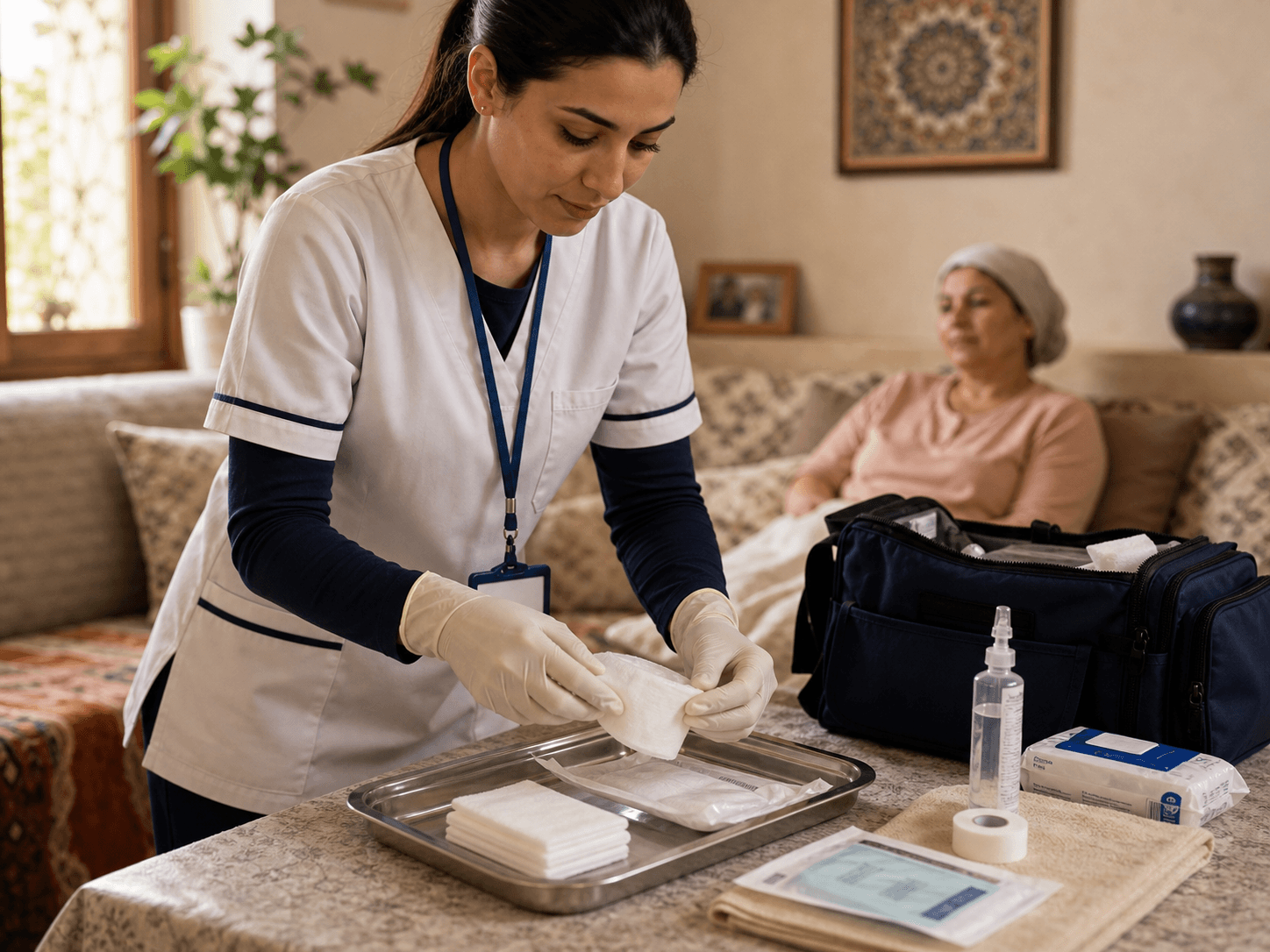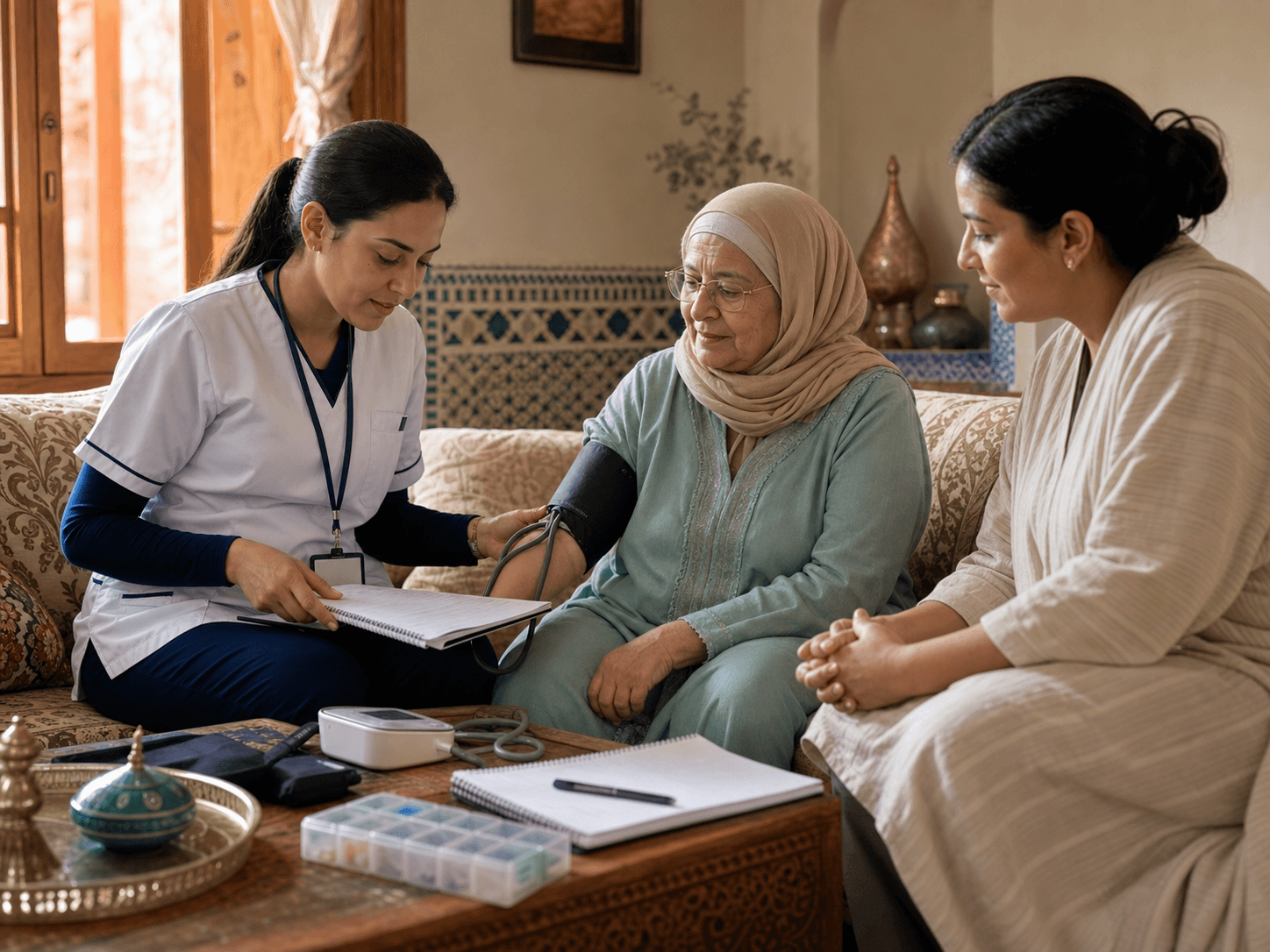
Home paediatric nursing is for infants, children and adolescents requiring medical care in the comfort of their home: vaccinations, post-hospital care, chronic illness monitoring (asthma, diabetes, cystic fibrosis), dressings or blood tests. SOS Nursing sends nurses trained in paediatrics, sensitive to the child's specific needs (adapted dosages, paediatric equipment, reassuring approach), for safe home care in Marrakech.
The Moroccan vaccination schedule includes vaccines from birth (BCG, Hepatitis B) and throughout childhood (DPT, Polio, MMR, Pneumococcal, Rotavirus).
Paediatric vaccinations at home
The Moroccan vaccination schedule includes vaccines from birth (BCG, Hepatitis B) and throughout childhood (DPT, Polio, MMR, Pneumococcal, Rotavirus). The nurse administers injections at home according to the prescribed schedule, checks the vaccination booklet, monitors the child for 15 to 30 minutes after injection and advises parents on managing mild side effects (fever, local redness).
Newborn care: umbilical cord, bathing and monitoring
The first days of life require specific care: umbilical cord disinfection until it falls off (5 to 15 days), monitoring of skin colour (neonatal jaundice), weighing for growth curve tracking, and advice on breastfeeding and sleep positioning. The nurse reassures new parents and detects warning signs requiring medical consultation.
Chronic illness monitoring in children
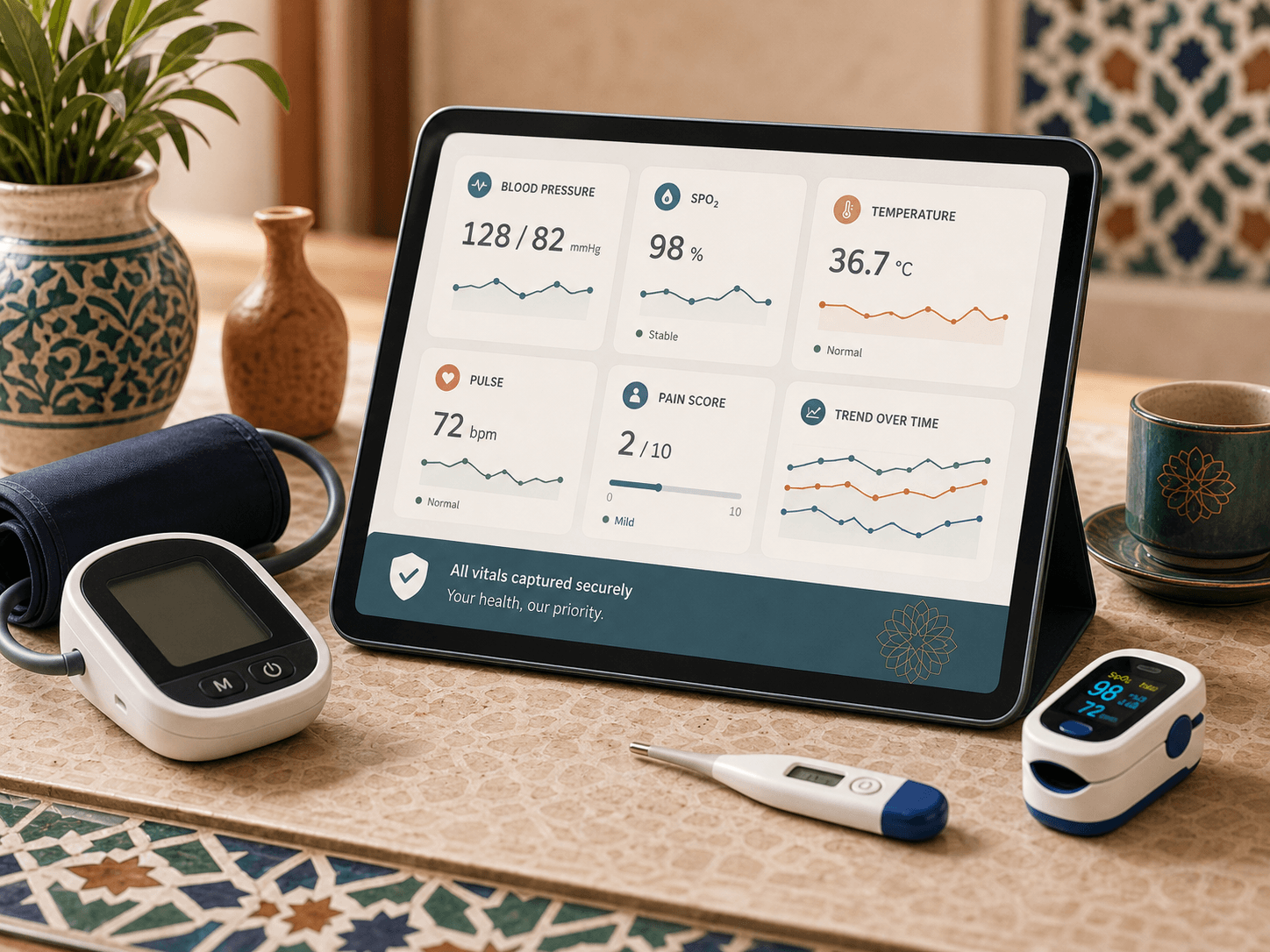
For children with asthma, type 1 diabetes, epilepsy or rare diseases, the nurse provides home follow-up: treatment administration, therapeutic education for child and parents, vital sign monitoring, and coordination with the specialist paediatrician. This regular care reduces hospitalisations and improves the child's quality of life.
Pain and anxiety management in children
Paediatric nursing integrates pain and fear management: use of anaesthetic patches before blood draws, distraction techniques (games, stories), age-appropriate communication, and involving parents as care partners. The goal is to make each procedure as non-traumatic as possible to build a trusting relationship with the child.
Parental support and care education
The nurse trains parents in essential skills: temperature taking, oral or rectal medication administration, basic care for fever, recognition of respiratory distress signs, and first steps in case of febrile seizures. This education strengthens parental confidence and enables rapid response in emergencies.