Falling ill far from home is one of a traveller's dreads. In Marrakech, between the heat, the change in diet, and the intense pace of sightseeing, a few health troubles are common. The good news: getting a doctor quickly, directly at your hotel or riad, is entirely possible. This practical guide explains how to react, what your travel insurance covers, how to handle the language barrier, and what the most common ailments among tourists are.
The first thing to do when you feel unwell while travelling is to assess the situation calmly.
Falling ill while travelling: don't panic
The first thing to do when you feel unwell while travelling is to assess the situation calmly. The vast majority of tourists' health problems in Marrakech are mild and temporary: digestive troubles, fatigue linked to the heat, mild sunburn, headaches. They are easily managed with rest, hydration, and, if needed, home medical advice. There is no need to cut your stay short or rush to the emergency room for a minor reason. On the other hand, certain signs — high persistent fever, intense pain, difficulty breathing, marked dehydration — warrant prompt medical advice. The right reflex is to contact a service able to bring a doctor to you, and to keep your travel insurance details close at hand.
The doctor at the hotel or riad
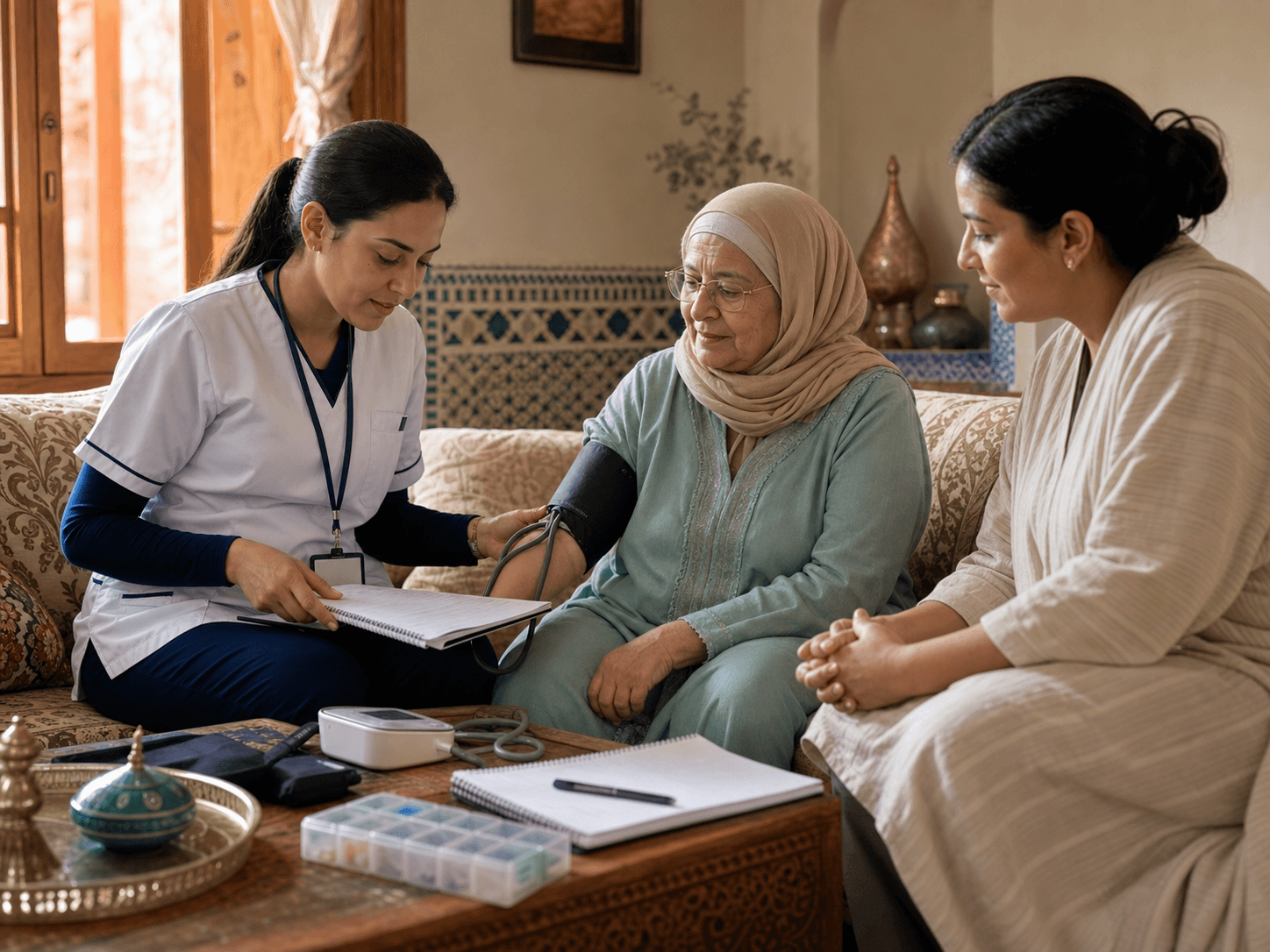
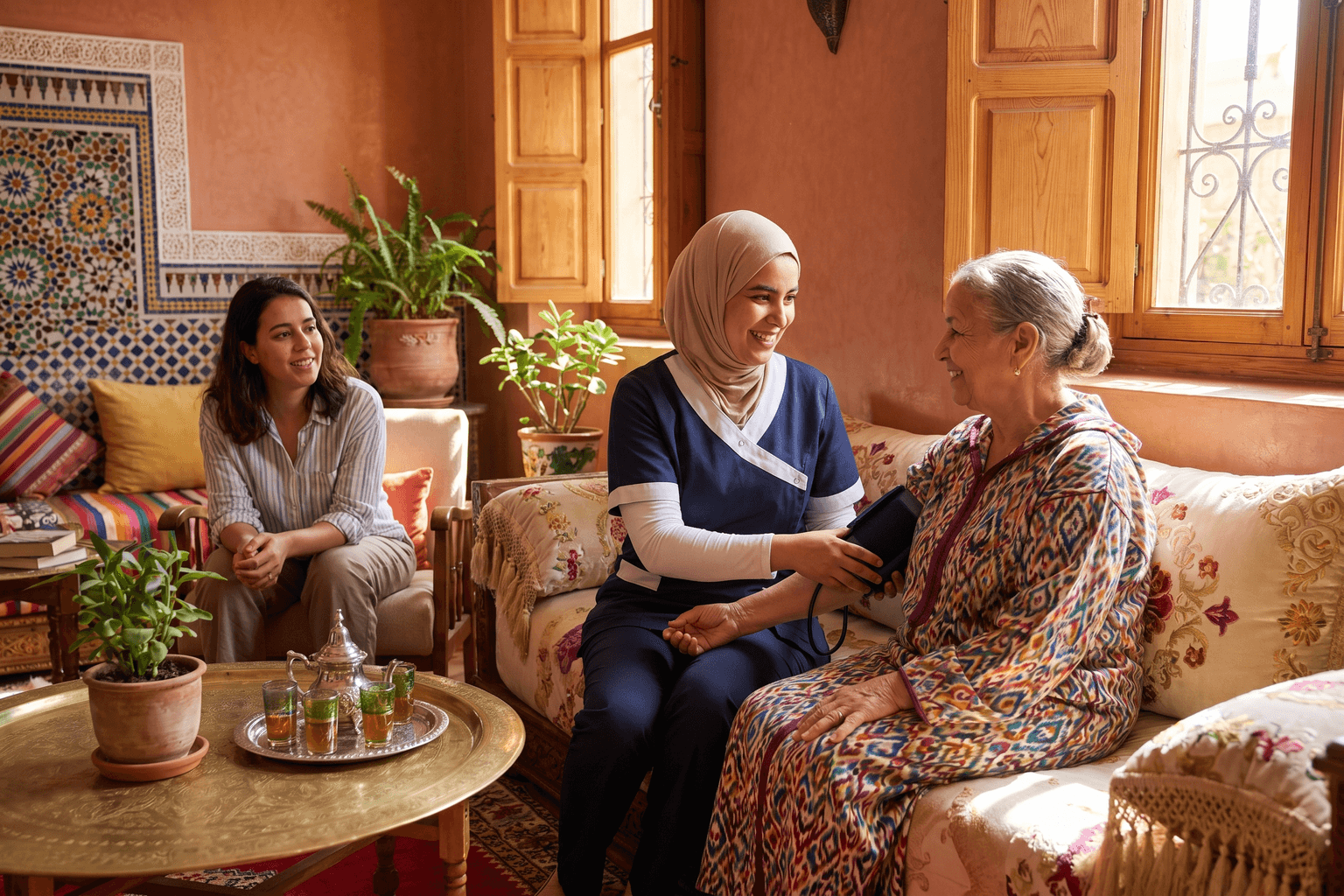
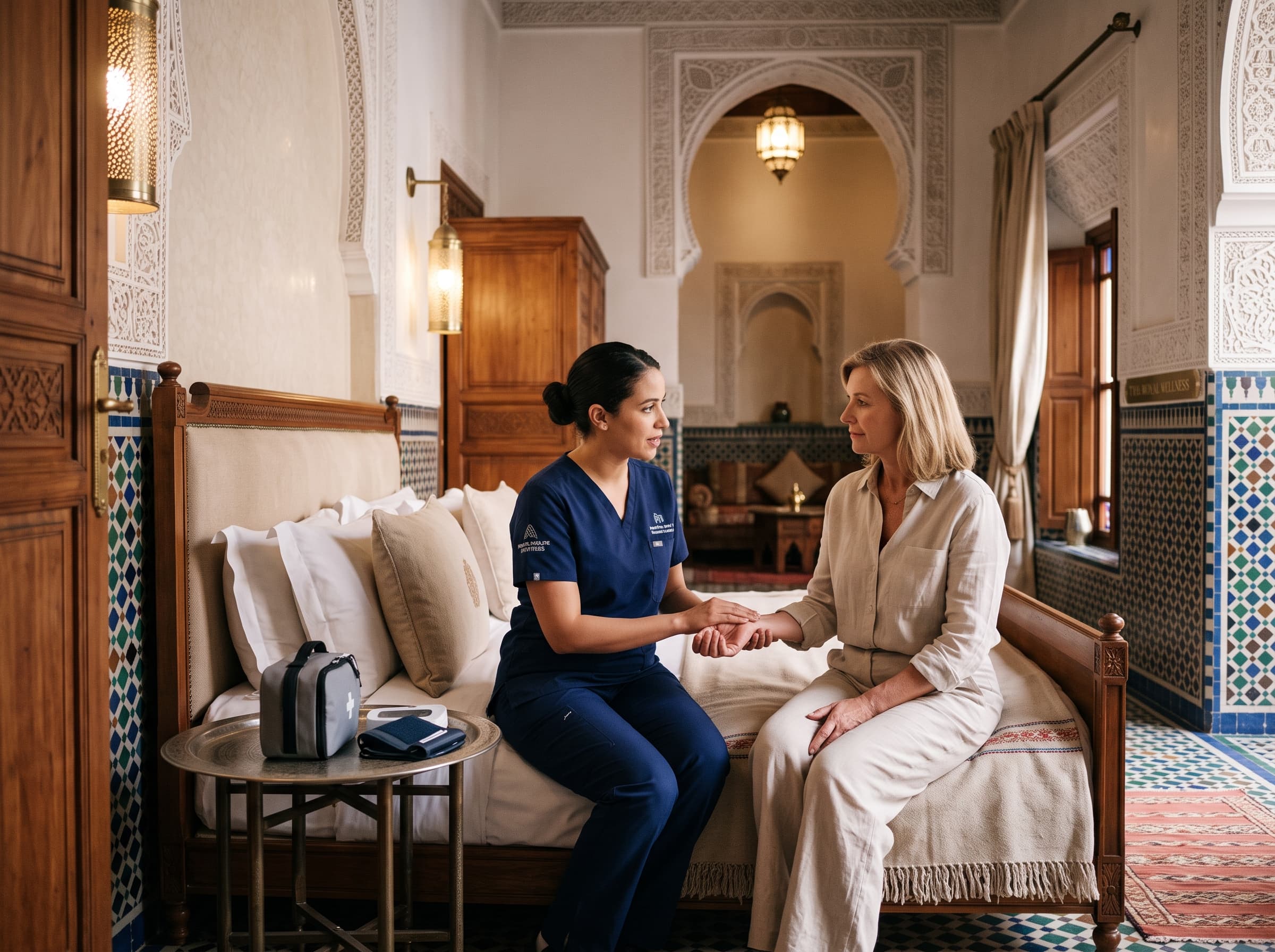
The most practical option for a traveller is to have the doctor come to where they are staying. A consultation at the hotel or riad avoids searching for a surgery in an unfamiliar city, travelling while unwell, and wasting time in a waiting room. You contact the coordinator, describe your symptoms, and a doctor travels out with their kit to examine you in your room. They make a diagnosis, prescribe treatment, and provide a report — valuable for your insurance. If nursing care is needed (an injection, a rehydration infusion, a dressing), the SOS Nursing team can arrange it on site. This integrated care, in the comfort of your accommodation, is ideal when you are travelling and tired.
The language barrier: solutions
The fear of not being understood is legitimate, but it should not stop you from seeking care. In Marrakech, a very touristy city, many healthcare professionals speak French, and English is increasingly common. When booking, specify the language you speak: the coordinator can direct you to a doctor able to communicate with you. To make the exchange easier, prepare a written list of your symptoms, your usual treatments, and your allergies, translated if possible. Translation apps on smartphones are also a great help for the details. A written report will be given to you: it allows you, if needed, to pass the information on to your usual doctor or your insurer once you are back home.
Travel insurance and repatriation assistance
Before any trip, it is strongly recommended to take out travel insurance that includes health assistance and, ideally, a medical repatriation guarantee. If a problem arises, quickly contact your insurer or the assistance platform indicated on your policy: it guides you on the steps, the coverage, and, for serious cases, the organisation of any repatriation. To be reimbursed for the medical costs incurred on site, always keep all the supporting documents: itemised invoices, prescriptions, consultation reports, and pharmacy receipts. A home doctor gives you these documents at the end of the visit. Also check, before departure, the terms of your policy: excess, ceilings, and the procedure to follow for declaring a health claim abroad.
Travellers' diarrhoea (turista): the number one reason
Travellers' diarrhoea, or turista, is by far the most common health problem while travelling. It most often results from contaminated water or food, and presents as diarrhoea, sometimes nausea, cramps, and fatigue. The absolute priority is rehydration: drink plenty, in small frequent amounts, preferably sealed bottled water, and use oral rehydration solutions. Avoid tap water, ice cubes, raw vegetables washed in tap water, and raw or undercooked food. Most episodes clear up within a few days. But if the diarrhoea is accompanied by a high fever, blood in the stools, uncontrollable vomiting, or signs of dehydration, consult a doctor without delay.
Sun, heat, and dehydration
Marrakech's climate, very hot and dry in season, exposes travellers to heatstroke, sunstroke, and dehydration, especially during long days of sightseeing. Protect yourself: a hat, sunglasses, sunscreen, light-coloured loose clothing, and above all regular hydration throughout the day. Avoid exertion and prolonged exposure between 11 a.m. and 5 p.m., the hottest hours. The first warning signs are headaches, unusual tiredness, dizziness, nausea, and cramps. Heatstroke, which is more serious, combines hot skin, a high temperature, and confusion: it is an emergency. Faced with these serious signs, move the person to a cool place, hydrate them, and call emergency services immediately.
Allergies, bites, and minor accidents
Other troubles frequently affect travellers. Allergies can flare up on contact with pollen, dust, or unfamiliar foods; a mild reaction (sneezing, itching, blotches) is treated simply, but swelling of the face or throat, or difficulty breathing, is an emergency that requires calling for emergency help. Insect bites, common in the evening, are eased with local care. Minor accidents — sprains, cuts, blisters from walking through the medina — may require medical advice or nursing care (disinfection, a dressing, a simple suture). A home doctor, backed up by a nurse if needed, handles these common situations without forcing you to interrupt your stay or to search for a healthcare facility.
Access to pharmacies and medicines
Marrakech has a good network of pharmacies, including on-call pharmacies open at night, on weekends, and on public holidays. Many common medicines are available there, sometimes under brand names different from those in your country. For your usual treatments, always travel with a sufficient supply and a copy of your prescriptions, ideally with the name of the molecule (international nonproprietary name), which makes it easier to obtain a local equivalent. Some medicines require a prescription: a home doctor can provide one after an examination. If in doubt about a product, its dosage, or an interaction, ask the pharmacist or the doctor for advice rather than relying on risky self-medication in a foreign country.
When to seek emergency care
While most travellers' ailments are mild, certain signs call for an immediate reaction. Difficulty breathing, chest pain, loss of consciousness, a severe allergic reaction (swelling of the face or throat), severe dehydration, a high fever with confusion, or a serious accident warrant calling emergency services without delay. These services have the means for emergencies and medical transport. SOS Nursing is a private home-care service that works alongside, never in place of, these emergency services. For everything that calls for prompt but non-life-threatening medical advice, however, having a doctor come to your hotel or riad remains the simplest and most comfortable solution.