When a child falls ill, worry rises quickly, especially at night or on weekends. Should you consult right away? Wait? Go to the emergency room? A home medical consultation can often meet the need without subjecting a feverish child to the stress of a waiting room. This guide helps you recognise the situations that justify a call, those that require emergency care, and what a doctor can do for your child at home.
Taking a sick child to the office or the emergency room is never simple: the tiredness, the fever, the risk of contagion in the waiting room, and the wait itself all make…
Why a paediatric consultation at home
Taking a sick child to the office or the emergency room is never simple: the tiredness, the fever, the risk of contagion in the waiting room, and the wait itself all make the discomfort worse. At home, the child stays in their own environment, reassured by familiar surroundings and their parents. The doctor examines them calmly, without time pressure, and observes their real behaviour — are they playing, eating, can they be comforted? — which is often more telling than a few minutes in a standard consultation. For infants, very young children, or siblings among whom illness is spreading, the home visit avoids difficult journeys and limits the spread. It is also an opportunity for parents to ask their questions calmly and to receive clear monitoring instructions.
Fever in children: thresholds and what to do
Fever is defined as a temperature above 38 °C, measured correctly. It is most often a sign of a mild infection that the body is fighting, and its height alone does not reflect the seriousness. What matters is the child's general condition and age. In an infant under 3 months, any fever should prompt prompt medical advice. Beyond that, the main concerns are if the fever lasts more than 48 to 72 hours, if the child is abnormally listless, whiny, refuses to drink, or if other signs appear. Basic treatment relies on hydration, sensible uncovering, and an antipyretic adapted to the child's weight. A home doctor can assess the cause of the fever and either reassure you or refer you according to needs.
When to choose the emergency room rather than a home visit
Certain signs make it essential to call emergency services immediately, without waiting for a visit. In infants and children, the following are particularly alarming: difficulty breathing (rapid breathing, chest retractions, bluish lips), abnormal drowsiness or difficulty waking the child, convulsions, red or purplish spots on the skin that do not fade under pressure, a fever in a baby under 3 months, severe dehydration (no urine for several hours, sunken eyes, skin that stays pinched), or a state of prostration. In these situations, call for emergency help immediately. SOS Nursing is a private service that works alongside emergency services: faced with a sign of seriousness, the reflex must always be to call for emergency help.
Common reasons for a home consultation
Many childhood illnesses lend themselves well to a home consultation when the general condition is preserved: nasopharyngitis, sore throat, ear infection, isolated fever, early gastroenteritis, skin rash, conjunctivitis, or abdominal pain without signs of seriousness. The doctor examines the child, identifies the cause, prescribes the appropriate treatment, and explains to the parents the signs that should lead them to consult again or call for emergency help. They can also issue a sickness certificate or a school exclusion note if necessary. For families, the benefit is twofold: reliable medical advice quickly, and personalised monitoring instructions that avoid anxiety and unnecessary back-and-forth trips to the emergency room.
The infant: the first year
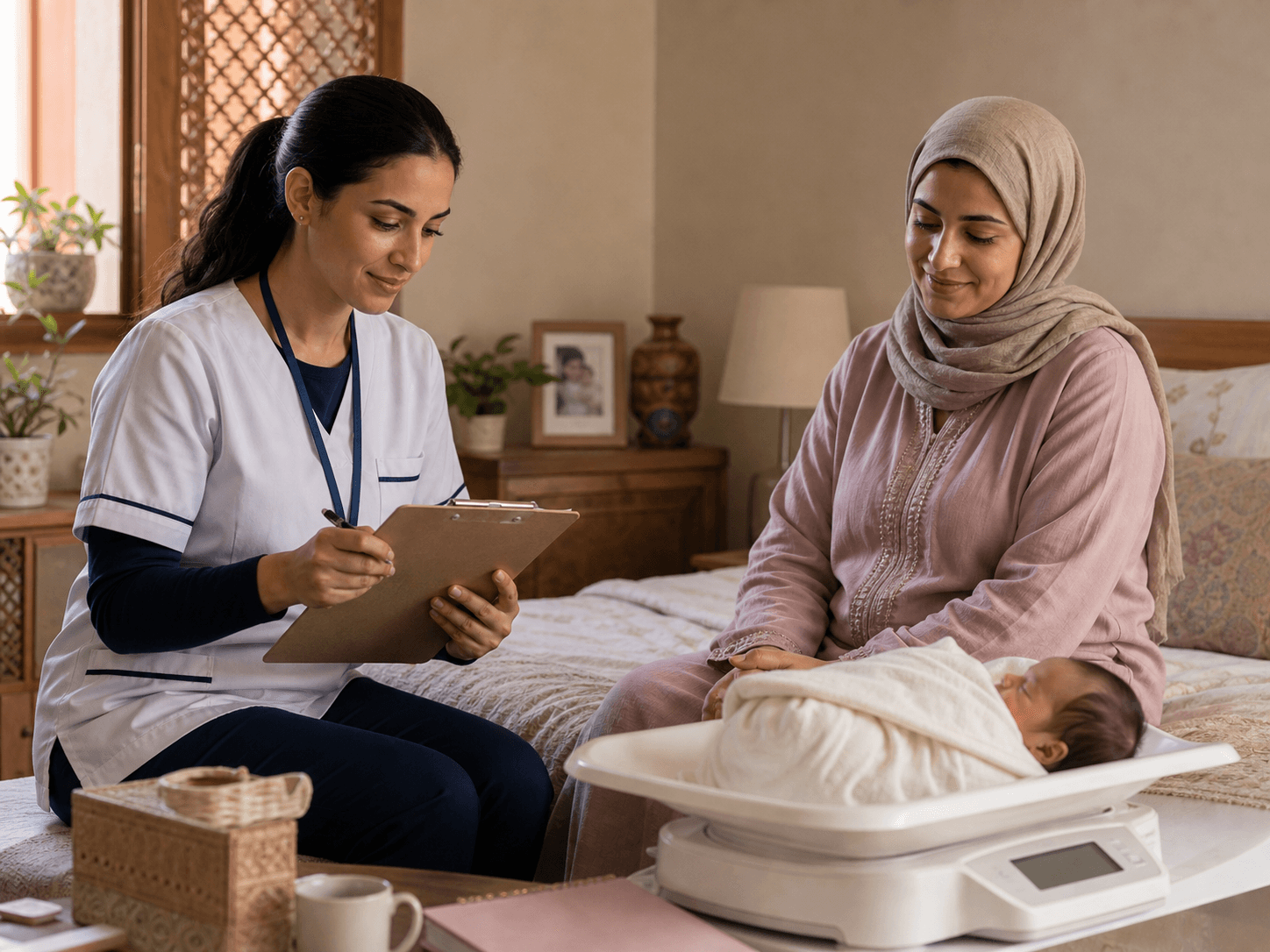
The first year of life calls for particular vigilance, because an infant expresses few symptoms and their condition can change rapidly. Before 3 months, any fever, any repeated refusal to feed, any unusual drowsiness, or any inconsolable crying warrants prompt medical advice. Common reasons include colic, reflux, heavy regurgitation, difficulty gaining weight, nappy rash, and the first infectious episodes. A home visit allows the baby to be examined calmly, weighed and measured if needed, and supports parents who are often worried and tired. The doctor can also review breastfeeding, sleep, and the vaccination schedule, and reassure about what is part of normal development.
Gastroenteritis, dehydration, and bronchiolitis
Two situations dominate winter and early childhood. Gastroenteritis (diarrhoea, vomiting) mainly carries the risk of dehydration, which is all the faster the younger the child: the priority is rehydration in small, frequent amounts, using an oral rehydration solution. Bronchiolitis, a common respiratory infection in infants, presents with a cough, wheezing, and sometimes difficulty feeding; most cases are mild, but close monitoring of breathing and feeding is essential. In both cases, a home doctor assesses the severity, gives precise monitoring instructions, and refers to the hospital if the child is breathing poorly, becoming dehydrated, or tiring. The golden rule remains: faced with respiratory distress, call for emergency help.
What the doctor does at your home
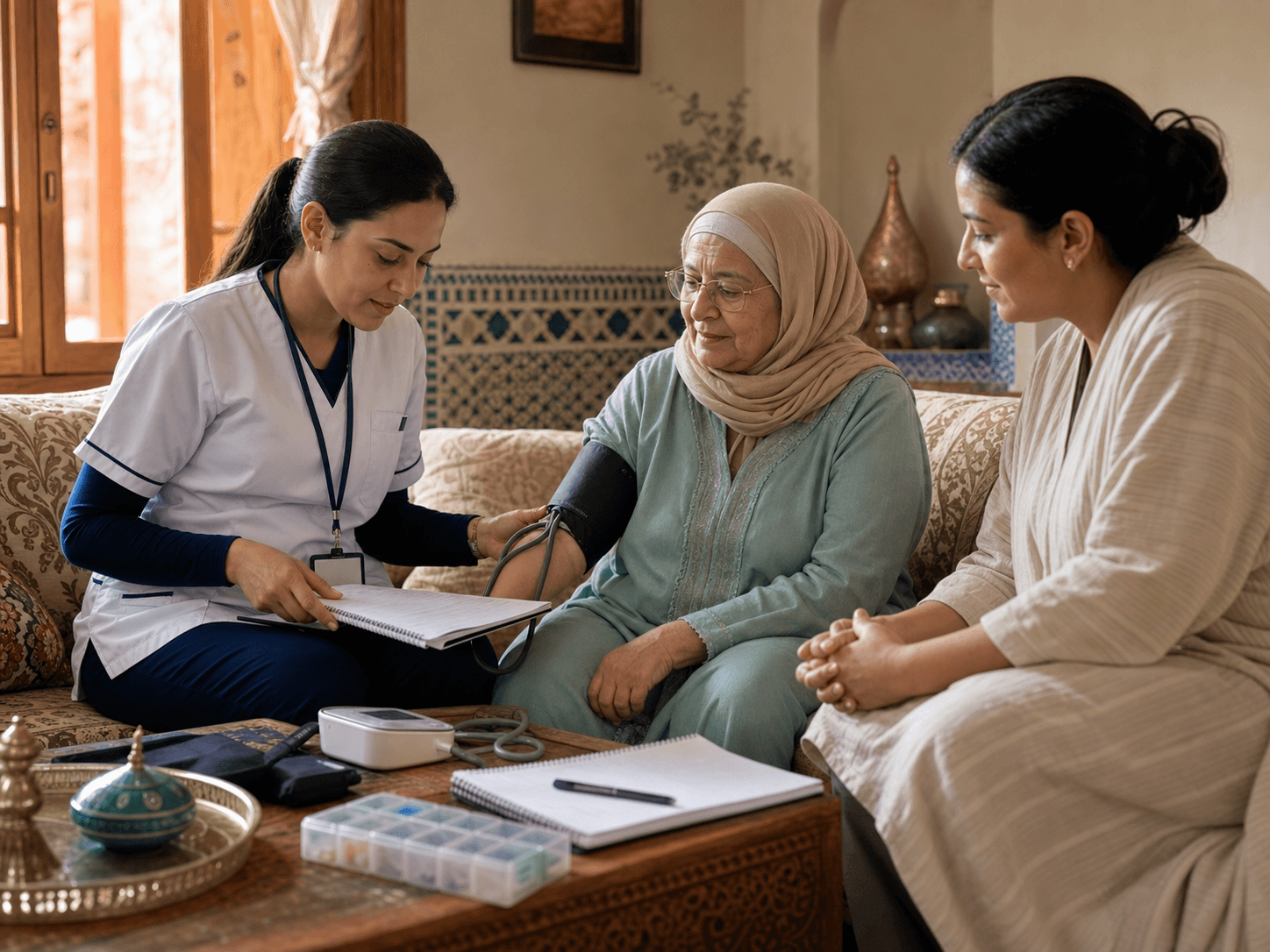
During a paediatric home visit, the doctor carries out a full clinical examination appropriate to the age: listening to the lungs and heart, examining the throat and ears, palpating the abdomen, assessing hydration and behaviour. They measure the temperature, the oxygen saturation, and, if necessary, the weight. They make a diagnosis, prescribe treatment, explain the doses according to the child's weight, and provide written or verbal monitoring instructions. If care is required — for example a rapid test, supervised rehydration, or close follow-up — the SOS Nursing team can arrange a nursing handover at home. The coordinator remains reachable to reassess the situation in the hours that follow.
Vaccinations and follow-up at home
The Moroccan national vaccination schedule protects children against many diseases from the very first months. While some vaccines are given as part of routine follow-up, a home visit can be an opportunity to check that the record is up to date and to answer parents' questions. The doctor can also follow growth, spot a delay or a difficulty, and refer to a specialist if necessary. For families far from healthcare facilities or with several young children, this local follow-up makes continuity easier. Any vaccine administration is done on prescription and according to the applicable recommendations, with appropriate monitoring after the injection.
Preparing well for the visit
For the consultation to be useful, prepare the child's health record, the list of current treatments and any allergies, and note the precise timeline of symptoms: how long the fever has lasted, how many stools, is the child drinking, sleeping, playing? Measure the temperature before the doctor arrives and note it down. Set aside a quiet, well-lit space, and somewhere to undress the child for the examination. Keep useful numbers close at hand. After the visit, follow the monitoring instructions precisely and don't hesitate to contact the coordinator again if in doubt: a child's condition can change quickly, and it is always better to ask one question too many than one too few.