Having a doctor come to your home is no longer reserved for exceptional situations. In Marrakech, the home consultation meets a real need: avoiding a crowded waiting room with a feverish child, not having to move a frail elderly parent, or simply being examined quickly when you can't travel. This complete guide explains how it works, when to use it, and what you can really expect from a home medical visit.
A home consultation is quite simply a general practitioner who travels to wherever you are — your home, the family riad, the hotel — to examine you just as they would at…
What is a home medical consultation?
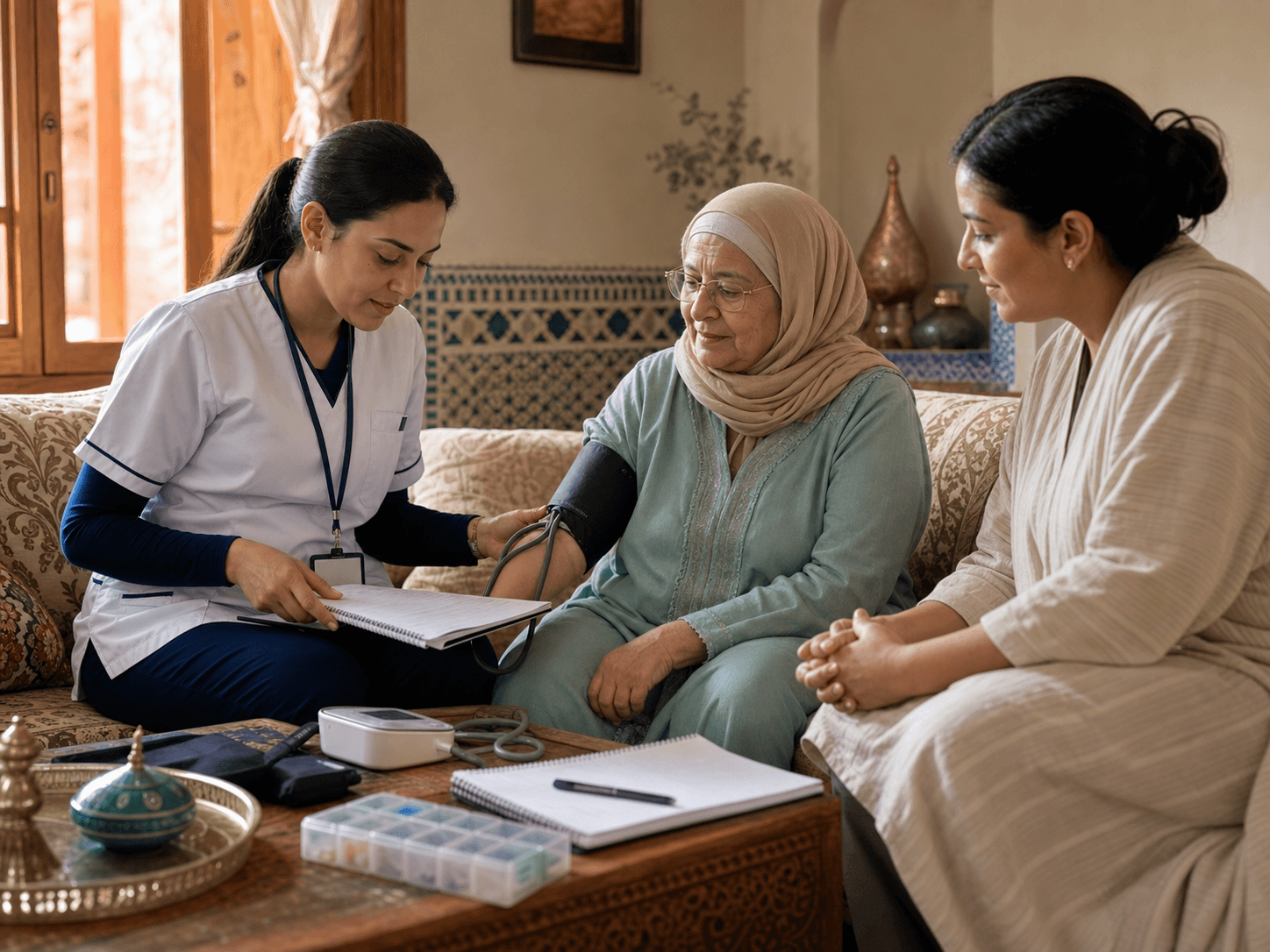
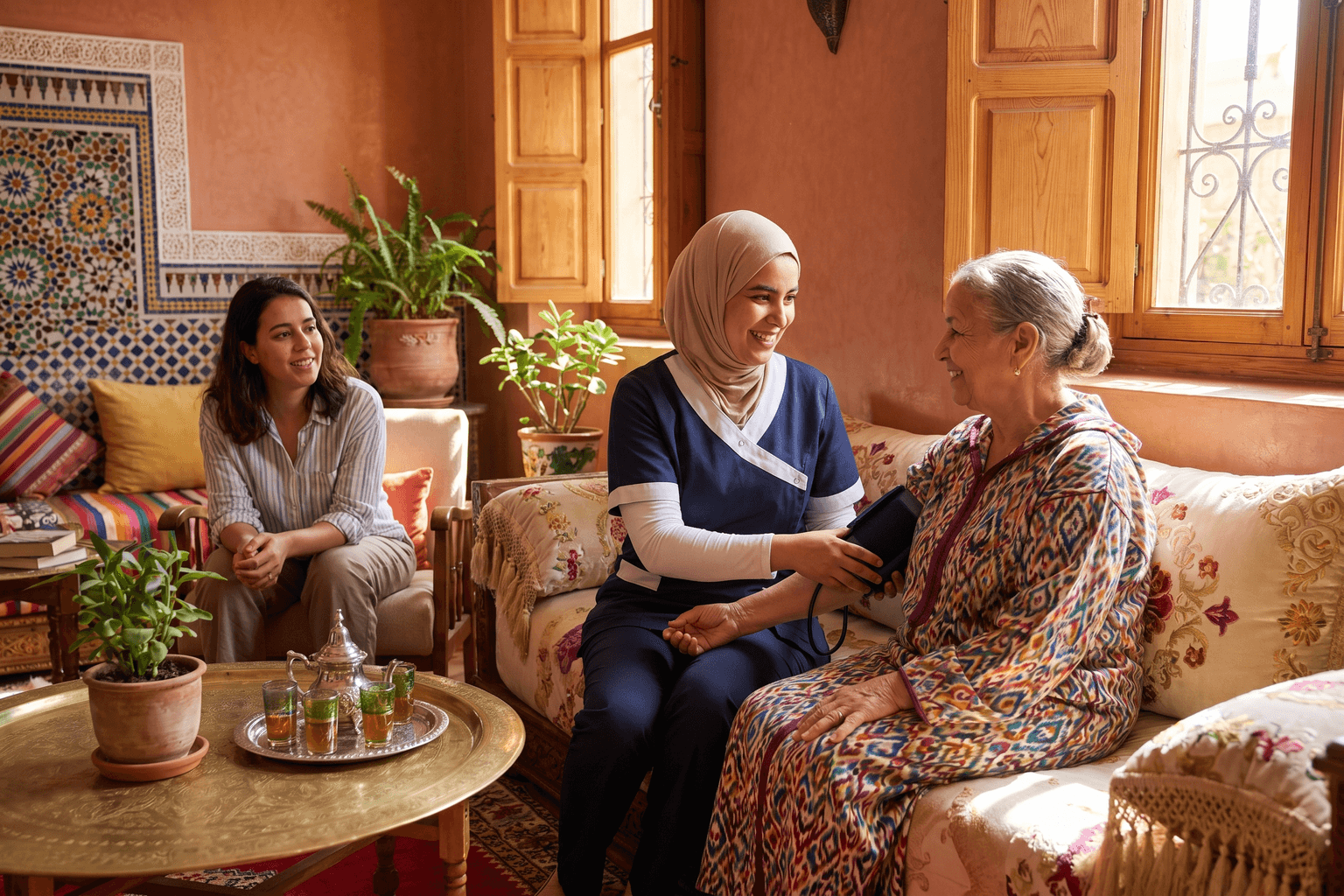
A home consultation is quite simply a general practitioner who travels to wherever you are — your home, the family riad, the hotel — to examine you just as they would at the office. The doctor carries a complete kit: blood pressure monitor, thermometer, pulse oximeter, otoscope, stethoscope, glucometer, and everything needed to perform certain simple tests on site. They make a diagnosis, write a prescription if necessary, order tests or a further examination, and refer you to a clinic if needed. The big difference from an office visit is comfort and time: the consultation takes place in your own environment, with no travel or waiting, which is invaluable for vulnerable people, young children, or patients with limited mobility.
How it works: from the call to the visit
The process is deliberately simple. You contact the coordinator, by phone or WhatsApp, and describe the symptoms, the patient's age, and the address. The coordinator assesses the level of urgency: a serious situation is immediately redirected to emergency services, while a routine case leads to a visit being arranged. You are then given a time slot and an estimated arrival time. The doctor arrives with their kit, takes the time to ask questions and examine the patient, then provides a report and a prescription where applicable. At SOS Nursing, if a nursing care need follows the consultation — an injection, a dressing, a blood draw, an infusion — a qualified nurse can take over at home, without you having to travel again.
When to call a home doctor (and when to go to the emergency room)
The home visit is suitable for situations that require prompt medical advice but are not life-threatening: persistent fever, flu-like illness, gastroenteritis, urinary tract infection, joint pain, prescription renewal, medical certificate, or follow-up of a stable chronic illness. On the other hand, certain signs make it essential to call emergency services immediately rather than wait for a visit: severe chest pain, difficulty breathing, loss of consciousness, paralysis or sudden speech difficulty, major bleeding, or convulsions. In these cases, call for emergency help right away. SOS Nursing is a private home-care service that works alongside emergency services, never in their place: if you have any doubt about the seriousness, the reflex should always be to call for emergency help.
What the doctor can do at your home
A home general practitioner covers the essentials of an office consultation. They carry out a full clinical examination, measure vital signs, listen to the heart and lungs, and can perform certain rapid tests (capillary blood glucose, oxygen saturation, urine dipstick). They establish a diagnosis, prescribe treatment, write prescriptions and sick-leave certificates, and order laboratory tests or imaging if needed. They can also follow up on a chronic condition, adjust a treatment in coordination with the specialist, or reassess a situation at 24 or 48 hours. What a home visit cannot replace are the heavy technical facilities — CT scan, operating room, intensive care — which remain the domain of the hospital or clinic.
The neighbourhoods and areas covered in Marrakech
SOS Nursing covers the whole of the Marrakech metropolitan area and its surroundings: the medina and its riads, Hivernage, Guéliz, Targa, Agdal, Semlalia, Sidi Youssef Ben Ali, Massira, Annakhil, as well as the Ourika road, the Fès road, the Casablanca road, and the palm grove. Hotels and tourist residences in the area are also covered. The arrival time depends on the neighbourhood, the time of day, and traffic: central areas are generally reached more quickly, while outlying districts take a little longer. The coordinator gives you a realistic estimate when you book, so you know what to expect.
Advantages over the clinic or the office
The first advantage is obvious: you avoid the journey and the wait. For a feverish child, a tired elderly person, or a patient recovering from illness, going out is an effort and a risk of worsening or contagion. At home, the doctor also observes the living environment — how the home is organised, the medications present, the person's real level of independence — which enriches their assessment. The consultation is often longer and more personalised than at the office. Finally, for families juggling a dependent relative and a busy schedule, having the doctor and, if needed, the nurse come to the same place saves precious time and limits everyone's fatigue.
The advantage of an integrated doctor + nurse service
SOS Nursing's strength lies in the continuity between the medical consultation and the nursing care. Too often, after a consultation, the patient has to separately find a nurse for an injection, a dressing, or a blood draw, multiplying appointments and intermediaries. With an integrated service, the doctor prescribes and the nurse carries it out straight away, at home, with a shared record and a coordinator orchestrating the whole process. This coordination reduces delays, avoids gaps in care, and reassures the family, who have a single point of contact. For a chronic illness, post-operative recovery, or an elderly person at home, this doctor-nurse coordination makes a concrete difference to the quality of follow-up.
Pricing, AMO, and reimbursement
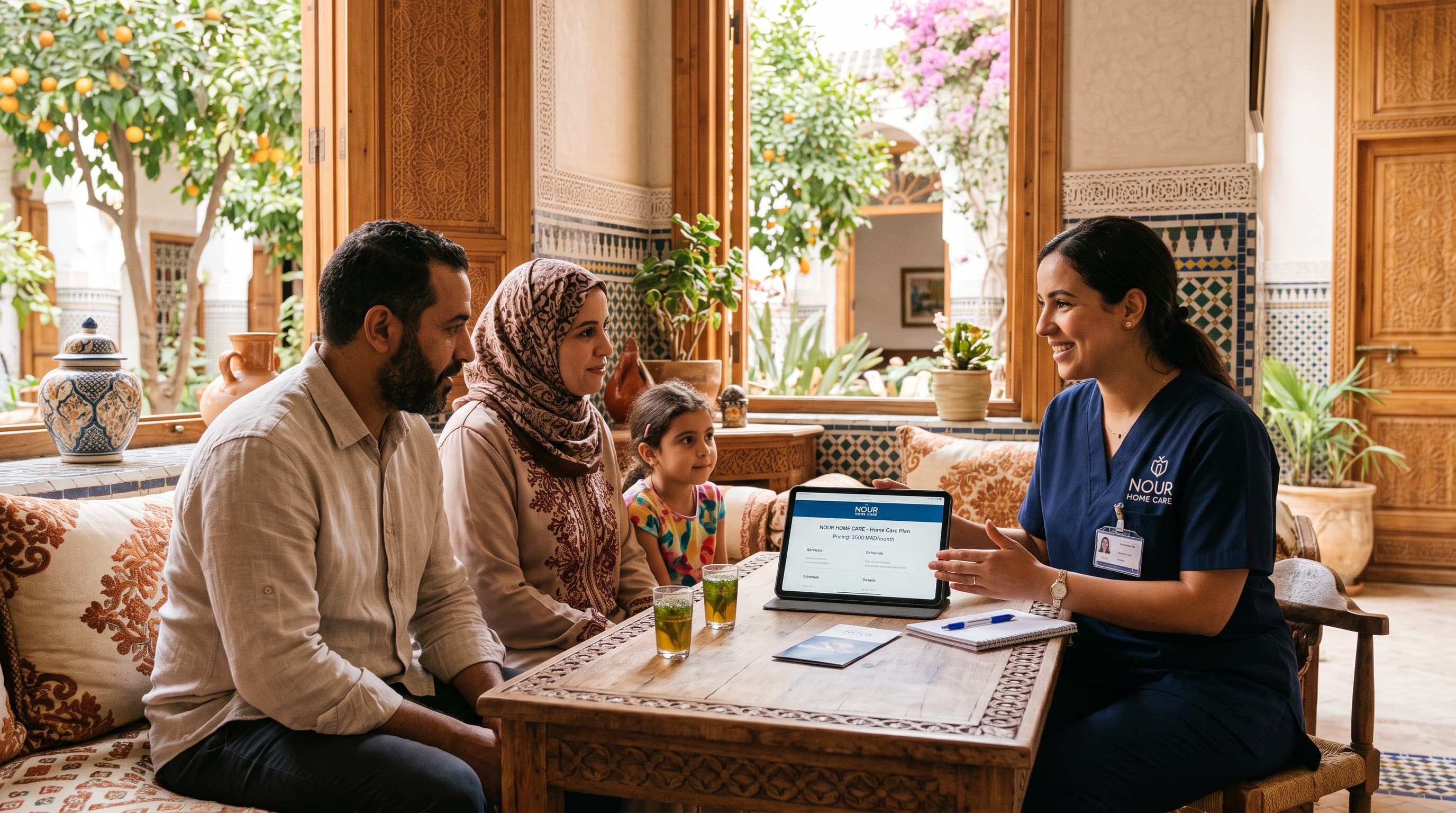
The cost of a home visit depends on several factors: the time (day, night, weekend, or public holiday), the distance, and the procedures performed. The coordinator clearly explains the terms before the visit, with no nasty surprises. As for reimbursement, compulsory health insurance (AMO), managed by the CNSS for private-sector employees, covers part of the consultations and care according to reference rates and the applicable percentages. To be reimbursed, always keep the itemised invoice, the prescription, and the report given by the doctor, then submit your claim to your insurer. A mutual insurer or supplementary insurance may cover the remaining balance. The coordinator helps you gather the supporting documents needed for your claim.
Preparing for the doctor's visit
A few preparations make the consultation more effective. Gather the prescriptions and boxes of current medications, recent test or examination results, the health record, and the insurance card. Write down the timeline of symptoms, the temperature measured, and any known allergies. Set aside a quiet, well-lit space for the examination, and somewhere to wash your hands. If the patient is an elderly person or a child, the presence of a relative who knows the medical history is valuable. Finally, keep the coordinator's number handy: after the visit, they remain available to arrange a test, nursing care, or a reassessment, and to answer your questions about the prescribed treatment.