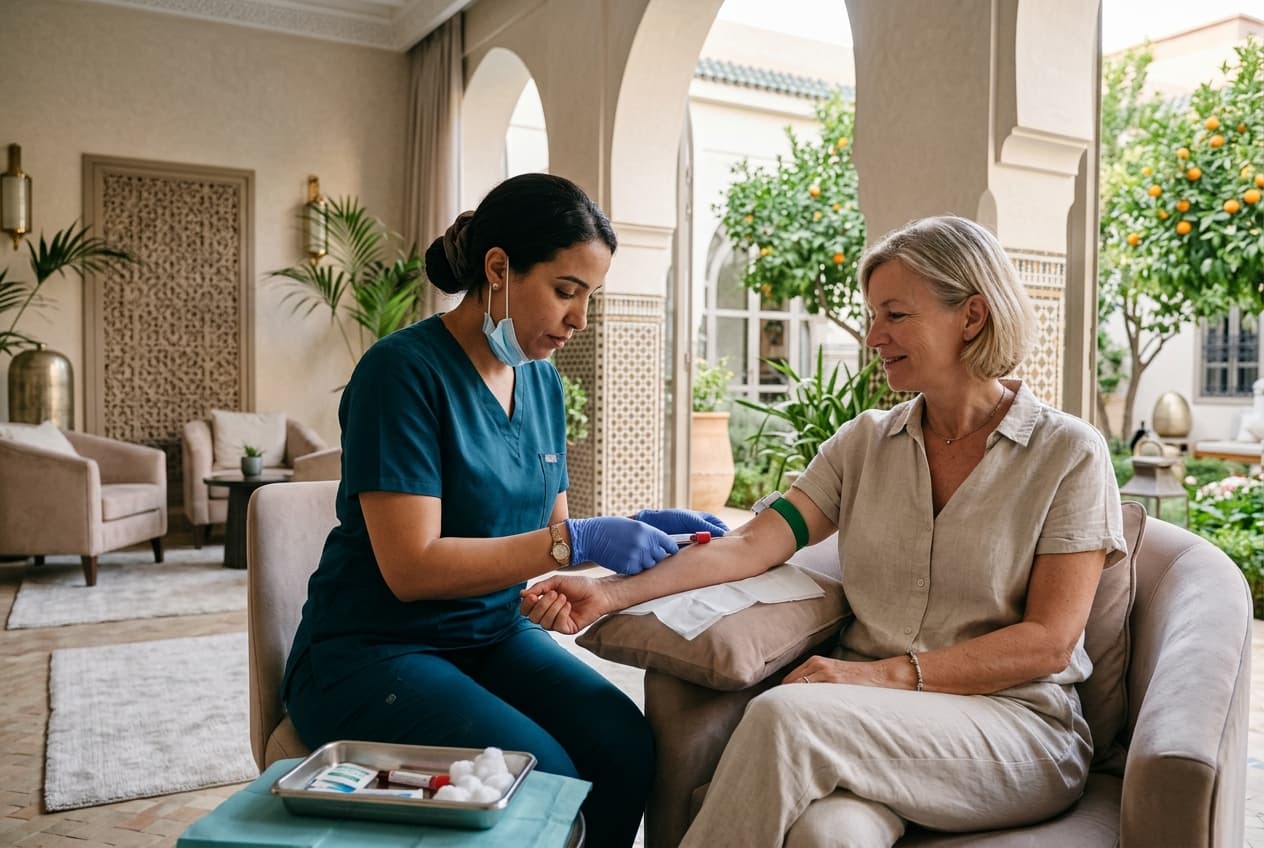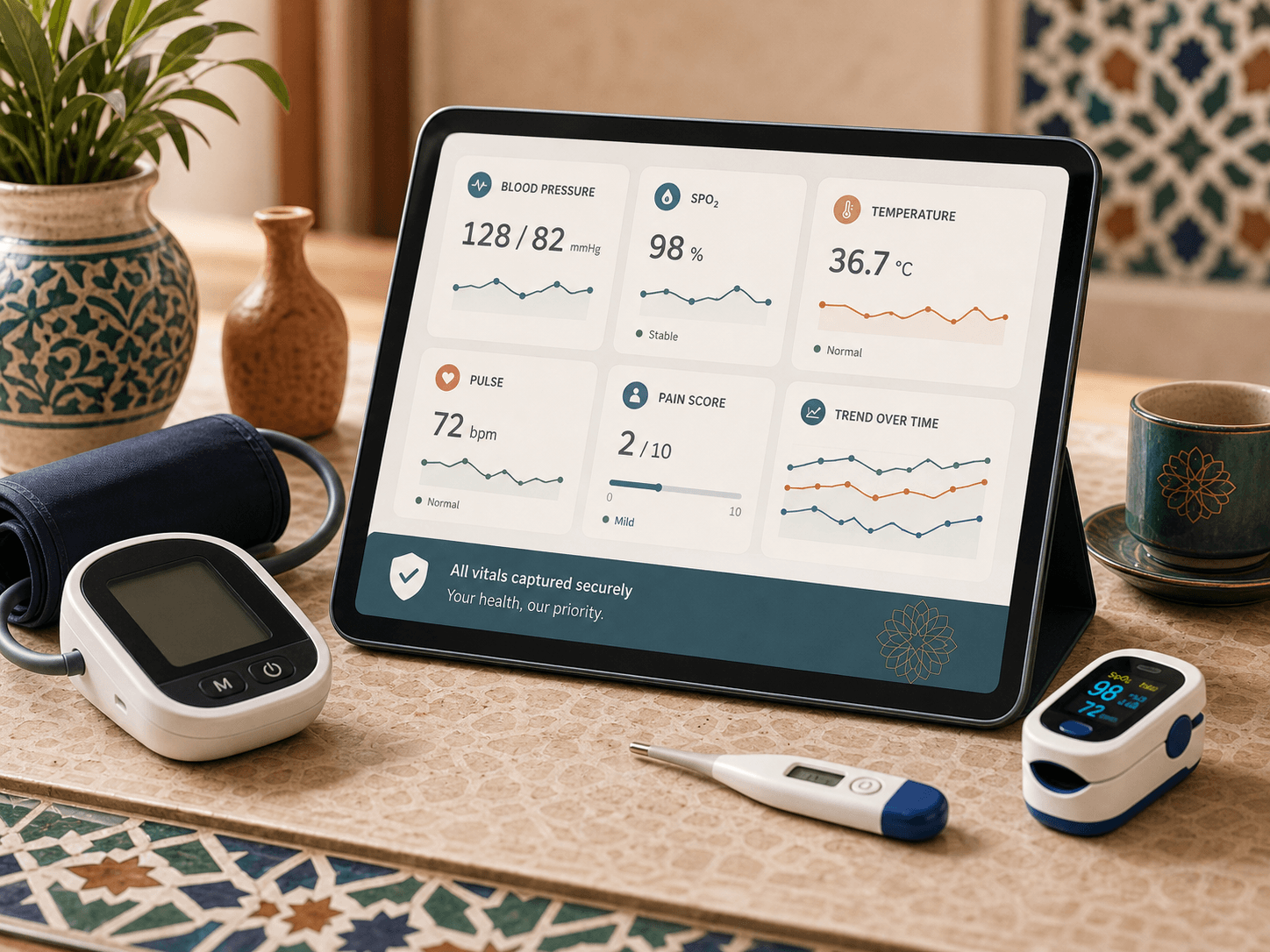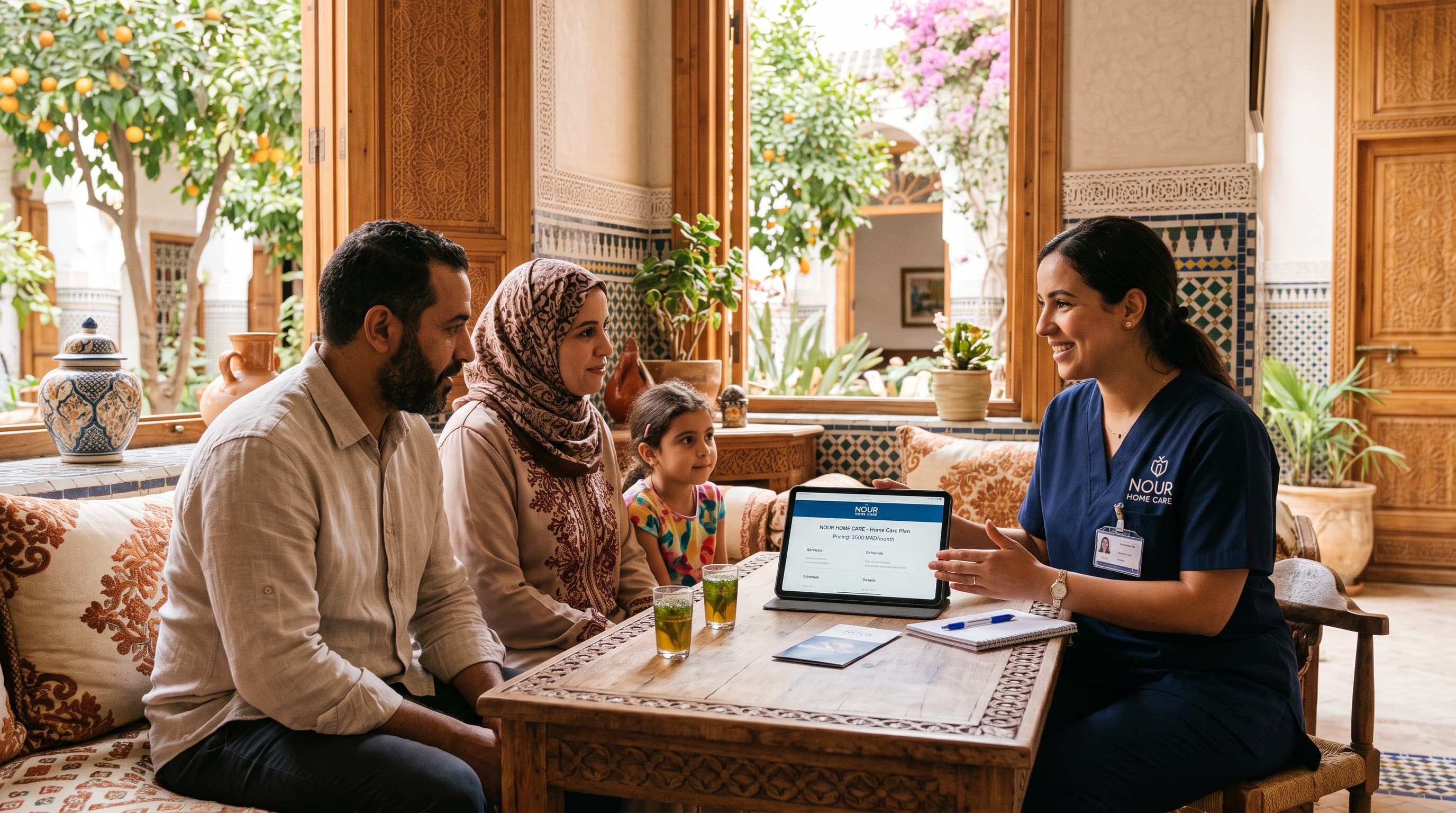
Caring for a sick or dependent relative at home often means adapting the living space and acquiring the right equipment. An adjustable hospital bed, oxygen therapy, a wheelchair, pressure-sore prevention materials, and mobility aids transform an ordinary home into a safe, comfortable place for care. Choosing the right equipment, installing it properly, and using it correctly are all essential. In Marrakech, SOS Nursing advises families and coordinates home equipment provision alongside nursing care.
Keeping a dependent person at home depends as much on the environment as on nursing care.
Why equipping the home matters
Keeping a dependent person at home depends as much on the environment as on nursing care. Appropriate equipment prevents complications, makes the work of carers and family easier, and preserves the patient's dignity. An adjustable bed prevents pressure sores and protects carers from dangerous exertion when repositioning; an oxygen concentrator keeps a patient with respiratory failure safe; a wheelchair restores a degree of freedom. Conversely, a poorly equipped home multiplies the risk of falls, carer injury, and complications. Investing in the right equipment makes home care not only possible but safe and sustainable.
The adjustable hospital bed
An adjustable hospital bed is the central piece of equipment for a bed-bound or highly dependent person. Adjustable in height and incline, it facilitates nursing care, bathing, meals, and repositioning while reducing the effort and back strain on carers. Side rails prevent falls, and the appropriate mattress limits pressure-sore risk. Height adjustment also protects the carer's back during patient handling. The choice of model depends on the degree of dependence and the patient's build. SOS Nursing advises families on the right bed and its installation, so that it fully serves its purpose of comfort and safety.
Home oxygen therapy
For patients with chronic respiratory failure — notably advanced COPD — home oxygen therapy improves quality of life and independence. An oxygen concentrator, powered by electricity, produces oxygen continuously, while portable cylinders allow movement within and outside the home. Its use always follows a medical prescription specifying flow rate and duration. Safety is paramount: oxygen supports combustion, which means all flames and heat sources must be kept away — cigarettes in particular. The nurse monitors oxygen saturation, checks the correct setting, and trains the family in operation and safety rules, essential for confident home use.
Wheelchairs and mobility aids
Regaining or maintaining the ability to move changes the life of a person with reduced mobility. Depending on the level of independence, several aids are available: cane, crutches, walker, manual or electric wheelchair. The choice depends on the patient's strength, the layout of the home, and whether the disability is temporary or permanent. Ill-suited equipment is ineffective and can be dangerous. SOS Nursing guides families towards the right aid, verifies its adjustment, and teaches safe use. In Marrakech, where traditional homes often have narrow doorways or elevated thresholds, access arrangements should also be anticipated to ensure the equipment is genuinely usable day to day.
Pressure-sore prevention
For a person who is bed-bound or chairbound, pressure sores are a constant threat. These wounds — caused by sustained pressure on the skin — develop quickly and heal slowly. Prevention combines equipment and nursing: pressure-relieving mattresses and cushions distribute weight, while regular repositioning, hygiene, and skin surveillance complete the approach. The nurse inspects at-risk areas — heels, sacrum, hips — and raises the alarm at the first sign of persistent redness. Caught early, an incipient pressure sore is straightforward to treat; neglected, it becomes a painful chronic wound. The right equipment, combined with attentive care, makes all the difference.
Small equipment and consumables
Beyond major items, home care requires a regular supply of smaller materials: dressings, gauze, antiseptics, gloves, syringes, injection or infusion devices, incontinence products, patient hoists, or transfer boards. Managing these consumables — their procurement and storage in suitable conditions, away from Marrakech's heat — takes organisation. SOS Nursing helps families anticipate needs to avoid shortages that interrupt care. The coordinator reviews what is needed based on the prescribed acts. This forward planning prevents last-minute emergencies and ensures every procedure has the right materials at hand.
Buying or renting: what to choose
Depending on the likely duration of need, buying or renting will make more sense. For a temporary situation, such as convalescence after surgery, renting a hospital bed, wheelchair, or crutches avoids a lasting investment. For a long-term need, purchasing may be more economical. Some prescribed equipment may also qualify for partial coverage depending on your insurance. SOS Nursing advises families on the most suitable option for their situation and duration, and points them to solutions available in Marrakech. The goal is to equip the home at the right cost, without compromising on quality or safety.
SOS Nursing's support
Equipping a home is not something to improvise. SOS Nursing assesses needs during a visit, recommends equipment suited to the relative's condition and the layout of the home, and coordinates installation alongside nursing care. Our nurses train the family in the use of each piece of equipment and the relevant safety rules, then check regularly that everything remains appropriate as the patient's condition evolves. This comprehensive approach — combining equipment and care — avoids unnecessary purchases and unsafe installations. For families in Marrakech, it means a home genuinely transformed into a place of care where a vulnerable relative lives safely and comfortably.