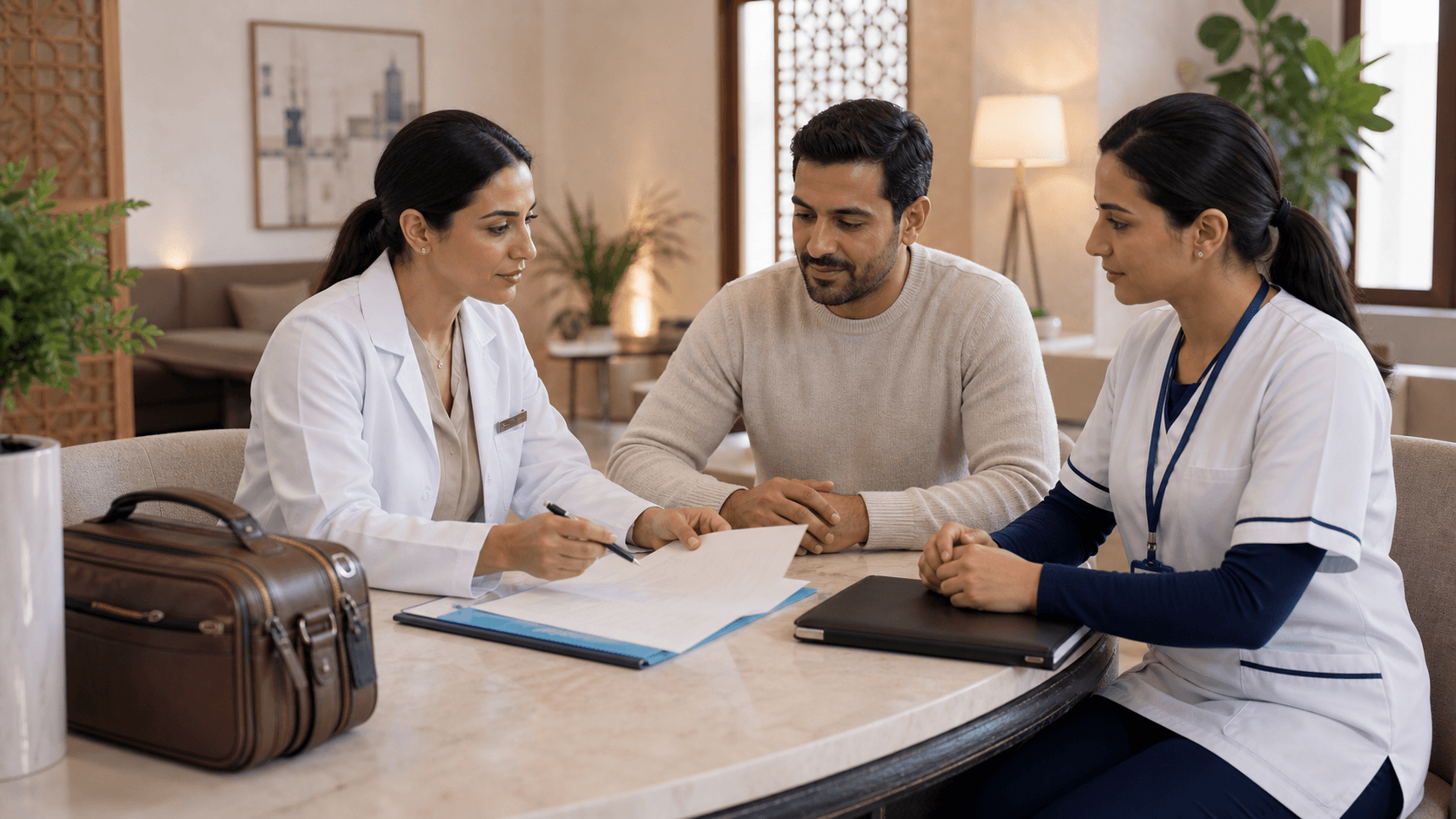
Hospital discharge is a critical moment. To ensure a smooth transition between hospitalisation and the return home, SOS Nursing has established partnerships with several clinics in Marrakech.
Leaving a clinic is supposed to feel like progress, and it is, but it is also one of the riskiest transitions in a patient's recovery.
Why hospital discharge is such a fragile moment
Leaving a clinic is supposed to feel like progress, and it is, but it is also one of the riskiest transitions in a patient's recovery. In the space of a few hours, responsibility shifts from a team of professionals with monitors and medication trolleys to a family at home who may have been given a discharge sheet and little else. This is when complications quietly arise: a wound that is not redressed correctly, a missed dose of an anticoagulant, an infection that goes unnoticed for a day too long, or a frail patient who falls because no one assessed the home for safety. Bridging that gap with professional follow-up is precisely what prevents an avoidable readmission, and it is the reason SOS Nursing has built close working relationships with clinics across Marrakech.
Seamless care continuity from clinic to home
The strength of a clinic partnership is that care does not stop at the hospital door; it simply changes location. From the moment of discharge, an SOS Nursing nurse can take over at home with post-operative dressings, IV infusions, injections, vital-sign monitoring, mobility support and rehabilitation follow-up. Crucially, the care protocol is defined in consultation with the hospital team, so the nurse arrives already knowing what surgery was performed, what to watch for, which medications are in play and when the next review is due. There is no awkward gap in which the patient and family are left guessing. Because we employ our nurses directly, we can also keep the same nurse on the case throughout recovery, preserving the continuity that makes follow-up genuinely safe.
What coordinated post-operative care looks like
In practice, structured follow-up after an operation covers several layers at once. The nurse manages the surgical wound, watching for the early signs of infection, redness, swelling, heat, unusual discharge or fever, and reports them to the surgeon before they become serious. They administer prescribed medication, including the anticoagulant injections often needed after surgery to prevent clots, and ensure pain relief is taken correctly. They monitor vital signs, support the patient's gradual return to movement, and reinforce the instructions the surgeon gave at discharge. Throughout, written reports flow back to the clinic and the attending physician, so the people who operated remain informed about how their patient is healing at home.
The benefits of recovering at home
An earlier, well-supported return home is good for patients on almost every measure. It reduces exposure to hospital-acquired infections, and most people simply rest, eat and sleep better surrounded by their own family and familiar surroundings, which speeds recovery. The patient regains a sense of normality and dignity rather than feeling like a case on a ward, while still receiving daily professional care to the same standard. Families, often anxious about taking a loved one home too soon, are reassured by a structured plan and a professional they can reach. For many conditions, this combination of comfort and clinical oversight produces a smoother, faster and more humane recovery than a prolonged hospital stay.
Coordination with your surgeon and physician
A partnership only works if information flows in both directions, and that is the part families rarely see. Before discharge, our coordinators align with the clinic on the care plan, medication schedule and review dates; during recovery, the nurse documents each visit and escalates any concern to the surgeon or attending physician promptly. If a wound is not healing as expected or a patient's observations drift outside safe limits, the doctor hears about it quickly rather than at a follow-up appointment two weeks later. This continuous loop, clinic to home and back again, is what turns separate visits into a single, joined-up recovery, and it is overseen by coordinators who remain reachable around the clock.
Safe medical transport when it is needed
Recovery sometimes involves further journeys: a return to the clinic for a review, a transfer between facilities, or moving a fragile patient home in comfort. For these planned, non-emergency needs, SOS Nursing can arrange private medical transport with appropriately equipped vehicles and trained staff, coordinated around the patient's condition and schedule. This is a private service and is entirely separate from the public emergency system; in a life-threatening emergency, families should always call the public emergency services (SAMU 141 or Civil Protection 150). For everything else, having reliable private transport as part of the care plan removes one more logistical worry from a family already focused on their relative's recovery.